

Werewolves and Shapeshifters: Every culture has one. Most of them are nothing like the movies.
The werewolf is the second most universal monster in human folklore, after the vampire, and like the vampire it takes a radically different form depending on where in the world you are. The Hollywood werewolf, the man who transforms under the full moon into a beast and can only be killed with silver, is a very specific synthesis of elements drawn from several European traditions, filtered through decades of film production. It bears only a passing resemblance to most of the world’s actual werewolf traditions.
The Lobisomem of Brazil transforms because he is the seventh son. The Rougarou of Louisiana targets Catholics who have broken Lent. The Livonian werewolf Thiess went to hell three times a year to fight the devil and protect the harvest and argued at his trial that this made him one of the good guys. The Irish wolf-people of Ossory were cursed by a saint to take wolf form for seven years and then pass the burden to two others. The Cynocephali were not werewolves at all but permanent dog-headed humans who posed a theological crisis for medieval Christianity about whether they had souls.
The articles below cover the full global tradition of werewolves, shapeshifters, and wolf-adjacent supernatural figures. They are organised by region and the cluster will keep growing as new traditions are added.


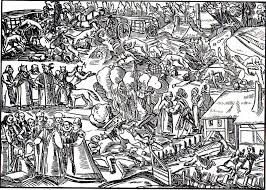
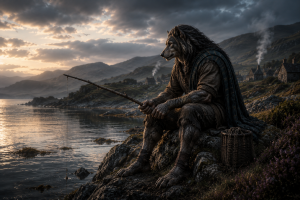


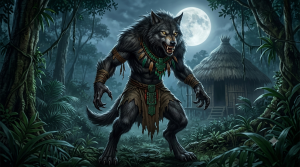
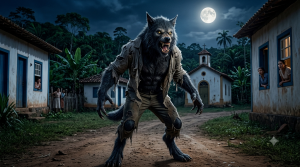
The werewolf answers a question that every human culture has had to grapple with: what is the boundary between the human and the animal, and what happens when something crosses it? The wolf, where it exists, represents the wildness that human civilisation is built in opposition to. The werewolf is the civilised person who contains that wildness and cannot always contain it.
In cultures without wolves, the same anxiety attaches to other animals. The werehyena in Ethiopia, the were-jaguar in Mesoamerica, the Aswang in the Philippines who takes the form of a large dog: all are doing the same work as the European werewolf, encoding the fear that something human can become something animal, and that the boundary between the two is more permeable than we would like.
The specific form the boundary-crossing takes, and the specific moral weight it carries, varies enormously. Thiess the Livonian werewolf thought his wolf nature was a gift from God. The seventh son in Brazil did nothing to deserve his transformation and is understood as a victim. Peter Stumpp confessed under torture to crimes that made him a monster in any tradition’s terms. Marie de France’s Bisclavret is the noblest figure in his own story, trapped in wolf form by his wife’s betrayal and more loyal, more courtly, and more admirable than the humans around him.
The werewolf is never just a monster. It is always a question about what we are and what we might become.