The Alps · Scandinavia · Germany · France · Wales · Italy · Eastern Europe

Christmas Folklore: Darker and stranger than the fairy lights suggest

The Christmas most people know is a twentieth century American construction: Santa Claus in a red suit, reindeer, elves, a chimney, presents under a tree. It is a warm and cheerful tradition and there is nothing wrong with it. But beneath it is something considerably older, considerably stranger, and in places considerably more frightening.

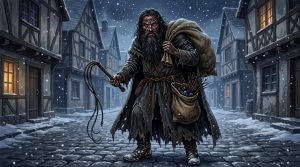
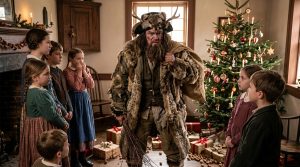
Perchta visits Alpine homes during the twelve days of Christmas to inspect whether you have finished your spinning. If you have not, she cuts you open, fills the cavity with straw, and sews you back up. Grýla descends from her Icelandic mountain cave every December with fifteen tails, each with a hundred bags, each bag for naughty children. The Wild Hunt rides hardest through the twelve days of Christmas, and the Rauhnächte — the Rough Nights — are the period when the dead are closest and the supernatural is most active. The Tomte has guarded your farm since its founding and will destroy your best livestock if you forget his Christmas porridge.

Saint Nicholas himself was a fourth century bishop from what is now Turkey who reportedly punched a heretic at the Council of Nicaea. The distance between him and the man in the red suit is one of the more remarkable transformations in the history of folklore.

The articles below cover the full tradition — the figures, the creatures, the customs, and the history of what Christmas actually was before it became what it is now.


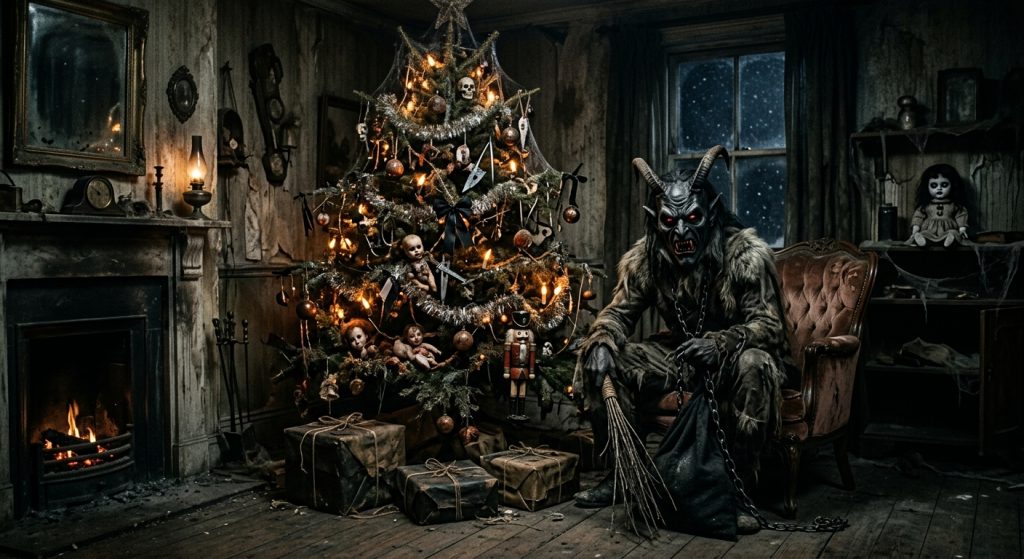
AustriaKrampus: The Alpine Devil Who Punishes Naughty Children, His Pre-Christian Roots, and the Tradition the Church Tried to Suppress for Five CenturiesKrampus is a horned, chain-dragging, cloven-hoofed devil figure from the Alpine tradition of Austria, Bavaria, and the surrounding…
AustriaPerchta: The Alpine Christmas Witch Who Inspects Your Spinning, Rewards the Diligent, and Disembowels Everyone ElsePerchta is a supernatural figure from the Alpine tradition of Austria, Bavaria, and Switzerland whose activities are concentrated…
ChristmasHans Trapp: The French Christmas Scarecrow Who Was a Real Man Condemned to Terrify Children for EternityHans Trapp is the Christmas threatening figure of the Alsace and Lorraine regions of northeastern France, the area…
ChristmasPère Fouettard: The French Child-Beater Who Accompanies Saint Nicholas and Has a Very Dark Origin StoryPère Fouettard, Father Whipper, is the dark companion of Saint Nicholas in the French Christmas tradition, particularly in…
ChristmasBelsnickel: The Fur-Clad Christmas Visitor Who Brings Both Switches and Sweets and Makes You Earn the DifferenceBelsnickel is a Christmas figure from the Palatinate region of southwestern Germany whose tradition was brought to Pennsylvania…
NetherlandsBlack Peter: The Dark Companion of Saint Nicholas and the Most Controversial Figure in Dutch ChristmasBlack Peter, Zwarte Piet in Dutch, is the companion of Sinterklaas, the Dutch Saint Nicholas, and the most…


ChristmasFrau Holle: The Germanic Winter Goddess Who Shakes Out Snow From Her Featherbed and Rewards the HardworkingFrau Holle is one of the most important figures in Germanic folk tradition, a supernatural woman who governs…
ChristmasThe Tomte: The Scandinavian Farm Spirit Who Protects Everything You Have and Will Destroy You If You Forget HimThe Tomte is the household and farm spirit of Scandinavian tradition, a small supernatural being who has inhabited…
Greek MythologyKallikantzaroi: The Greek Christmas Goblins Who Spend All Year Sawing the World Tree and Emerge at the Worst Possible MomentThe Kallikantzaroi are the goblins of Greek folklore, supernatural beings who spend the entire year underground sawing at…
ChristmasLa Befana: The Italian Christmas Witch Who Delivers Gifts on Epiphany and Is More Important Than SantaLa Befana is the old woman of Italian Christmas tradition who flies on a broomstick on the night…

ChristmasThe Wild Hunt at Christmas: Wotan’s Ride Through the Twelve Days and the Dead Who Follow HimThe twelve days of Christmas, the period between the 25th of December and Epiphany on the 6th of…
GermanyWotan’s Hunt: The Wild Hunt in German Tradition and the God Who Never Stopped RidingThe Wild Hunt in German tradition is inseparable from Wotan, the German name for the chief of the…
EnglandThe Wild Hunt: The Spectral Riders Who Cross the Winter Sky and the Traditions Behind ThemIn the winter of 1127, according to the Peterborough Chronicle, several reliable witnesses including monks reported seeing something…
NorseFimbulwinter: The Three Winters That End the World and the Real Climate Catastrophe That May Have Inspired ThemRagnarök does not begin with a battle. It begins with a winter. Fimbulwinter, from the Old Norse fimbulvetr…


The sanitised Christmas is a product of the nineteenth and twentieth centuries. Before the Victorian period’s progressive domestication of Christmas into a family celebration of warmth and gifts, the midwinter season across Europe was understood as a time of genuine supernatural danger. The twelve days were the Rough Nights. The Hunt rode. The dead were close. The spinning had to be finished before the witch arrived to inspect it.

The figures in this cluster are not simply colourful alternatives to Santa Claus. They are the surviving remnants of a midwinter worldview in which the darkest point of the year required active supernatural management — the right rituals, the right offerings, the right behaviour — to pass safely into the returning light. Krampus, Grýla, Perchta, the Tomte, the Wild Hunt: each one encodes a specific anxiety about the winter season and a specific community response to it.

Understanding the dark Christmas tradition does not diminish the celebration. It deepens it. The warmth and light of Christmas mean something more when you understand what the darkness outside actually represented to the people who built the tradition.

Scroll to Top
×