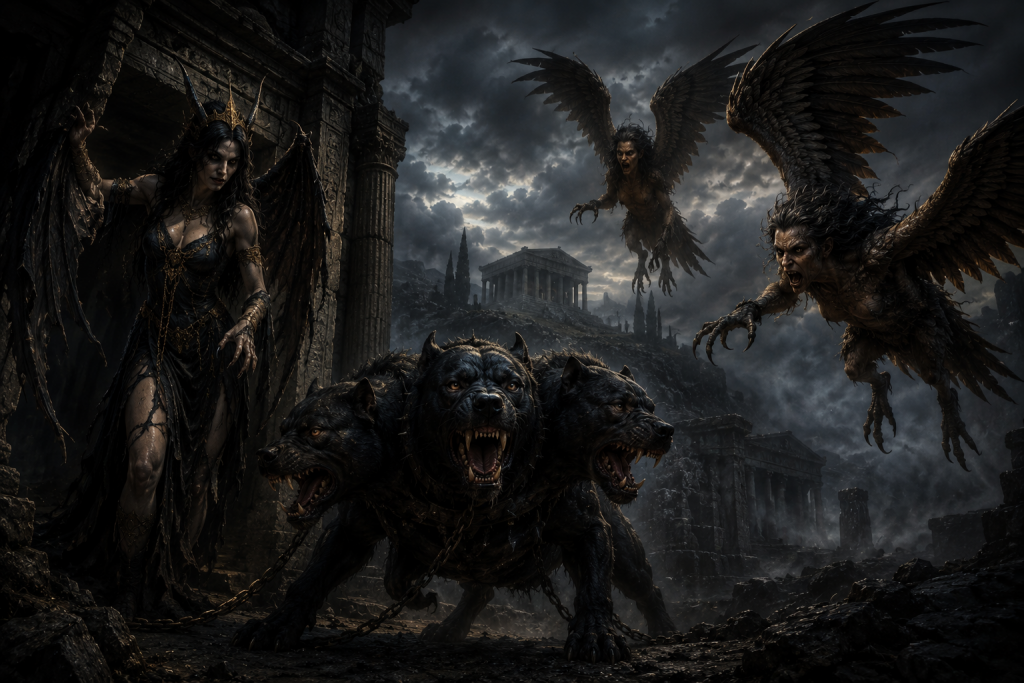
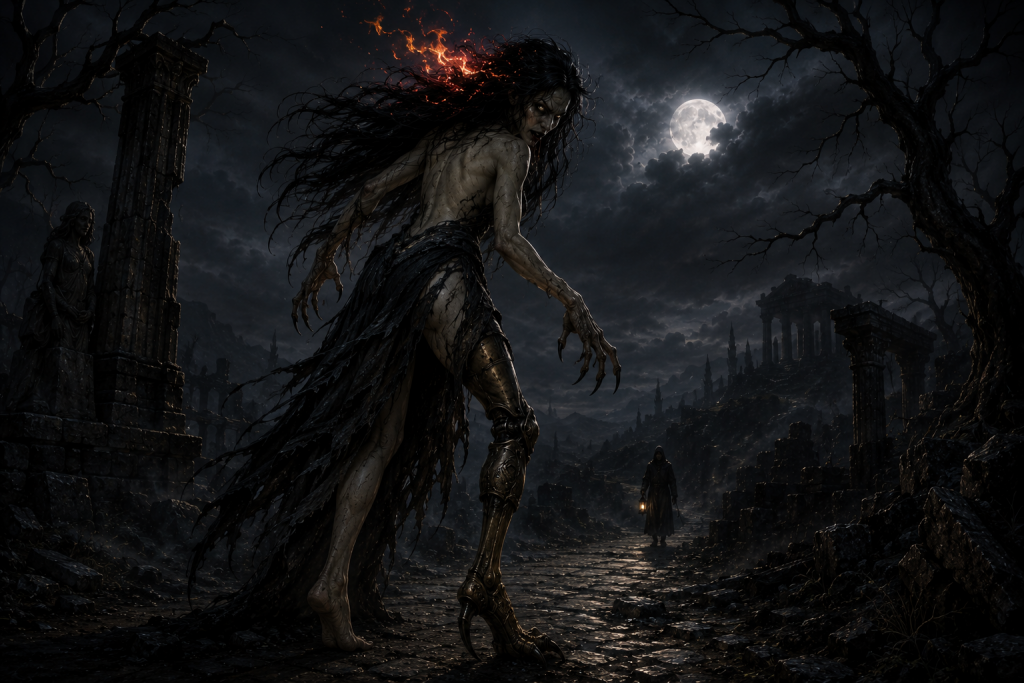
The Kallikantzaroi are the goblins of Greek folklore, supernatural beings who spend the entire year underground sawing at the World Tree that holds the earth together. They are almost through the trunk. One more day and the tree will fall, the earth will collapse, and everything will end. And then Christmas arrives, and the Kallikantzaroi are compelled to emerge from underground for the twelve days between Christmas and Epiphany to cause chaos among the living, and while they are above ground the World Tree begins to heal itself. By the time Epiphany comes and the Kallikantzaroi are driven back underground, the tree has recovered enough to require another year of sawing. And so it goes, forever.
The Kallikantzaroi tradition is one of the most structurally elegant in European folklore: the monsters are simultaneously the greatest threat imaginable, beings who are literally destroying the foundations of existence, and completely ineffectual, because the mechanism that allows them to emerge and cause mischief is the same mechanism that prevents them from ever completing their actual goal. They are doomed to almost succeed for eternity.
What They Look Like and What They Do
The Kallikantzaroi’s appearance varies significantly across regional traditions in Greece, which is characteristic of a folk figure whose specific details were never standardised by a canonical literary text. They are typically described as dark, hairy, and somewhere between human and animal in form: semi-human bodies, animal features such as hooves, tusks, or tails, and a general quality of wrongness that marks them as not quite belonging to the world above ground. Some accounts describe them as very small. Others describe them as larger than humans. Their size, like their appearance, is whatever the specific tradition needs it to be.
During the twelve days they are above ground, the Kallikantzaroi cause the specific kind of domestic chaos that makes daily life miserable rather than catastrophically dangerous. They ride on people’s backs. They soil the food. They put out fires. They tangle thread and break pottery and generally invert the normal order of the household. They enter houses through the chimney, which connects them to the broader European tradition of supernatural beings who use the chimney as their point of entry.
Protection and Epiphany
The twelve days of Christmas in Greek tradition are a period requiring specific protective measures against the Kallikantzaroi. Keeping a fire burning through the night prevents them from entering through the chimney. Hanging a pig’s jaw at the door is protective. Burning old shoes produces a smell they find intolerable. The specific protective measures vary by island and region, but the basic principle is consistent: the Kallikantzaroi are out there during the twelve days and the household must be actively protected against their intrusion.
Epiphany, the sixth of January, is the day of the Great Blessing of the Waters, when priests bless rivers, springs, and the sea. This blessing drives the Kallikantzaroi back underground and purifies the water sources they have contaminated during their twelve days above ground. The ritual marks the end of the dangerous period and the beginning of the normal year, with the Kallikantzaroi back below sawing at the World Tree and the twelve days’ chaos resolved.
The Unbaptised and the Kallikantzaroi
A specific element of the Greek tradition holds that children born during the twelve days of Christmas are at risk of becoming Kallikantzaroi themselves. An unbaptised child born in this liminal period between Christmas and Epiphany partakes of the supernatural quality of the time and may be transformed. The solution is immediate baptism, which closes the window of supernatural vulnerability.
This belief encodes the urgency of baptism in a specific and memorable way: not as a general spiritual safeguard but as a specific protection against a specific supernatural threat during a specific period. The parent who delays baptising a child born at Christmas is not simply being negligent about a religious obligation but is leaving their child vulnerable to transformation into a goblin.
Further Reading
If this article sparked your interest, these are the books worth reading next.
The Iliad — Homer (Penguin Classics)
by Homer — the primary source for everything in this article, and still the most vivid account of the Trojan War ever written.
The Odyssey — Homer (Emily Wilson translation)
by Homer, translated by Emily Wilson — the best modern English translation, and the book that contains Odysseus’s own account of the horse.
The Trojan War: A Very Short Introduction
by Eric Cline — the clearest and most up to date account of what archaeology actually tells us about Troy and whether any of it happened.
For more on the folklore of Greece, the Vrykolakas article covers the Greek vampire tradition. The Nereid article covers the sea nymphs of Greek folk tradition. The Greece folklore hub page has every article in the cluster.
Never miss a myth
Thank you for being here. The site is brand new and every subscriber genuinely means something to me. If you're here, you care about this stuff as much as I do - and that's all the reason I need to keep going. New stories, videos and dark folklore from around the world, straight to your inbox. No algorithm. Just the stories, when they're ready.