
Slavic Mythology: Older than Christianity in Eastern Europe, and it never quite went away
Slavic mythology is one of the least known and most rewarding of the great mythological traditions. It was never written down in its original form. There is no Slavic equivalent of the Prose Edda or the Iliad — no single text that preserved the tradition before Christianity arrived and began systematically replacing it. What survives comes from archaeology, from the records of the Christian missionaries who condemned the old practices, from comparative mythology, and from the extraordinary richness of Slavic folk tradition, which preserved pre-Christian beliefs in the form of seasonal rituals, household customs, and creature lore long after the official religion had changed.
What that folk tradition preserved is remarkable. An eternal conflict between a sky god and an underworld god that drives the cosmos. A death goddess whose effigy is still drowned every spring across Poland and the Czech Republic. A household spirit in every home whose happiness determines whether the family prospers. A forest that has its own owner who must be acknowledged before you take anything from it. A water demon who owns the drowned. A witch who lives in a hut on chicken legs at the boundary between the living world and the dead.
This is a tradition that rewards serious attention. The articles below cover it properly.


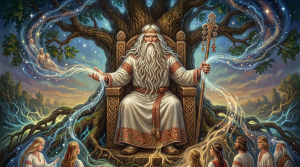
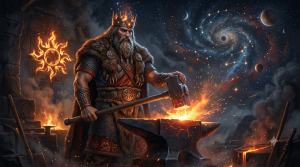


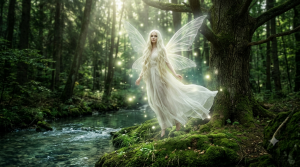
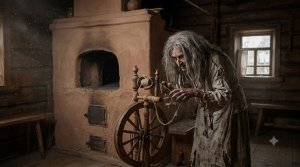
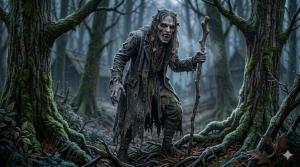


The Slavic tradition is underrepresented in popular culture relative to its depth and its richness. Greek mythology has had two and a half thousand years of continuous engagement from Western culture. Norse mythology has the Eddas and a century of modern revival. Slavic mythology has Baba Yaga, and even Baba Yaga is usually presented in a simplified form that strips away most of what makes her interesting.
The full tradition is considerably stranger and more sophisticated than the simplified versions suggest. Perun and Veles in eternal conflict is as compelling a cosmic myth as Thor and the Midgard Serpent. The Domovoi as the spirit of the founding ancestor living in the walls is a more nuanced household supernatural than most folklore traditions produce. Marzanna being ritually drowned every spring to end winter is one of the most vivid seasonal rituals in European folk culture, and it is still happening.
The articles on this site cover the Slavic tradition with the same depth and primary source grounding applied to the Greek, Norse, Egyptian, and Celtic clusters. If you have not spent time with Slavic mythology before, start with Perun and Veles and the conflict that drives everything else. If you have, there is plenty here that goes further than the standard treatments.