

Vampires of the World: Every culture has one. Most of them are nothing like Dracula.
The vampire is the most universal monster in human folklore. Every culture on earth, from the Ewe people of Ghana to the Aboriginal communities of Australia to the rural villages of Tlaxcala in Mexico, has developed its own tradition of the undead or the supernatural figure that feeds on human blood or vitality. What these traditions share is the anxiety at their core: the fear of the dead returning, the fear of something that looks human but is not, the fear of an invisible force draining life from those who cannot see it coming.
What they do not share is the form. The vampire of popular culture, the pale aristocrat with the cape and the castle, the creature destroyed by sunlight and repelled by garlic, is a very specific Central European tradition that became dominant in the West through Bram Stoker’s Dracula and the century of film adaptations that followed it. The Penanggalan is a severed head trailing its own intestines through the Malaysian night. The Yara-ma-yha-who is a small red creature that lives in Australian fig trees and swallows its victims whole. The Adze is a firefly. The Soucouyant hides her skin in a mortar before she transforms into a ball of fire.
The articles below cover the full global tradition. They are organised by region, and the cluster will keep growing as new traditions are added. The world’s vampire folklore is vast, and this is the beginning of a serious attempt to cover it properly.

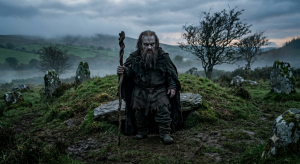


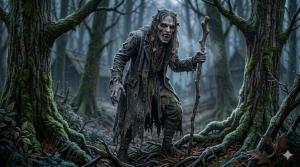

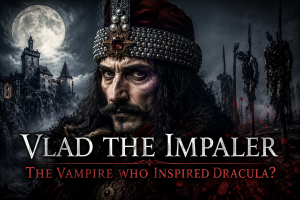


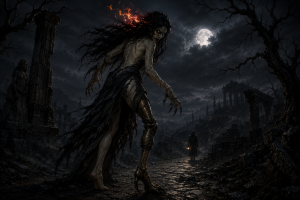


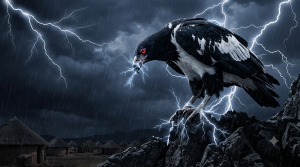



The universality of vampire belief is not a coincidence. It reflects something deep in how human communities have understood the relationship between the living and the dead, between visible illness and invisible cause, between the person who was known in life and the uncanny thing they might become after death.
Before germ theory, before an understanding of contagion, communities experiencing epidemic disease needed explanations for why multiple people in a family or a village were dying in sequence. The vampire, a dead person who returned to drain the living, provided exactly that explanation: one death produced the vampire, who then caused the next death, which produced another vampire, and so on in a chain of causation that matched the observable reality of how infectious disease moved through a community.
The specific forms the vampire took in different cultures reflect local anxieties, local ecology, and local social structures. The Southeast Asian vampires target pregnant women and infants because childbirth was the most dangerous moment in life and infant mortality was the most common form of unexplained death. The Eastern European vampire spreads through families because disease spread through families. The Adze looks like a firefly because the light moving through the darkness at night was genuinely unexplained and genuinely mysterious.
Every vampire tradition on this page is doing the same work: giving a name, a shape, and a set of countermeasures to something that the community experiencing it could not otherwise explain or control. That is what folklore has always done. The vampire just happens to be the version that every human culture, independently and across thousands of years, found necessary to invent.