Long before Bram Stoker put a name to the darkness, before the castle on the hill and the widow’s peak and the opera cape, the vampire existed. It existed in the soil of the Balkans and the river valleys of Mesopotamia. It existed in the folklore of ancient China, in the death rites of Rome, in the fears that gather whenever human beings try to make sense of what happens after we die. The vampire is not an invention of Gothic literature. It is one of the oldest things we have.
What follows is not the story of Count Dracula. It is the story of something far older, far stranger, and considerably more disturbing. It is the story of where the vampire actually came from.
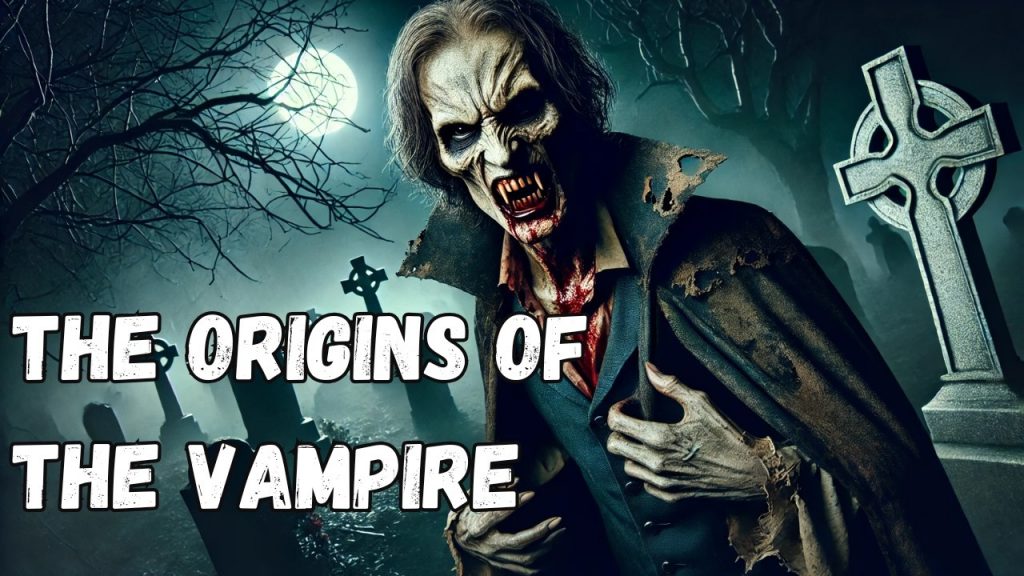
Before You Read: Watch the Documentary
If you would prefer to explore the origins of vampire mythology through video first, the documentary below covers the history in depth. The article beneath it goes further into the folklore, the historical cases, and the traditions from around the world that fed into the legend.
The Word Itself
The word vampire entered the English language in the early eighteenth century, borrowed from either the Serbian vampir or the Hungarian vámpír, both of which were already well established in the folklore of their regions. The first major wave of vampire panic in Western Europe coincided with the Habsburg Empire’s expansion into the Balkans following the Ottoman retreat, when Austrian military officials found themselves confronted with local beliefs and burial practices entirely outside their experience.
The etymology beyond this point becomes contested. Some scholars have traced roots to Turkish, to Slavic words for witches or blood, or to Proto-Slavic terms connected to drinking. Others have suggested influence from the Kazan Tatar word ubyr, meaning witch. The honest answer is that the precise origin of the word remains unresolved, which is fitting for a creature that has always been difficult to pin down.
What is clear is that the belief the word described was neither new nor confined to one region. By the time European writers began documenting it in the 1700s, it was already ancient.
Mesopotamia: The First Blood Drinkers
The oldest identifiable vampire-like figures in recorded history appear in the mythology of ancient Mesopotamia, in the civilisations of Sumer, Akkad, Babylonia, and Assyria. These were not vampires in the later European sense, but the family resemblance is unmistakable.
The Ekimmu was a spirit of the unburied or improperly buried dead, doomed to wander the earth unable to reach the underworld, attaching itself to the living and draining them of vitality. The cause of its creation was almost always a failure of proper burial rites, a theme that recurs with remarkable consistency across vampire traditions worldwide. The dead, in these traditions, had obligations and rights. Neglect them, and the consequences visited the living.
The Akhkharu was more explicitly predatory, a blood-drinking demon that attacked the living at night. The Lilu and Lilitu, storm demons associated with the figure who would eventually become Lilith in Jewish tradition, were night-wandering creatures that preyed on sleeping men and women and killed infants in their cribs. The Lamashtu, a goddess-turned-demon, drank the blood of men and ate their flesh.
These creatures were understood as genuinely real and genuinely dangerous. Clay tablets containing incantations against them survive to this day, evidence that people sought practical protection against something they believed could actually harm them.
Ancient Greece and Rome: The Drinking Dead
The classical world had its own traditions of bloodthirsty undead, which fed directly into European folklore through centuries of cultural transmission.
The Empusa of ancient Greece was a shape-shifting demoness associated with Hecate, capable of appearing as a beautiful woman to seduce men before draining their blood and eating their flesh. The Lamia was a queen of Libya who, after her children were killed by Hera out of jealousy over Zeus’s affections, was cursed to devour the children of others. She became, in time, a byword for a blood-drinking monster that preyed especially on the young.
The Strix of Roman tradition was perhaps the most direct ancestor of the later European vampire. Initially described as a screech owl that fed on human blood, the strix evolved in Roman literature into something more humanoid, a witch or undead creature that attacked infants and sucked their blood. The word survived into Romanian as strigoi, one of the most important vampire figures in Balkan folklore, demonstrating a direct linguistic and cultural thread running from ancient Rome to the heart of vampire country.
Ovid wrote about the striges in his Fasti, describing birds with hooked talons and great heads that flew by night and attacked cradles. These were not metaphors. Roman parents took the threat seriously enough to place protective charms over their children’s beds.
The Balkan Tradition: Where the Modern Vampire Was Born
It is in the folklore of the Balkans, particularly Serbia, Bulgaria, Romania, and the surrounding regions, that the figure most recognisable as a vampire takes its clearest shape.
In these traditions, vampires arose from specific categories of the dead: suicides, excommunicants, those who had lived sinful lives, those who had been buried improperly, those whose bodies had been crossed by a cat or had a shadow fall on them before burial. In some traditions, anyone who had not received last rites was at risk. In others, a person of particularly strong will or unusual character might simply refuse to stay dead.
The Balkan vampire was, crucially, not the aristocratic seducer of later fiction. It was a bloated, ruddy-faced creature, recognisable because it had not decayed as it should. It returned to its own home and terrorised its own family. It might knock on doors at night, call out the names of people it had known in life, and drain their energy through proximity rather than dramatic neck-biting. Its victims sickened and died slowly, sometimes rising themselves.
This last detail reflects a genuine epidemiological reality. When one member of a family died of an infectious illness and others began to sicken and die in sequence, the vampire provided an explanatory framework. The first victim was blamed for the deaths that followed. It was wrong, but it was an attempt to impose meaning on something terrifying and apparently inexplicable.
The Documented Cases: When Officials Got Involved
The vampire panic of the early eighteenth century produced something unusual in the history of folklore: official documentation.
The case of Peter Plogojowitz, a Serbian villager who died in 1725, was investigated by Austrian imperial officials. Nine people in his village had died in quick succession after his death, each reportedly claiming on their deathbed that Plogojowitz had come to them in the night and attacked them. When the body was exhumed, the officials found it in a condition they described as showing signs of continued life: fresh blood around the mouth, new skin beneath the old, no sign of the decomposition expected after nine weeks in the ground.
The body was staked through the heart, from which fresh blood reportedly poured, and then burned.
The case of Arnold Paole, investigated the following year in a nearby village, was even more extensively documented. Paole had reportedly been troubled in life by a vampire encounter and had taken traditional protective measures. After his death, four people died in the weeks following, each said to have been visited by him. Again, exhumation, and again, a body in unexpected condition. The official report, signed by multiple military physicians and filed with the Habsburg court, was published across Europe and caused a sensation.
These cases were not the work of superstitious peasants acting in secret. They were documented by educated men who did not know what to make of what they were seeing. The reports spread across Europe and forced a genuine intellectual debate. Philosophers, physicians, and theologians wrote seriously about vampires through the 1730s and 1740s. The debate was not about whether to mock the belief. It was about how to explain what had apparently been observed.
What They Were Actually Seeing
Modern pathology has provided answers that the eighteenth century lacked.
The conditions that made exhumed bodies appear unnaturally preserved, fresh, or even growing, are explicable by the mechanics of decomposition. Different soil conditions, temperatures, and the causes of death can produce dramatically different rates of decay. A body exhumed after weeks might look almost fresh under some conditions. Bloating from internal gases can force blood to the mouth, creating the appearance of recent feeding. Skin can slough away to reveal newer-looking tissue beneath. Fingernails and hair can appear to have grown as the surrounding skin contracts.
None of this was understood in the eighteenth century. What observers saw appeared genuinely anomalous, and the vampire was the framework they had available for making sense of it.
The clustering of deaths in families and villages that gave rise to many vampire accusations was, in most cases, almost certainly the result of infectious disease, tuberculosis especially. Tuberculosis, known historically as consumption, killed slowly, drained vitality, caused paleness and wasting, and moved through households in exactly the pattern that vampire lore described. In New England in the eighteenth and nineteenth centuries, a vampire belief almost identical in structure to the Balkan tradition developed independently, also centred almost entirely on tuberculosis deaths.
If you want more like this, the Tales of Myth and Magic newsletter delivers new creatures, legends, and forgotten folklore straight to your inbox.
No fixed schedule. No noise. Just the stories, when they are ready.
Sign up here →A Fear That Crossed Every Border
What is most striking about vampire mythology, considered globally, is how consistent the underlying anxieties are across traditions that had no contact with one another.
The Jiangshi of China, the Aswang of the Philippines, the Penanggalan of Malaysia, the Strigoi of Romania, the Upyr of Russia and Ukraine, the Loogaroo of the Caribbean, the Adze of the Togo and Ghana region, the Ekimmu of ancient Mesopotamia: all of them, in their different forms, circle the same set of fears. The improperly dead returning to harm the living. Vitality being drained rather than violence being done. The dead who cannot or will not let go of the world they left. The familiar face that comes back wrong.
These fears are not cultural accidents. They are human. They emerge wherever people bury their dead and lie awake wondering whether the dead stay buried. They emerge wherever illness takes one person and then another and then another and no explanation is available. They emerge wherever the darkness is real and the night is long and something that sounds like a name being called comes drifting in from outside.
Further Reading
If this article sparked your interest, these are the books worth reading next.
The Encyclopedia of Vampires, Werewolves and Other Monsters
by Rosemary Ellen Guiley — the most comprehensive reference on the vampire tradition across world cultures.
In Search of Dracula
by Raymond McNally and Radu Florescu — the book that connected Bram Stoker’s Dracula to the historical Vlad the Impaler.
Dracula (Penguin Classics)
by Bram Stoker — if you have not read the original, it is considerably better and considerably stranger than you expect.
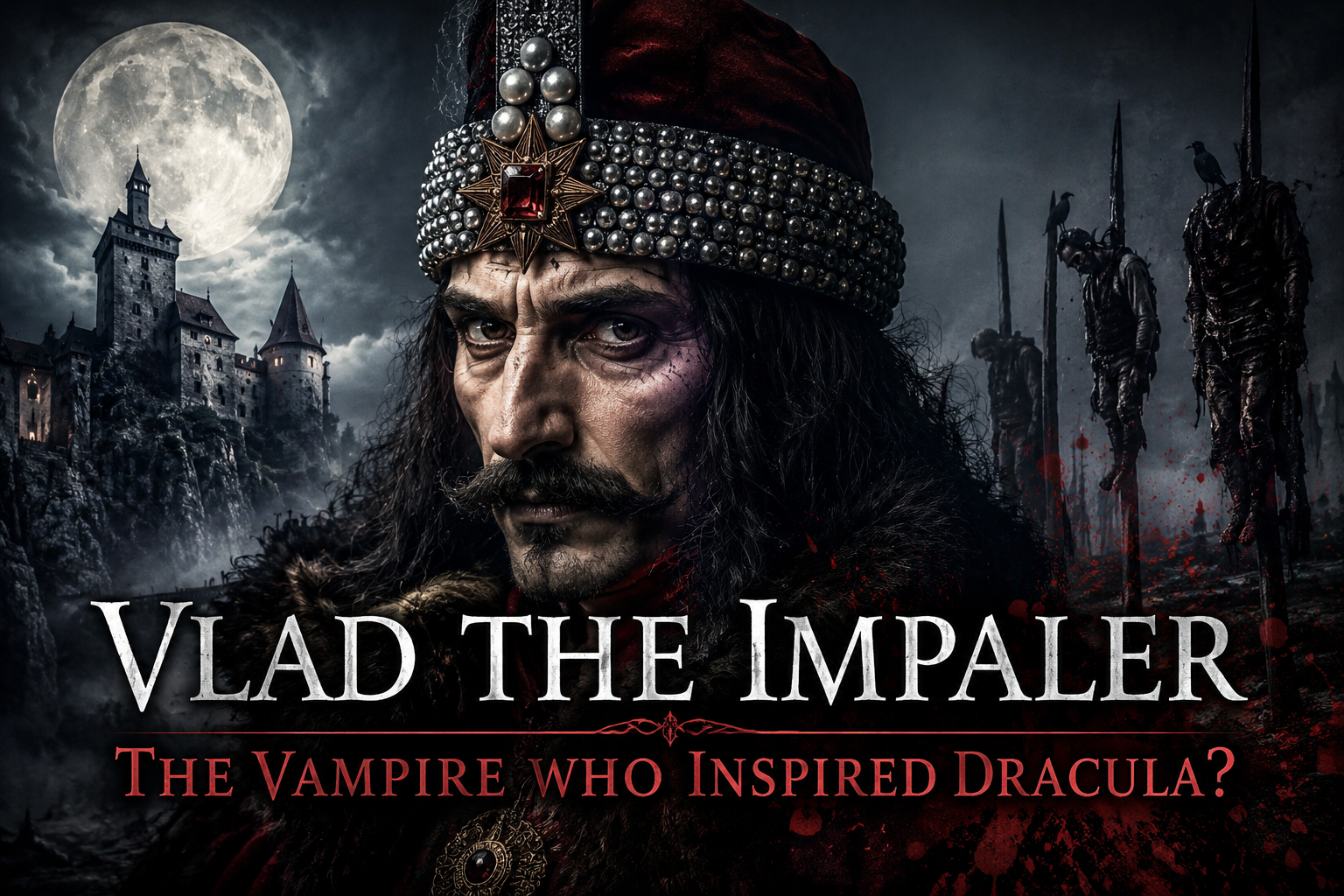
If you are interested in reading more about vampires, you can check out the main vampire page here. The video below covers Vlad the Impaler and many others, if you are interested!
Never miss a myth
Thank you for being here. The site is brand new and every subscriber genuinely means something to me. If you're here, you care about this stuff as much as I do - and that's all the reason I need to keep going. New stories, videos and dark folklore from around the world, straight to your inbox. No algorithm. Just the stories, when they're ready.