In 1370, a cleric in Moscow recorded the case of a merchant who had died during a famine. Villagers had seen him walking at night. When they dug him up, his corpse was the colour of a man still alive. They staked him through the chest and burned what remained.
This was not folklore being collected after the fact. This was a contemporary record, written down at the time by a man who believed every word of it.
The Word Older Than Vampire
Long before the word vampire entered the English language, long before Bram Stoker ever set pen to paper, the Slavic peoples of Eastern Europe had already been living with their own version of the walking dead for centuries. They called it the upyr.
The earliest known written reference to the word appears in an Old East Slavic chronicle from 1047, where it is used to describe wicked upyrs in a context that suggests the belief was already familiar enough not to require explanation. That single sentence, buried in an eleventh century manuscript, makes the upyr one of the oldest documented vampire figures in European history, predating Dracula by more than eight hundred years.
For a deeper look at another vampire tradition that predates Stoker, the Abhartach covers Ireland’s own ancient vampire whose connection to Dracula is equally contested.
The exact origin of the word itself is disputed even among scholars. The most widely accepted theory traces upir to a root meaning something close to one who thrusts or one who bites, though the etymology is genuinely uncertain and has been argued over for generations. What is not in dispute is the fear the word carried. To call someone an upyr, living or dead, was to name something that the entire community needed to take seriously.
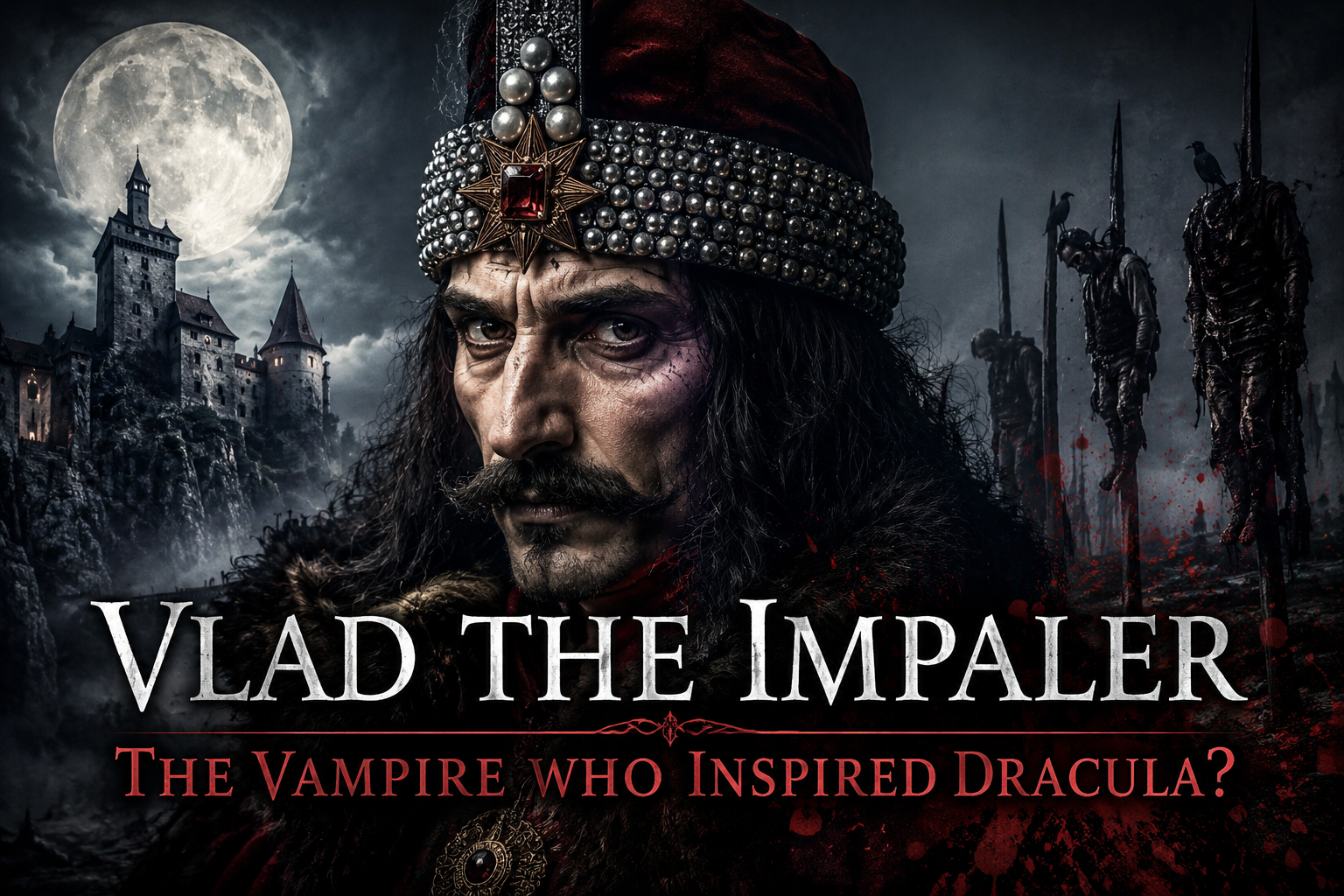
If you are interested in reading more about vampires, you can check out the main vampire page here. The video below covers Vlad the Impaler and many others, if you are interested!
A Corpse, Not a Count
The upyr bears almost no resemblance to the vampire of popular culture. There is no charm to it, no aristocratic manner, no seduction. It is, at its core, simply a corpse that refuses to stay dead.
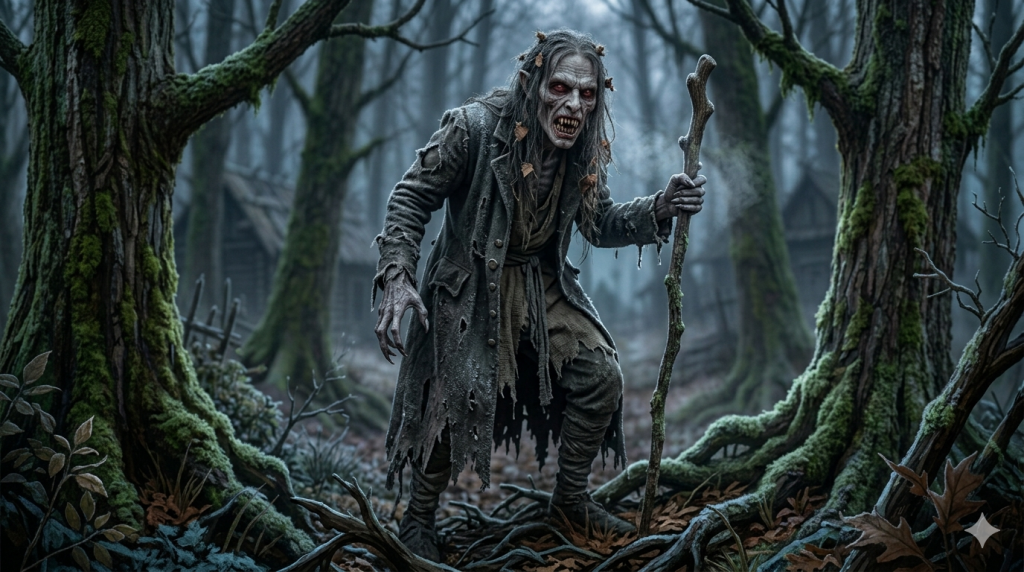
Descriptions from Slavic folklore consistently emphasise the grotesque rather than the elegant. Pale or bloated skin. Sharp claws. Glowing eyes. A body that should have decomposed but has not, sometimes described as ruddy or flushed, as though blood were still moving beneath the surface. This was not a creature designed to be desired. It was designed to be feared, the physical embodiment of everything wrong with a death that had gone wrong.
Pre-Christian Slavic belief held that death was never entirely final. A body buried correctly, with the proper rites observed, would stay where it was put. A body buried incorrectly, or a person who had lived a life marked by sin, violence, or unnatural circumstances, carried the risk of returning. The upyr was less a separate species of monster and more a description of what could happen to anyone, if the proper care was not taken.
When Christianity arrived in the Slavic lands, arriving in Kievan Rus in the late tenth century and spreading gradually outward over the following two centuries, it did not erase this belief. It absorbed it. Priests began to frame the upyr in terms of sin and demonic possession, warning that an immoral life or an improperly performed funeral rite could cause the dead to rise as a blood drinking monster. Pagan fear and Christian morality fused into a single explanation, and the upyr survived the religious transition by becoming useful to both systems of belief.
The Merchant of 1370
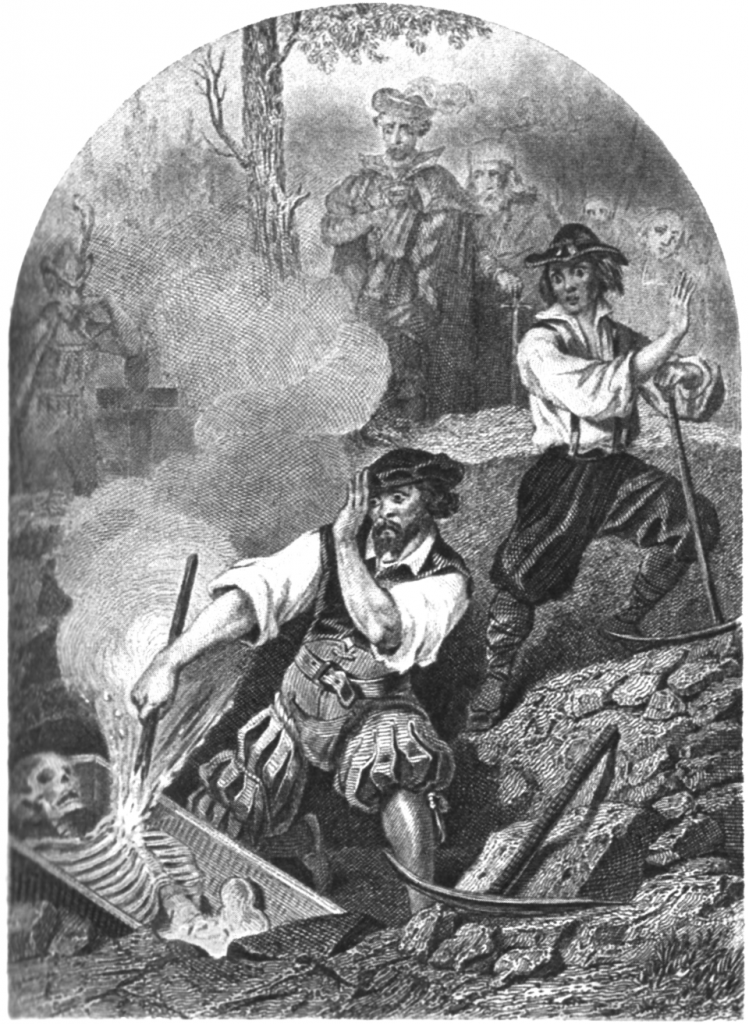
The case recorded by the Moscow cleric in 1370 is one of the clearest windows we have into how seriously these beliefs were held, and how they operated in practice.
A merchant had died during a famine, a detail that matters because famine, plague, and other forms of communal disaster were consistently the conditions under which upyr accusations multiplied. When food was scarce and people were dying in unusual numbers, the explanation that something supernatural was responsible offered a kind of order to otherwise senseless suffering.
The merchant was seen, or believed to have been seen, wandering at night after his death. This was enough to trigger the next stage: exhumation. When his body was dug up, those present described it as ruddy, a colour suggesting blood still present in the tissue rather than the pallor expected of a corpse that had been in the ground for any length of time. By the standards of the belief system, this was confirmation. The body was staked through the chest and then burned, the combination considered necessary to ensure the threat could not return in any form.
This pattern, of crisis followed by suspicion followed by exhumation followed by ritual destruction, repeats throughout the historical record of upyr belief, and not only in Russia. Similar accounts surface across the Polish Lithuanian Commonwealth during the Thirty Years War in the seventeenth century and during the famines that struck Russia in the 1550s. Wherever death arrived suddenly and in numbers that defied easy explanation, the upyr tended to follow close behind as the explanation communities reached for.
How to Recognise the Risen Dead
Slavic communities developed a fairly consistent set of warning signs used to identify a suspected upyr, and the consistency of these signs across different regions and centuries suggests a genuinely widespread and deeply held tradition rather than scattered, unrelated superstitions.
An exhumed body that showed no sign of the expected decomposition was the primary piece of evidence. Skin that remained supple rather than stiff. A ruddy or flushed complexion rather than the pallor of death. Blood found at the mouth, suggesting recent feeding. Any of these were taken as confirmation that the person had become an upyr rather than simply having died and been buried as anyone might expect.
The circumstances of a person’s life and death also marked them as a risk before any exhumation took place. Someone who had been excommunicated, who had died by suicide, who had been a known sorcerer or witch in life, or who had simply lived by a reputation for cruelty and immorality, was considered far more likely to rise. In Belarusian tradition from as early as the fifteenth century, some accounts held that an upyr could arise specifically from a union between a werewolf and a witch, blending two separate strands of supernatural fear into a single explanation for the worst kind of death imaginable.
Archaeological evidence backs up the written record in a way that few folklore traditions can claim. Graves uncovered across Eastern Europe have been found containing skeletons with stones deliberately wedged into their mouths, iron stakes driven through the chest cavity, or skulls separated entirely from the rest of the body. These were not accidents of burial. They were precautions, taken either before death when a person was already considered at risk, or after the fact once a corpse was formally identified as an upyr.
If you want more like this, the Tales of Myth and Magic newsletter delivers new creatures, legends, and forgotten folklore straight to your inbox.
No fixed schedule. No noise. Just the stories, when they are ready.
Sign up here →The Method of Destruction
Once a body was confirmed, by the standards of the tradition, to be an upyr, the response followed a fairly standard sequence across the Slavic world, even as small details shifted from region to region.
A wooden or iron stake driven through the heart or chest was the most common method, intended to pin the body in place and prevent any further movement. Decapitation was frequently paired with staking, the head removed and sometimes buried separately from the body or placed face down within the coffin, on the theory that a body without its head could not direct itself to rise. Burning was often the final stage, used either on its own or as a follow up to staking, ensuring that whatever remained of the corpse could not be reanimated by any means at all.
These rituals were rarely the act of a single frightened individual. They were communal undertakings, organised and witnessed by the village, frequently coordinated with the local priest who would bless the site afterward to ensure the danger had genuinely passed. The upyr was a problem the entire community owned, and its solution required the entire community’s participation.
The Dearg Due is Ireland’s female vampire, contained by a gravestone rather than destroyed, and belonging to the same pre-Gothic tradition of the revenant as the Upyr.
The Upyr’s Wider Family
The upyr did not exist alone in Slavic supernatural tradition. It sat within a broader family of related undead and night creatures that varied by region and language but shared its essential DNA.
In Polish folklore, the strzyga described a similar revenant, and the upyr was also linked to the mora, a spirit believed to suffocate sleepers in the night, an association that connects the upyr to a much wider Slavic anxiety about vulnerability during sleep. In Serbian tradition, the vukodlak carried many of the same characteristics while leaning more heavily into the werewolf side of the supernatural spectrum. Each of these regional cousins reflected the same underlying fear, expressed through slightly different local vocabulary and slightly different ritual responses.
This family of related beings is part of why the upyr deserves recognition as something close to the common ancestor of the entire vampire tradition that would later sweep across Western Europe and, eventually, the world. When the vampire panics of the eighteenth century gripped the Habsburg territories and produced the reports that would eventually filter into Western literature, they were drawing on a belief system that had already been operating in Slavic communities for the better part of a thousand years.
From Folk Belief to Folk Literature
The upyr’s most famous appearance in literature came centuries after the Moscow merchant was staked and burned, when the Russian author Nikolai Gogol included an undead witch carrying distinctly upyr-like traits in his 1835 novella Viy. The story drew directly on the folk traditions Gogol had grown up surrounded by in Ukraine, translating oral village fear into the literary form that would eventually reach a much wider audience, including a 1967 Soviet film adaptation that introduced the creature to international cinema audiences for the first time.
This is, in many ways, the upyr’s quiet legacy. It rarely gets the recognition that Dracula receives, and it has never had its own globally recognised name brand in the way the Count has. But the fundamental shape of the modern vampire, the corpse that will not stay dead, the necessity of staking and decapitation, the vulnerability exposed through ritual exhumation, all of this traces back through Slavic tradition to the upyr, centuries before Stoker ever needed a setting for his novel.
The Romanian Strigoi shares much of the same folklore architecture as the Upyr, right down to the improper burial as the trigger for undeath.
The Fear That Built a Myth
What makes the upyr worth taking seriously, beyond the historical curiosity of an eleventh century manuscript or a 1370 staking, is what it reveals about how communities under genuine strain make sense of death they cannot otherwise explain.
Famine, plague, and unexplained illness moving through a village were terrifying precisely because they offered no clear cause and no clear solution. The upyr gave Slavic communities both. A specific corpse, a specific ritual, a specific resolution that could be carried out by hand. It transformed an invisible, ongoing catastrophe into a single, identifiable enemy that could be dug up, staked, and burned, after which the community could tell itself, with some confidence, that the danger had passed.
That is not a small thing. It is, in its own dark way, a coping mechanism built from fear, faith, and the desperate need to do something in the face of suffering that otherwise had no answer.
The graves are still being found. The chronicles are still being read. And somewhere in that eleventh century manuscript, the word sits exactly where it was first written down, describing something that the scribe clearly expected his readers to already understand without further explanation.
Further Reading
If this article sparked your interest, these are the books worth reading next.
The Encyclopedia of Vampires, Werewolves and Other Monsters
by Rosemary Ellen Guiley — the most comprehensive reference on the vampire tradition across world cultures.
In Search of Dracula
by Raymond McNally and Radu Florescu — the book that connected Bram Stoker’s Dracula to the historical Vlad the Impaler.
Dracula (Penguin Classics)
by Bram Stoker — if you have not read the original, it is considerably better and considerably stranger than you expect.
Want to learn more about the history of Vampies? Click below to watch the documentary
Never miss a myth
Thank you for being here. The site is brand new and every subscriber genuinely means something to me. If you're here, you care about this stuff as much as I do - and that's all the reason I need to keep going. New stories, videos and dark folklore from around the world, straight to your inbox. No algorithm. Just the stories, when they're ready.