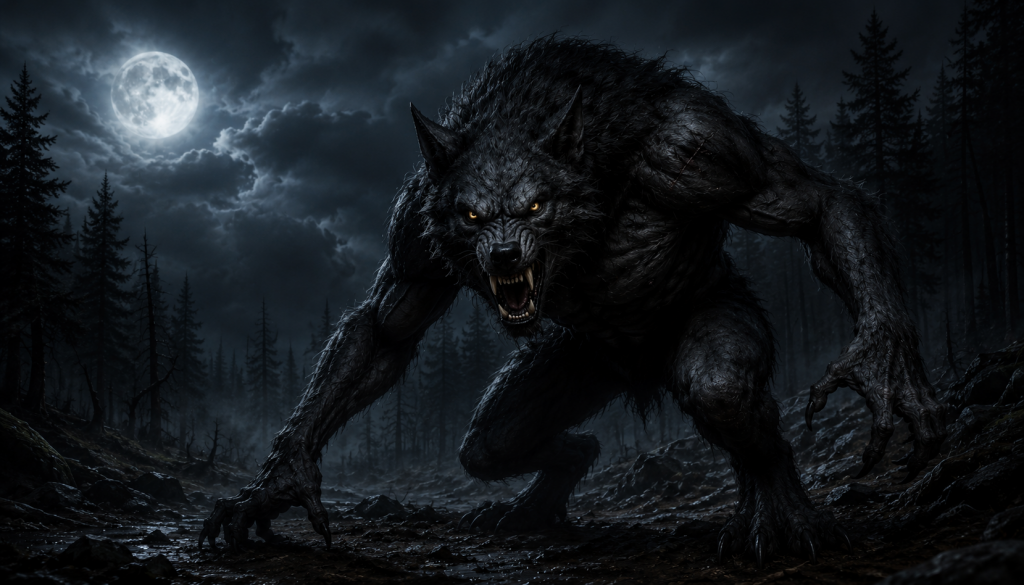
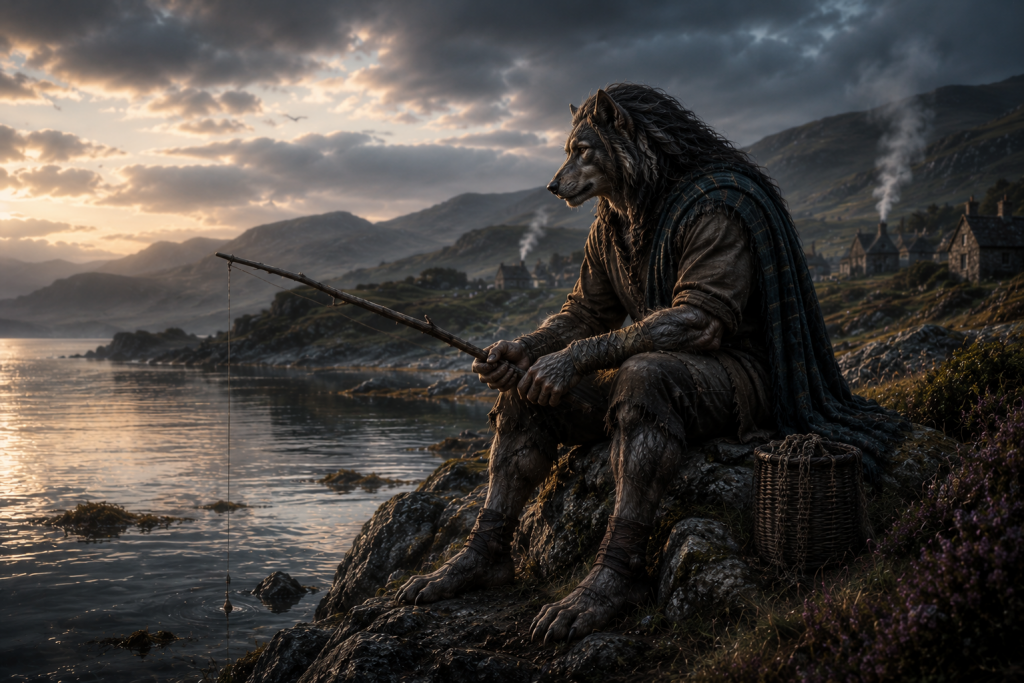
The Loup-Garou is the werewolf of French tradition, and it differs from the German and Eastern European werewolf in one significant respect: it is understood primarily as a curse rather than as a diabolical pact or a permanent supernatural condition. A person becomes a Loup-Garou through the violation of religious obligation, through breaking a fast, through failing to take communion for a specified number of years, through neglecting the duties that French Catholic life required. The transformation is punishment, and crucially it is temporary: seven years is the standard duration, after which the curse lifts and the person returns to normal human life if they can survive it.
This seven year structure gives the Loup-Garou tradition a moral logic that distinguishes it from the more absolute werewolf transformations of other traditions. The werewolf is not irredeemably damned. They have failed in their religious duties and are paying for it. If someone breaks the curse, typically by drawing the werewolf’s blood, the transformation ends immediately. If no one intervenes, the seven years eventually run out and the person comes home.
The Religious Dimension
The causes most consistently cited for Loup-Garou transformation in the French folk tradition are specifically Catholic in character. Failing to observe Lent for seven consecutive years was the most commonly cited trigger. Failing to take confession or communion for seven years was another. Making a pact with the devil was also cited but was less central to the French tradition than to the German one, which placed diabolical pact at the heart of werewolf belief.
The Catholic framing is significant because it positioned the Loup-Garou within the Church’s framework of sin and consequence rather than outside it. A person who had neglected their religious duties had not been corrupted by supernatural evil but had failed in their obligations to God, and the wolf transformation was the consequence of that failure. The Church’s remedies, confession, communion, the resumption of proper religious practice, were therefore relevant to the cure in a way they were not in traditions where the werewolf had made an active diabolical pact.
How to Break the Curse
The most widely recorded method for breaking the Loup-Garou curse was to draw the creature’s blood. A person who encountered a Loup-Garou and managed to wound it, causing blood to flow, would trigger the reversal of the transformation. The werewolf would return to human form, and the person who had been transformed was released from the curse, often with no memory of the wolf years or only fragmentary recollections.
The person who broke the curse was then bound to silence about what they had witnessed. Revealing that a specific person had been a Loup-Garou was considered deeply harmful to the former werewolf and was itself understood to carry supernatural consequences for the one who broke the silence. This obligation of silence served a practical social function: it allowed former werewolves to reintegrate into communities without the stigma of what they had been, and it discouraged the kind of post-hoc accusations that might otherwise follow a community’s werewolf scare.
The Canadian and Louisiana Traditions
The Loup-Garou travelled with French colonists to North America and adapted to new landscapes while retaining its core characteristics. In Quebec, the Loup-Garou became the Loup-garou of the Canadian winter, haunting the frozen forests and the roads between isolated settlements. The seven year structure and the Catholic moral framework largely survived the crossing.
In Louisiana, the tradition merged with other folk beliefs to produce the Rougarou, a variant covered in its own article that shares the Loup-Garou’s basic structure while developing the specific character of the Louisiana swamp landscape and the Cajun cultural context. The Rougarou is the Loup-Garou made local, adapted to sugar cane fields and bayous rather than French provincial countryside.
Further Reading
If this article sparked your interest, these are the books worth reading next.
The Beast of Gévaudan
by Jay M. Smith — the most thorough historical investigation into the creature that terrorised southern France between 1764 and 1767, and what the historical record actually reveals about what it was.
The Werewolf Book: The Encyclopedia of Shape-Shifting Beings
The most comprehensive reference on the werewolf tradition across world cultures — every regional variant, every historical case, every folkloric and literary expression of the shape-shifting being.
The Werewolf in Lore and Legend
by Montague Summers — the classic scholarly treatment of werewolf belief, drawing on primary sources from across Europe. Dense, serious, and still the best single academic treatment of the tradition.
For more on the werewolf tradition, the Rougarou article covers the Louisiana descendant of the Loup-Garou tradition. The Beast of Gévaudan article covers the real attacks in France that the Loup-Garou tradition helped explain. The Dark Origins of the Werewolf article covers the broader history of werewolf belief.
Never miss a myth
Thank you for being here. The site is brand new and every subscriber genuinely means something to me. If you're here, you care about this stuff as much as I do - and that's all the reason I need to keep going. New stories, videos and dark folklore from around the world, straight to your inbox. No algorithm. Just the stories, when they're ready.