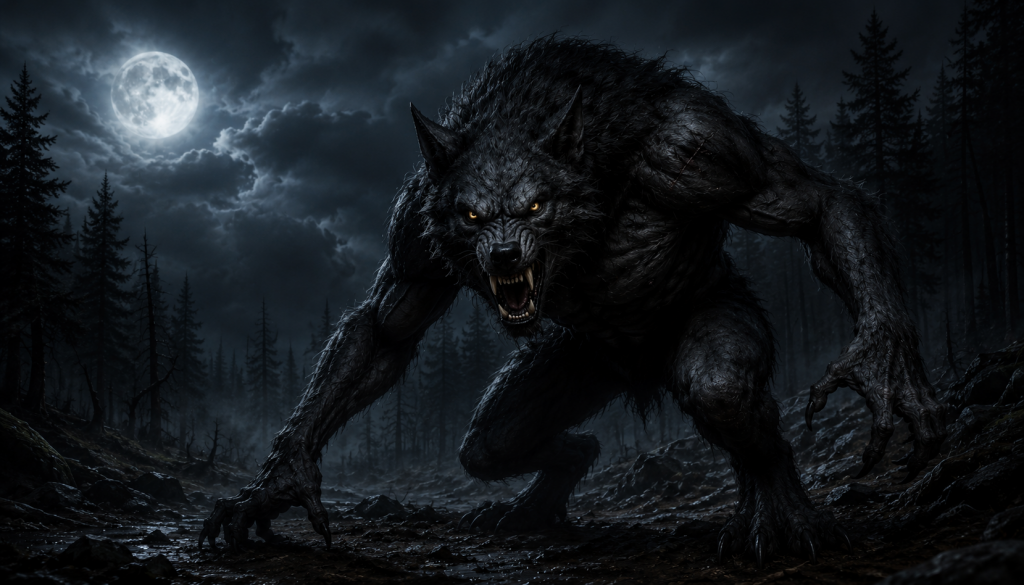
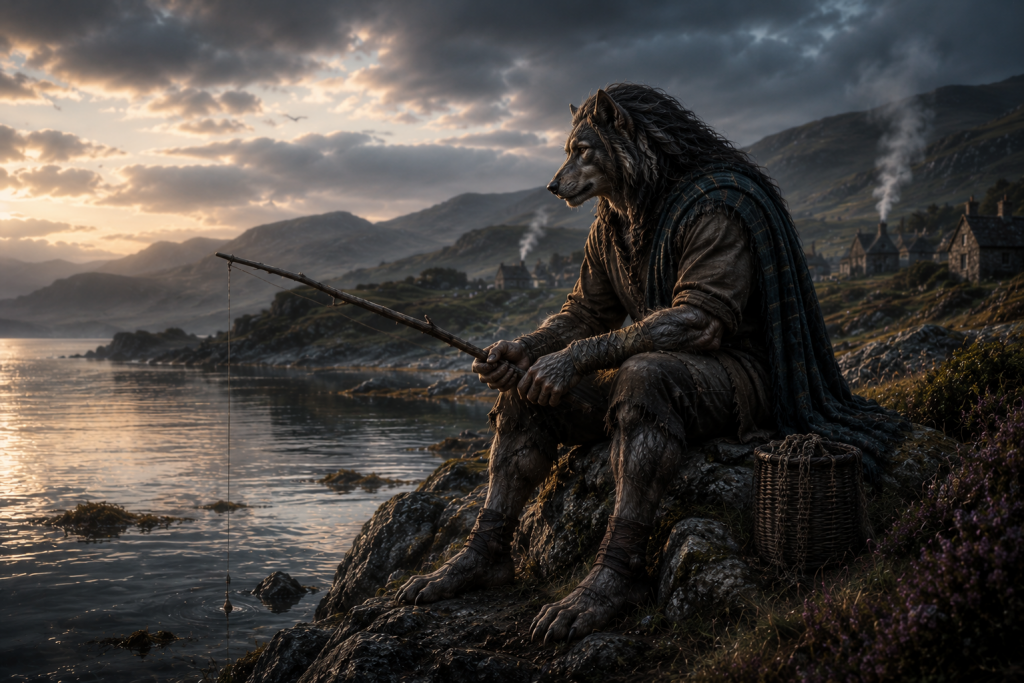
Vseslav Bryachislavich, Prince of Polotsk, ruled from 1044 to 1101 and was by any measure one of the most remarkable rulers in the history of medieval Rus. He held Polotsk against the combined forces of the other Russian princes, briefly captured Kiev and held it as its ruler, survived capture and imprisonment in Kiev, and maintained his principality against sustained military pressure for over fifty years. He was also, according to the Russian literary tradition that remembered him, a werewolf.
The accounts are not straightforward allegations of werewolfism in the Western European sense. They are poetic and oblique, embedded in texts that treat Vseslav’s wolf nature as one aspect of his extraordinary character rather than as a crime or a diabolical transgression. He ran as a wolf at night. He reached distant places by dawn that no ordinary man could have reached. He moved through the world in ways that suggested something more than human ability, and the wolf was the tradition’s way of naming that something.
The Sources
The primary source for Vseslav’s wolf nature is the Tale of Igor’s Campaign, the great twelfth century Russian epic poem that commemorates a failed military expedition of 1185. Vseslav appears in the poem as a figure from the recent past whose life illustrates the themes of fate, treachery, and the mysterious gifts of great rulers. The poem describes him leaping at night as a blue-grey wolf, running to Tmutorokan before the cock’s crow, crossing the path of the great Khors as a wolf.
Khors was the Slavic god of the sun, and crossing his path as a wolf meant travelling so fast and so far through the night that Vseslav was in motion while the sun was absent and arrived before it rose. The image is of a ruler whose power operated in the liminal space between night and day, who moved at supernatural speed through the darkness, who was something other than ordinary in the hours when ordinary men slept.
The Primary Chronicle, the foundational text of early Russian history, notes that Vseslav was born with a caul, the amniotic membrane sometimes covering an infant’s face at birth, which was widely understood across Slavic tradition as a mark of supernatural gifts. His mother was advised to have him wear the caul as an amulet, and the chronicle notes that he wore it for his entire life. The caul tradition and the wolf tradition are not explicitly connected in the sources but they belong to the same understanding of Vseslav as a person marked from birth with qualities outside the ordinary human range.
The Political Context
Vseslav’s political career was genuinely extraordinary and provides a context within which the supernatural accounts make a kind of sense. He was captured by treachery in 1067, seized by the princes of Kiev during a supposed negotiation under guarantee of safe conduct, and imprisoned in a pit in Kiev. The following year a popular uprising freed him and acclaimed him prince of Kiev, a reversal of fortune so dramatic that it looked to contemporaries as if something more than ordinary luck was operating. He held Kiev for seven months before the legitimate princes returned with Cuman allies and he withdrew to Polotsk.
A ruler who survives treachery, escapes imprisonment, and is acclaimed by a city’s population is a ruler around whom legends accumulate. The wolf tradition attached to Vseslav is partly a way of describing a quality his contemporaries and successors perceived in him: a capacity for movement and reversal that exceeded what ordinary political and military ability should have produced. He was a wolf in the sense that he operated by different rules from other princes and achieved things that ordinary princes should not have been able to achieve.
Further Reading
If this article sparked your interest, these are the books worth reading next.
The Beast of Gévaudan
by Jay M. Smith — the most thorough historical investigation into the creature that terrorised southern France between 1764 and 1767, and what the historical record actually reveals about what it was.
The Werewolf Book: The Encyclopedia of Shape-Shifting Beings
The most comprehensive reference on the werewolf tradition across world cultures — every regional variant, every historical case, every folkloric and literary expression of the shape-shifting being.
The Werewolf in Lore and Legend
by Montague Summers — the classic scholarly treatment of werewolf belief, drawing on primary sources from across Europe. Dense, serious, and still the best single academic treatment of the tradition.
For more on the werewolf tradition, the Lycaon article covers the mythological origin of the werewolf in ancient Greece. The Vukodlak article covers the Slavic werewolf-vampire tradition. The Dark Origins of the Werewolf article covers the broader history of werewolf belief.
Never miss a myth
Thank you for being here. The site is brand new and every subscriber genuinely means something to me. If you're here, you care about this stuff as much as I do - and that's all the reason I need to keep going. New stories, videos and dark folklore from around the world, straight to your inbox. No algorithm. Just the stories, when they're ready.