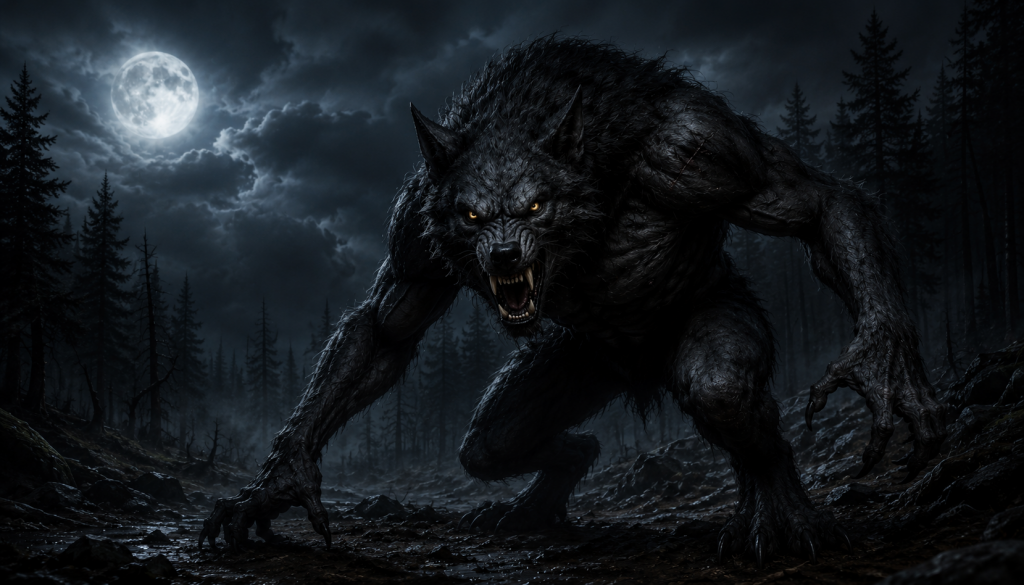
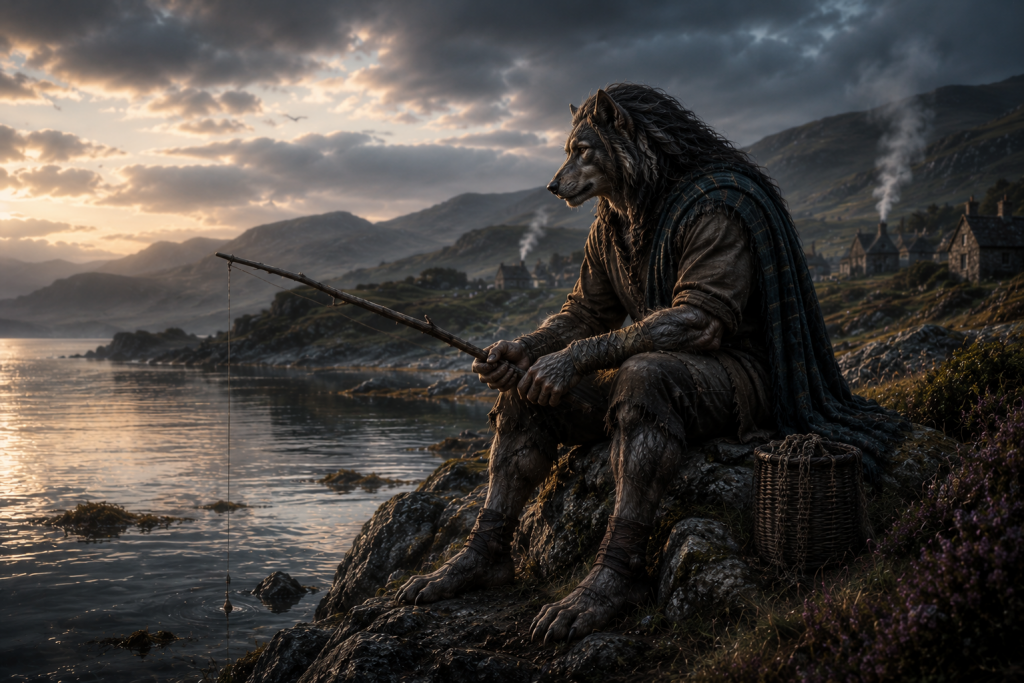
The werehyena is one of the oldest shapeshifter traditions in the world and one of the least known outside Africa. It appears in the folklore of Ethiopia, Morocco, Tanzania, and several other African countries, and it predates the European werewolf tradition in its documented history by a considerable margin. Ancient Egyptian texts contain references to were-hyenas, and the creature’s presence in Arabian Nights stories indicates that the tradition was widespread across the Islamic world by the medieval period.
The hyena is not a wolf, and the werehyena tradition is not simply the African equivalent of the European werewolf. The hyena occupies a specific and complex position in African supernatural belief that gives the werehyena a character quite different from its European counterpart. The hyena is associated with witchcraft, with the night, with the consumption of the dead, and with a boundary-crossing quality that the wolf does not carry in the same way. A werehyena is not simply a human who becomes a predatory animal. It is a human who becomes a creature specifically associated with the most transgressive forms of supernatural power.
The Ethiopian Tradition
In Ethiopia the werehyena tradition is particularly well developed and takes several forms. The most common describes blacksmiths, potters, and other craftspeople of specific ethnic groups as having the ability to transform into hyenas at night. These groups, the Buda people in Ethiopian tradition, are understood to possess the evil eye as well as the transformation ability, and their supernatural danger is partly connected to their social position as artisan castes who occupy a liminal space in Ethiopian social structure: necessary to the community, socially marginalised within it, and attributed with powers that reflect both their usefulness and their perceived otherness.
The Buda tradition is not a simple story of monsters. It is a complex social phenomenon in which a specific community’s supernatural reputation reflects their position in a hierarchical society, and in which the attributed powers, real in the belief of those who attribute them, function to explain misfortune, illness, and the general category of harm that comes from sources that cannot be visibly identified. The werehyena is the explanation for why the blacksmith’s neighbour’s child sickened after the blacksmith passed by.
The Moroccan Tradition
In Morocco the werehyena appears in a tradition where certain individuals are understood to be hyenas by day and humans by night, the reverse of the Ethiopian pattern. These creatures, called Bultungin in some accounts after a Hausa term for the same figure, inhabit the spaces between settlements and are associated with the consumption of corpses, which connects them to the hyena’s actual scavenging behaviour and gives the supernatural creature a specifically mortuary quality.
The Moroccan tradition also includes accounts of hyenas that can capture humans through a specific kind of supernatural breath or gaze, leading their victim in a trance state to follow them into the wilderness. This capturing quality, the ability to compel a human to follow the creature against their will, is one of the most widely distributed elements of the African werehyena tradition across multiple countries and cultures.
The Hyena’s Symbolic Position
The hyena’s position in African supernatural belief reflects its actual ecological behaviour in ways that the wolf’s position in European belief does not quite replicate. The hyena is primarily a scavenger of the dead, a creature that consumes corpses. In cultures where the proper burial and non-consumption of the dead is a significant religious and social obligation, an animal that violates that boundary by eating what should be left in peace is already transgressive in a way that a predator like the wolf, which kills living prey in the ordinary way of predators, is not.
The werehyena therefore carries a specific charge of boundary violation that the European werewolf does not have in the same degree. It does not just kill. It transgresses the boundary between the living and the dead in its very nature, and the human who transforms into one participates in that transgression.
Further Reading
If this article sparked your interest, these are the books worth reading next.
The Beast of Gévaudan
by Jay M. Smith — the most thorough historical investigation into the creature that terrorised southern France between 1764 and 1767, and what the historical record actually reveals about what it was.
The Werewolf Book: The Encyclopedia of Shape-Shifting Beings
The most comprehensive reference on the werewolf tradition across world cultures — every regional variant, every historical case, every folkloric and literary expression of the shape-shifting being.
The Werewolf in Lore and Legend
by Montague Summers — the classic scholarly treatment of werewolf belief, drawing on primary sources from across Europe. Dense, serious, and still the best single academic treatment of the tradition.
For more on the shapeshifter traditions of the world, the Bouda article covers the specific Ethiopian werehyena tradition in greater depth. The Impundulu article covers the South African supernatural creature with its own witchcraft associations. The Dark Origins of the Werewolf article covers the broader history of werewolf and shapeshifter belief.
Never miss a myth
Thank you for being here. The site is brand new and every subscriber genuinely means something to me. If you're here, you care about this stuff as much as I do - and that's all the reason I need to keep going. New stories, videos and dark folklore from around the world, straight to your inbox. No algorithm. Just the stories, when they're ready.