In the Hall of Two Truths, after death, every Egyptian faced a judgment that determined the remainder of their existence. Not a judgment that sent them to reward or punishment, as many later traditions would understand the afterlife. A judgment that either admitted them to paradise or destroyed them completely.
There was no Egyptian hell. There was no realm of eternal punishment where the wicked suffered in proportion to their crimes. What faced those who failed the judgment was not suffering. It was annihilation: the complete and permanent destruction of the soul, the removal of the person from existence entirely. The second death. The fate worse than any hell, because hell at least allows continued existence. The second death simply ended everything.
The mechanism of this judgment, the weighing of the heart against the feather of Maat, is the most important single ritual concept in Egyptian religion and the image most frequently depicted in Egyptian funerary art. Understanding what it meant and how the Egyptians prepared for it is understanding the moral and theological heart of the tradition.
The Hall of Two Truths
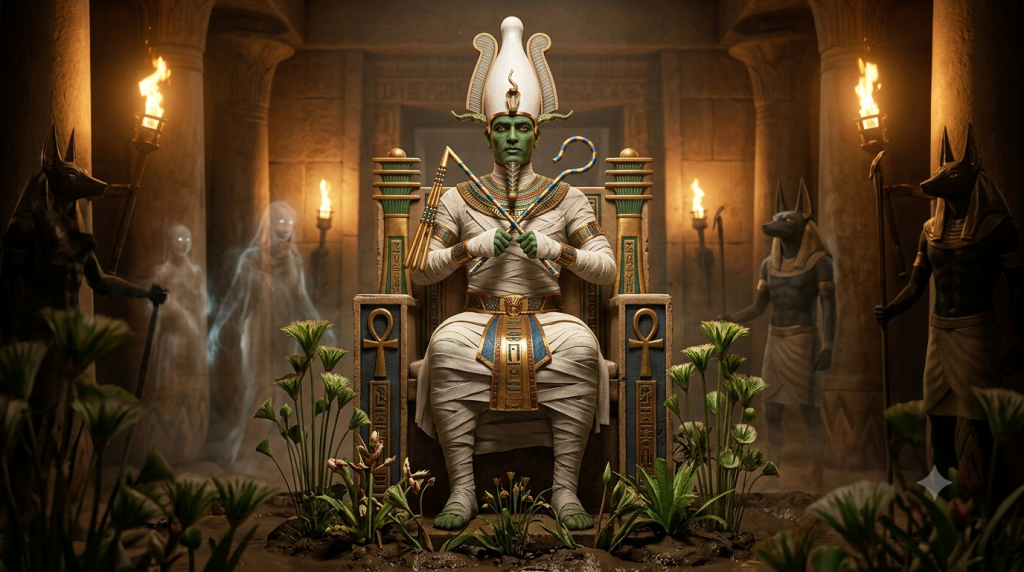
The judgment took place in the Hall of Two Truths, called Maaty in Egyptian, a name reflecting the dual nature of truth as both cosmic principle and divine goddess. The hall was presided over by Osiris, ruler of the dead, seated on his throne at the far end. On either side of the hall sat the forty-two Assessors of Maat, one for each of the forty-two nomes of Egypt, each responsible for judging a different category of moral failure. Anubis conducted the weighing. Thoth recorded the result. Maat herself, or her symbolic feather, provided the standard against which the heart was measured. Ammit the Devourer waited beside the scales for hearts that did not balance.
The forty-two assessors are one of the most significant details of the judgment scene and one of the least commonly discussed. Each of them had a name and a specific sin that was their domain. They are sometimes called the forty-two judges, and their existence means that the judgment was not a single evaluation against a single standard but a comprehensive review across forty-two distinct categories of moral behaviour. The deceased had to satisfy not just the scales but forty-two individual divine evaluators, each expert in a specific form of wrongdoing.
Maat: What Was Being Measured
The feather against which the heart was weighed was the feather of Maat, and Maat was not simply a goddess of truth in the conventional sense. Maat was the cosmic principle of truth, justice, order, balance, and harmony that the Egyptians understood as the foundation of the universe. Its opposite was isfet, chaos, injustice, and disorder. The maintenance of maat was the primary responsibility of the pharaoh, the justification for the priesthood, and the standard by which every individual’s life would ultimately be judged.
The feather in particular was the ostrich feather that Maat wore in her headdress, and it weighed almost nothing. This was the point. The standard was not perfection but sincerity: not a life without any moral failures but a life genuinely oriented toward truth, fairness, and proper behaviour. The feather was so light that only a heart genuinely weighted down by wrongdoing, by accumulated dishonesty and cruelty and violation of the principles of right living, would fail to balance with it. The ordinary human life, imperfect but well-intentioned, could pass the test. Only the genuinely corrupt heart, heavy with the weight of real wrongdoing, would fail.
This is a considerably more sophisticated moral theology than a simple record of good and bad deeds. It describes a qualitative condition of the heart, an accumulated orientation toward or away from the principles of right living, rather than a quantitative calculation of acts. The heart that failed the weighing was not one that had committed too many sins. It was one whose fundamental orientation, its characteristic relationship to truth and to others, had been toward isfet rather than maat.
The Negative Confession
Before the weighing, the deceased made the Negative Confession, also called the Declaration of Innocence, addressing each of the forty-two assessors in turn and declaring themselves innocent of the sin that assessor governed. The confessions were stated in the form I have not, a comprehensive list of negative statements about what the person claimed not to have done.
The forty-two declarations varied across different versions of the Book of the Dead, but the general categories they covered include: murder, theft, dishonesty in speech or in measurement, eavesdropping, causing weeping in others, sexual transgressions, slander, pride, cruelty, and various forms of ritual impurity. Together they constitute a comprehensive moral code that governed how Egyptians were expected to live, stated as negatives because the judgment required claiming their absence rather than asserting their presence.
The social significance of the list is considerable. It includes prohibitions against economic dishonesty such as cheating on grain measures, which was the most common form of commercial fraud in a grain-based economy. It includes prohibitions against causing suffering to the poor and to animals. It includes prohibitions against speaking ill of one’s neighbours and against pollution of the sacred Nile. The judgment of the dead encoded the full scope of what Egyptian society expected of its members, from the grandest religious obligations to the most practical economic ethics.
Whether the Negative Confession was understood as an actual truth test or as a magical formula is a question the tradition does not clearly answer. The Chapter 30B heart scarab spell, placed directly on the mummy’s chest and addressed to the heart asking it not to testify against its owner at the judgment, implies that the heart might give evidence contrary to the owner’s claim, which in turn implies the judgment could detect dishonesty in the confession. But the magical preparation of the deceased also implies that the confession’s effectiveness could be enhanced through proper ritual preparation. The tradition held both positions simultaneously without apparent discomfort.
The Weighing
After the Negative Confession, Anubis placed the heart on one side of the scales and the feather of Maat on the other. This is the moment depicted in countless papyri and tomb paintings: the golden scales, the jackal-headed god adjusting the balance, the heart and the feather in their respective pans, the watching gods, and Ammit crouching beside the scales waiting.
The heart was the appropriate organ for judgment because in Egyptian physiology the heart was the seat of everything that made a person who they were: not just emotion but consciousness, memory, personality, and moral character. The brain was considered unimportant. It was removed during mummification and discarded. The heart was preserved in the body itself, protected by the heart scarab placed over it, because the heart was needed for the judgment. Everything that had made a person who they were was in the heart, and the scales could measure the quality of that person by measuring the weight of that heart.
If the heart balanced with or was lighter than the feather, Thoth recorded the result as favourable, and the deceased was declared makheru, true of voice or justified. Anubis then led the deceased to Osiris, who admitted them to the Field of Reeds, the Egyptian paradise where they would live an eternal version of the best aspects of their earthly life: working, farming, meeting their loved ones again, enjoying all the activities that made life good, but without illness, age, or eventual death.
If the heart was heavier than the feather, Ammit ate it.
The Field of Reeds
The Field of Reeds, Aaru in Egyptian, was not simply an eternal resting place. It was a perfected version of the Egyptian world: fertile land, flowing water, harvests that required no labour to produce, the company of family members who had already made the journey, the presence of the gods. The deceased worked there, farmed there, enjoyed music and feasting and all the activities that the Book of the Dead promised would be available.
The inclusion of work in paradise is characteristic of the Egyptian understanding of the good life. The Field of Reeds did not offer leisure as its primary gift. It offered purposeful activity in conditions free from the hardships that made earthly activity difficult: no drought, no disease, no oppressive authorities, no death waiting at the end. The deceased could do the things that made life meaningful without the conditions that made life painful.
Ushabti figures, the small servant-shaped amulets placed in tombs in enormous quantities, were designed to perform any labour that might be required of the deceased in the Field of Reeds in their place. A well-provisioned tomb might contain hundreds of them, one for each day of the year and extras for supervision. The Egyptians were thorough in their preparation for paradise, and they saw no contradiction between hoping for eternal joy and also ensuring that any required work would be covered.
The Moral Significance
The Weighing of the Heart is Egyptian moral theology in its most concentrated form, and its significance for understanding what kind of moral universe the Egyptians believed they inhabited is difficult to overstate.
It tells us they believed in personal moral accountability beyond death. Not just social consequences in this life but cosmic consequences after it, administered by an impartial divine mechanism that could not be bribed, deceived, or appealed to by social status. The pharaoh’s heart was weighed against the same feather as the farmer’s heart. The priest’s heart was weighed against the same standard as the craftsman’s. Wealth, position, and social power were irrelevant in the Hall of Two Truths. Only the heart mattered.
It tells us they believed that living well was ultimately self-interested in the deepest possible sense. Every dishonest act, every cruelty, every violation of maat added weight to the heart that Ammit was waiting to eat. The moral instruction the tradition offered was not simply about how to treat others well. It was about what a life of wrongdoing did to the person living it, accumulating in the heart until the heart could not balance with the lightest feather in existence.
And it tells us they believed that the standard for paradise was achievable. The feather was almost weightless. The ordinary human life, with its ordinary mixture of good and bad, its genuine efforts toward right behaviour and its inevitable failures, was expected to be light enough. The judgment was designed to catch the genuinely corrupt, not to exclude the imperfect. Which means the tradition was not describing a cosmic lottery or an impossible standard but a genuine aspiration toward right living backed by the ultimate possible consequence.
For more on the figures who conduct the judgment, the Anubis article covers the jackal god who operates the scales and guides the dead to the hall. The Thoth article covers the divine scribe who records the result. The Ammit article covers the Devourer who waits beside the scales for hearts that do not balance. The Osiris article covers the ruler of the dead who presides over the judgment and admits the justified to his realm.
Never miss a myth
Thank you for being here. The site is brand new and every subscriber genuinely means something to me. If you're here, you care about this stuff as much as I do - and that's all the reason I need to keep going. New stories, videos and dark folklore from around the world, straight to your inbox. No algorithm. Just the stories, when they're ready.