Ammit was not worshipped. This is the first and most important thing to understand about her. In a religion with over two thousand documented deities, Ammit occupied a unique position: she was not a deity to be propitiated, appealed to, or asked for favour. No temples were built in her name. No priests served her. No prayers were offered to her. She was feared rather than revered, because what she represented was not a force to be invoked but a consequence to be avoided.
She waited in the Hall of Two Truths, beside the scales on which the dead were judged, and if the heart placed on the scales was heavier than the feather of Maat, she ate it.
That was the second death. Not simply death, which the Egyptians understood as a transition into the afterlife, but complete and permanent annihilation: the destruction of the soul itself, the erasure of everything that had made a person who they were, the removal of existence from the cosmic record. Death could be survived and transformed into something new. The second death could not be survived. It simply was the end.
The Egyptians feared this more than they feared ordinary death. The entire elaborate apparatus of Egyptian funerary religion, the mummification, the Book of the Dead, the canopic jars, the Opening of the Mouth ceremony, the spells and amulets and prayers, was built around ensuring that the heart passed the weighing. Avoiding Ammit was the purpose of the tradition’s most important practical theology.
The Composite Body
Ammit’s physical form is one of the most precisely designed in Egyptian mythology, and the precision is the point. She is a composite of the three largest man-eating animals known in ancient Egypt: the head of a crocodile, the forequarters of a lion, and the hindquarters of a hippopotamus.
Each of these animals was genuinely dangerous to humans in the Egyptian world. Nile crocodiles were among the most efficient killing machines in existence and were a constant presence along the river that Egypt’s entire population lived beside. Lions inhabited the desert margins and were formidable predators. The hippopotamus, which modern audiences often underestimate, was and is one of the most dangerous animals on earth, responsible for more human deaths in Africa than almost any other large animal.
The combination of the three most dangerous animals in Egypt into a single form created a being that represented the maximum possible destructive threat in the natural world. Ammit was not simply threatening. She was the concentrated essence of every natural threat the Egyptians encountered in their landscape, unified in a single body that waited patiently beside the scales for the hearts that did not balance.
The composition also carries a symbolic dimension: the crocodile represents the destruction of water, the lion the destruction of land, the hippopotamus the destruction of the boundary between them, the margin of the Nile where the river meets the shore. Together they encompass every domain of the Egyptian world, which means that there is nowhere to go and no terrain to escape to when Ammit acts.
The Second Death
The concept of the second death is the most philosophically significant idea in Egyptian afterlife theology and the one that most sharply distinguishes the Egyptian understanding of moral consequence from other ancient traditions.
Many ancient cultures had underworld realms to which the dead went regardless of how they had lived: the Greek Hades, the Mesopotamian Kur, the Hebrew Sheol. The Egyptians had the Duat, but they also had a positive afterlife destination, the Field of Reeds, and access to that destination was conditional on the judgment. What distinguished the Egyptian system was not the existence of a good and a bad afterlife destination but the existence of the second death: complete non-existence as the ultimate consequence of moral failure, rather than simply a worse version of continued existence.
When Ammit ate a heart, the person it belonged to did not go somewhere unpleasant. They stopped being. The soul became restless, unable to proceed anywhere, unable to return anywhere, dissolving eventually into nothing. This was the fate worse than any hell in the conventional sense, because hell still contains the sinner and gives them a continued existence, however miserable. The second death removed the sinner from the universe entirely.
The moral theology this encodes is sophisticated. It is not enough to avoid punishment in this life. The accumulated moral weight of a lifetime is inscribed in the heart and cannot be hidden from the scales. The heart knows what was done and cannot be made to forget. Every dishonest act, every cruelty, every violation of maat added weight to the heart that Ammit was waiting to eat.
The Spells Against the Heart
The Book of the Dead contains a chapter, Chapter 30B, that was placed in tombs as a carved scarab amulet laid directly on the heart of the mummy. The spell it contains is addressed to the heart itself:
O my heart of my mother, O my heart of my different ages, do not stand up against me as a witness, do not oppose me in the tribunal, do not rebel against me before the guardian of the scales.
This is the dead person speaking to their own heart, asking it not to testify against them at the judgment. The heart in Egyptian theology was both the self and an independent witness to the self’s actions: it knew what had been done and could choose to reveal or conceal it. The spell was an attempt to ensure the heart’s silence or cooperation rather than its honest testimony, which raises interesting questions about what the tradition believed the judgment was actually testing.
If the spell could work, the judgment could be manipulated by the magically prepared. If it could not work, its inclusion in the most important funerary text in Egyptian religion was meaningless. The tradition appears to have held both positions simultaneously: the judgment was absolute and could not be deceived, and also there were spells to help you at the judgment. Egyptian theology was comfortable with apparent contradictions in ways that modern readers sometimes find uncomfortable.
What She Represents
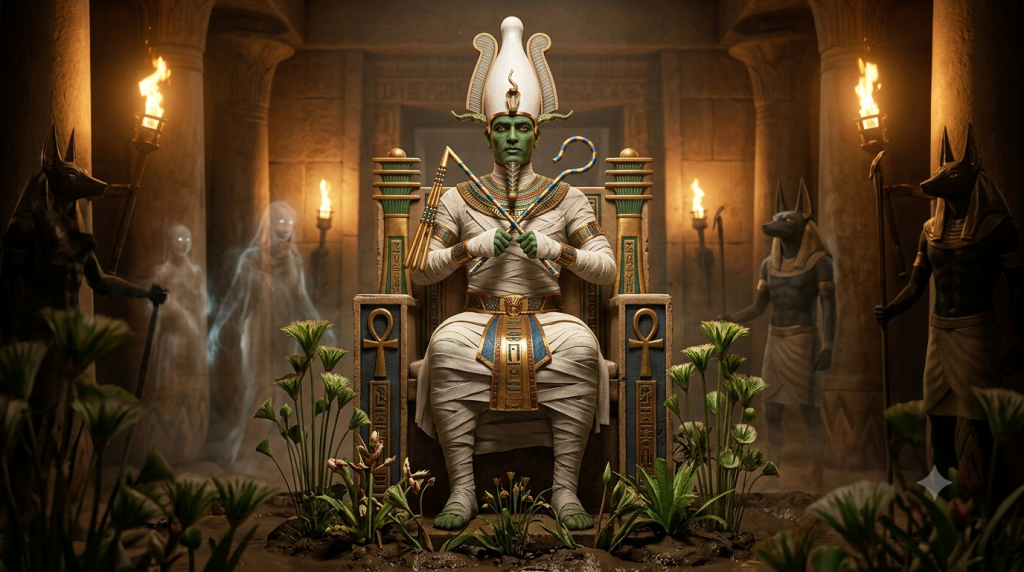
Ammit occupied a position in Egyptian theology that is unusual across world religions: she was a necessary component of the divine moral order who was not herself divine in any honoured sense. She did not cause the judgment or determine its outcome. She simply executed the consequences of a judgment made by others, by Anubis who weighed the heart, by Thoth who recorded the result, by Osiris who presided. She was the mechanism of consequence rather than its author.
This gave her a kind of theological cleanliness that a god of evil or punishment would not have had. She was not malevolent. She was not interested in the destruction she performed. She simply waited, and if the scales produced a particular result, she acted on it. She was the embodiment of consequence as impersonal as gravity: not angry, not satisfied, not disappointed. Simply what happened next when the judgment went a particular way.
No prayers were offered to Ammit because there was nothing to appeal to. She would not be moved by devotion or by grief or by argument. The only way to avoid her was not to appear before her with a heavy heart. The only preparation that mattered was a life lived in accordance with maat, which is exactly the moral logic that the tradition was designed to convey.
For more on the Egyptian tradition, the Anubis article covers the jackal god who operates the scales at which Ammit waits and whose judgment determines whether she acts. The Osiris article covers the ruler of the dead who presides over the judgment in which Ammit plays her role. The Weighing of the Heart article covers the full ceremony of judgment including the forty-two judges, the Negative Confession, and what the Field of Reeds offered to those whose hearts passed.
Never miss a myth
Thank you for being here. The site is brand new and every subscriber genuinely means something to me. If you're here, you care about this stuff as much as I do - and that's all the reason I need to keep going. New stories, videos and dark folklore from around the world, straight to your inbox. No algorithm. Just the stories, when they're ready.