Thoth invented hieroglyphics. He also invented mathematics, medicine, science, law, and magic. He is the divine scribe who records the results of the weighing of the heart at the judgment of the dead. He healed the damaged eye of Horus after Set tore it out during their conflict, restoring the moon to the sky. He acted as mediator in the eighty-year dispute between Horus and Set when no other god could broker an agreement. He was the tongue of Ra, the voice through which the sun god’s will became action.
The range of Thoth’s domains is not the result of accumulated mythology piling attributes onto a single figure over time, though that process certainly contributed. It reflects something specific about what the Egyptians believed wisdom and knowledge actually were: not a collection of separate disciplines but a unified capacity for understanding the order of things, which when applied to different areas of human and divine life produces different specific gifts. The god who understands the deep structure of reality can record it in writing, calculate it in mathematics, heal with knowledge of the body, and judge with knowledge of the heart. Thoth’s many domains are expressions of a single underlying nature.
Ibis and Baboon
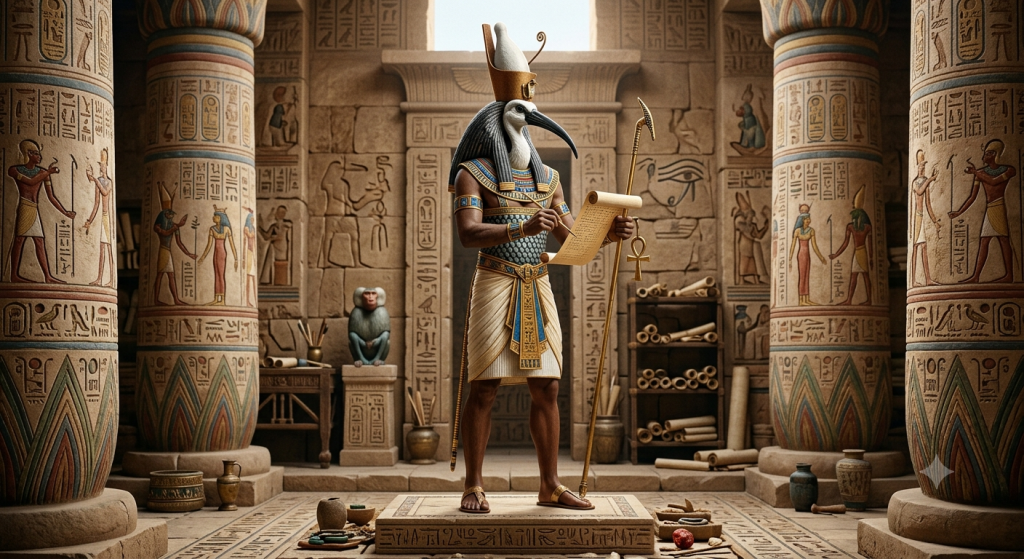
Thoth is depicted in two animal forms that seem at first to have little in common. The ibis-headed man is his primary form: a human body with the long curved bill of the sacred ibis, holding a reed pen and a papyrus scroll. The ibis bill resembles the curve of the crescent moon, connecting him to his lunar domain. It also resembles the shape of a reed pen, connecting him to writing. The practical instrument of the scribe and the celestial body of the night sky share a visual form in the beak of his sacred bird.
The baboon form appears less frequently but is equally significant. Baboons were observed by the Egyptians to make loud vocalisations at dawn, turning their faces toward the rising sun. The Egyptians interpreted this as the baboons greeting or even calculating the sunrise, attributing to them a knowledge of the sun’s schedule that resonated with Thoth’s role as measurer of time. At Hermopolis, his primary cult centre, the sacred necropolis at Tuna el-Gebel contains catacombs housing millions of mummified ibises and baboons, animals sacrificed and preserved in his honour across centuries of religious practice.
The Invention of Writing
The Egyptian tradition credited Thoth with inventing hieroglyphics, which they called the words of god, medu-netjer. This was not a casual attribution. In Egyptian religious thought, writing was not simply a practical technology for recording information. It was a form of power: the ability to fix meaning in permanent form, to make words outlast the speakers who uttered them, to create through inscription. The gods’ names written in a cartouche were protected by the writing itself. The spells in the Book of the Dead worked because they were written correctly. The inscriptions on temple walls were not records of divine activity but participations in it.
If Thoth invented writing, he invented the mechanism through which religious power operated. The scribe who copied a funerary text was working in Thoth’s tradition, using a technology that was itself divine in origin. This is why scribes held an elevated social position in Egyptian society and why the scribal profession was understood as something more than a trade: it was participation in a divine gift.
The Egyptians believed that Thoth was also the author of the Book of the Dead and the Pyramid Texts: not in the sense that he composed them on a specific occasion, but that these sacred texts embodied the wisdom he had given to humanity and bore his authority throughout. When a priest recited a spell from the Book of the Dead, he was, in a precise sense, speaking Thoth’s words.
The Healer of the Eye
During the conflict between Horus and Set, Set damaged or destroyed Horus’s left eye, the moon. In some versions he tears it out entirely. In others he injures it in combat. Thoth intervened and healed the eye, restoring it and returning the moon to the sky. The healed eye, the wedjat, became the most powerful protective symbol in Egyptian culture.
Thoth’s role as healer of the eye connects his wisdom domain to his lunar domain in a specific way: the moon is damaged by the chaos of the conflict between the gods, and only wisdom can restore it. The association between knowledge and healing is encoded in the story rather than simply asserted: Thoth restores the eye because he understands how it should be, which is the knowledge that healing requires.
This role as healer extended beyond the specific instance of the Eye of Horus. Thoth was understood as a god of healing more generally, and his knowledge of magic and medicine were applied to both divine and human illness. In the myths of Horus’s childhood in the marshes, when the child was stung by scorpions or afflicted by disease, it was Thoth who provided the healing spells that Isis used to save him.
The Mediator and the Scribe of the Gods
Thoth’s role in the Contendings of Horus and Set illustrates his position in the divine community more clearly than any other myth. When the tribunal of the gods could not resolve the dispute, when Osiris from the underworld sent angry letters complaining about the delay, when Ra himself seemed to favour Set against the weight of legitimate argument: Thoth consistently intervened on the side of justice and order while remaining politically neutral enough to be trusted by all parties.
He is described as the heart and tongue of Ra, which in Egyptian anatomical thinking meant the seat of intelligence and its expression. Ra thinks through Thoth and speaks through Thoth. The creative power of the sun god becomes actual through the mediation of the god of wisdom and language, which gives Thoth a cosmic significance that goes beyond his specific functions. He is the mechanism through which divine intelligence becomes effective in the world.
At the weighing of the heart in the Hall of Two Truths, Thoth stands beside the scales with his palette and reed pen, recording the results. When Anubis weighs the dead person’s heart against the feather of Maat, Thoth writes down the verdict. His presence at the judgment is not incidental: the record he keeps is the cosmic account of all things, the permanent register of what has happened, which is another expression of the writing function he invented and embodies.
Hermes Trismegistus: The Legacy Beyond Egypt
When the Greeks encountered Egyptian religion, they identified Thoth with their own Hermes: both were gods of writing and communication, both served as psychopomps guiding souls, both were associated with wisdom and magic. The Egyptian Thoth was known in the tradition as Twice-Great and then as Three-Times-Great, titles reflecting the magnitude of his wisdom across different domains. When the Greek identification produced the hybrid figure Hermes Trismegistus, Hermes the Thrice-Great, the figure became the supposed author of a body of philosophical and magical literature known as the Hermetic texts.
The Hermetic tradition, built on the supposed teachings of Hermes Trismegistus, influenced Western esoteric philosophy, alchemy, and magical practice from late antiquity through the Renaissance and beyond. The Emerald Tablet, the Corpus Hermeticum, the Kybalion: all of these trace their supposed authority back to the hybrid Greek-Egyptian figure who combined Hermes and Thoth. The ibis-headed god of the Nile became, through this process of cultural transmission and transformation, one of the founding authorities of the Western occult tradition.
That lineage from Thoth to Hermes Trismegistus to the Hermetic tradition is one of the longer and stranger cultural journeys in the history of religious ideas, and it is one more illustration of why Thoth’s domains, writing, wisdom, magic, the preservation of knowledge, have proven so durable and so transferable across different cultures and different periods.
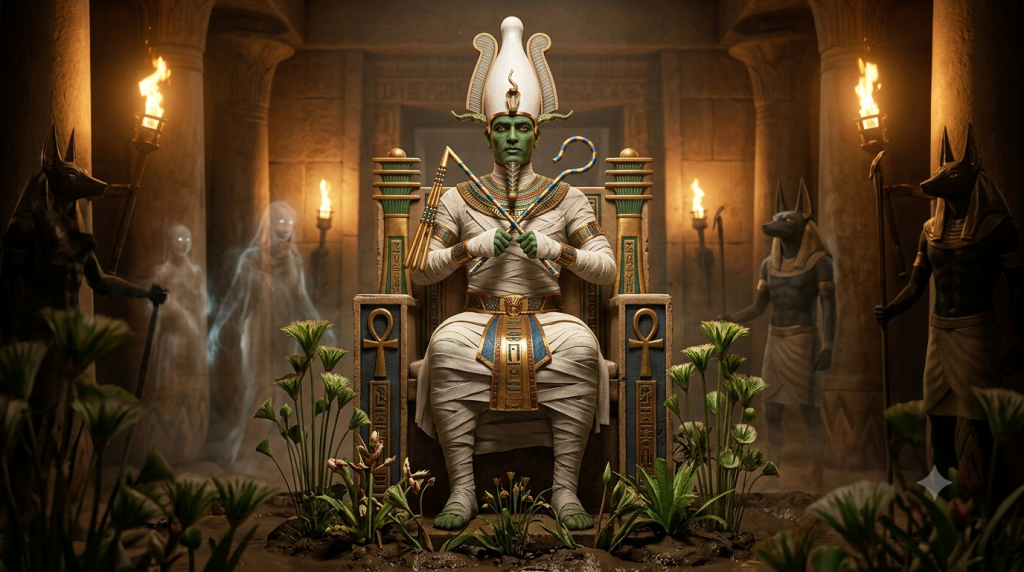
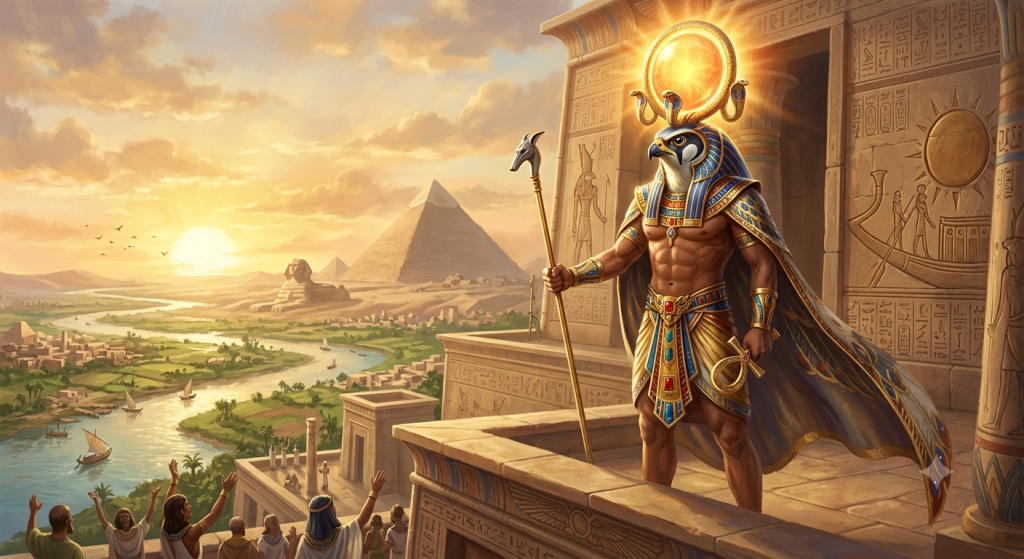
For more on the Egyptian tradition, the Osiris article covers the murdered king whose resurrection Thoth assisted and whose judgment Thoth records. The Horus article covers the falcon god whose eye Thoth healed and whose dispute with Set Thoth mediated. The Weighing of the Heart article covers the judgment ceremony at which Thoth serves as the divine scribe.
Never miss a myth
Thank you for being here. The site is brand new and every subscriber genuinely means something to me. If you're here, you care about this stuff as much as I do - and that's all the reason I need to keep going. New stories, videos and dark folklore from around the world, straight to your inbox. No algorithm. Just the stories, when they're ready.