The Great Sphinx of Giza is the largest monolithic statue to survive from the ancient world: 73 metres long, 20 metres high, carved from a single natural outcrop of limestone left standing on the Giza plateau while the surrounding stone was quarried away for the pyramids. It was not built block by block and raised into position like the pyramids beside it. It was revealed, excavated from the living rock by taking away what surrounded it, a sculptor’s logic rather than a mason’s. The three great pyramids are additive, two million blocks stacked into artificial mountains. The Sphinx is subtractive, a shape uncovered from what was already there.
No inscription from the time of its creation tells us who built it, or why, or what it was called. The word sphinx is Greek, coined roughly two thousand years after the statue was carved. The Egyptians who made it used no single word for it that survives in any contemporary document. What it meant to the people who created it, and what they intended it to represent, must be reconstructed from later sources, from its physical relationship to the surrounding monuments, and from what the Egyptian tradition says about the kind of figure a sphinx was and what such a figure did.
Who Built It: The Mainstream View
The mainstream scholarly consensus, held by the overwhelming majority of Egyptologists, is that the Great Sphinx was built during the reign of Pharaoh Khafre of the Fourth Dynasty, around 2500 BCE. The evidence is circumstantial but cumulatively strong.
The Sphinx is physically integrated into Khafre’s pyramid complex: it sits within the causeway that connected his valley temple to his mortuary temple, and the quarry from which its body was excavated provided stone used in the valley temple’s construction. The two structures were built simultaneously, from the same quarry site, as part of the same architectural programme. The Sphinx’s face, despite centuries of erosion and damage, bears stylistic similarities to known statues of Khafre. A stele found at Giza and dating to the reign of Khufu, Khafre’s father, includes a reference that appears to mention Khafre in connection with the Sphinx’s location, though the interpretation of this fragmentary text is contested.
The most frequently cited piece of evidence is the Dream Stele, erected between the Sphinx’s paws by Pharaoh Thutmose IV around 1401 BCE, roughly eleven hundred years after the statue was built. The stele describes a dream in which the Sphinx, by then almost entirely buried by desert sand, appeared to the young prince Thutmose and promised him the throne of Egypt if he would clear the sand from around it. When Thutmose became pharaoh, he honoured the promise and restored the statue. Line 13 of the Dream Stele’s hieroglyphic text contains what appears to be the beginning of a royal cartouche, and scholars have long read this as the name Khafre. The lower portion of the stele was damaged before modern scholars examined it, making the full reading impossible to confirm, but the identification of Khafre in the text has been the standard scholarly position since the 19th century.
The Water Erosion Controversy
The mainstream consensus is not without challenge. In the early 1990s, geologist Robert Schoch and writer John Anthony West argued that the erosion patterns on the Sphinx’s body and the walls of its enclosure are most consistent with water erosion rather than wind and sand erosion, and that the amount of water erosion present implies the statue must have been exposed to prolonged heavy rainfall at some point in its history. The last period of sustained heavy rainfall in the Giza region occurred around 10,000 to 7,000 BCE, which would make the Sphinx considerably older than any other known Egyptian monument.
Mainstream Egyptologists have contested this interpretation. Alternative explanations for the erosion patterns include periodic flood events, the effects of morning dew condensation over thousands of years, and the possibility that the enclosure walls were subject to different erosion conditions than the surrounding plateau. The geological argument remains genuinely unresolved to the satisfaction of all parties, though the mainstream position continues to accept the Khafre attribution on the basis of the archaeological and textual evidence rather than accepting an alternative chronology that would require a complete revision of the currently accepted history of Egyptian civilisation.
The honest position is that the water erosion argument has not been definitively refuted, and that the mainstream consensus rests on circumstantial rather than direct textual evidence from the period of construction. No inscription from Khafre’s reign or any other Old Kingdom reign explicitly states that he built the Sphinx. The building record, if it ever existed, has not survived.
What It Was Called and What It Represented
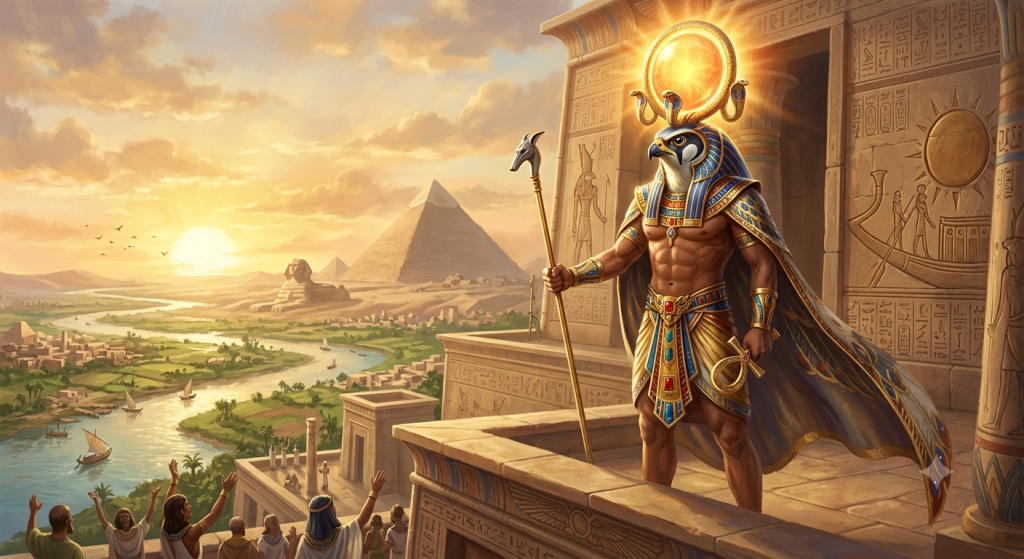
By the New Kingdom period, roughly 1550 to 1070 BCE, the Sphinx had acquired a specific divine identity. It was known as Horemakhet, Horus of the Horizon, or Ra-Horakhty, a solar deity associated with the point where the sun rises on the eastern horizon. The Sphinx faces east, toward the sunrise, and on the equinoxes the sun rises precisely at the point where the Sphinx’s gaze is directed. Whether this alignment was intentional from the moment of construction or whether the New Kingdom solar interpretation was imposed on an existing monument is a question the sources cannot definitively answer.
The figure of a sphinx in Egyptian iconography generally, not just the Great Sphinx at Giza, combines the human head with the lion’s body to express a specific theological idea: the intelligence of the human ruler united with the strength and ferocity of the lion, the most powerful predatory animal in the Egyptian landscape. Pharaohs were frequently depicted as sphinxes, embodying this combination of wisdom and power. Sphinx avenues lined the approaches to major temple complexes, the rows of guardian figures embodying the protection of the sacred space they flanked.
This general understanding of what a sphinx was and did provides the most plausible reconstruction of what the Great Sphinx meant to its builders. It was a guardian, positioned at the edge of the royal necropolis to protect the sacred space of the pyramids. Its solar orientation connected it to Ra and to the divine legitimacy of the pharaoh who was identified with Ra’s son. Its face, if it was Khafre’s, represented the divine king himself standing eternal guard over his own monuments and the necropolis of his family.
The Missing Nose and What Actually Happened
The most persistent popular story about the Sphinx’s missing nose attributes it to Napoleon’s artillery, which supposedly used the face for target practice during the French campaign in Egypt in 1798. This is demonstrably false. Drawings and descriptions of the Sphinx made before Napoleon’s arrival in Egypt already show the nose missing. The nose was gone well before the 18th century.
The most likely explanation, supported by structural evidence, is deliberate human removal at some point in the medieval period. An Arab historian writing in the 14th century described a Sufi named Muhammad Sa’im al-Dahr who was outraged by the rural population’s continued veneration of the Sphinx as a supernatural entity and had the nose chiselled off in 1378 CE. This account is consistent with the structural evidence for how the nose was removed and with the timing implied by the pre-Napoleonic sources that show the nose already absent.
The Dream Stele and What It Tells Us
The Dream Stele erected by Thutmose IV is important not just as evidence for who built the Sphinx but as a document of how the Sphinx was understood in the New Kingdom. Thutmose’s account presents the Sphinx as a divine being capable of communication, of promise, of demanding fulfilment and delivering reward. The monument buried in sand is not simply an old statue. It is an active divine presence that can appear to a sleeping prince in a dream and negotiate a political arrangement with him.
This is the Sphinx as it was understood by Egyptians who had not built it and who came to it as a monument already ancient by their own standards. They had inherited it, as they inherited the pyramids, from a past they understood as a golden age of divine kings, and they treated it with the reverence that antiquity and divine association demanded. Thutmose’s clearing of the sand and erection of the stele was both a religious act of restoration and a piece of royal propaganda: a king who had been promised the throne by the ancient solar deity himself was a king whose authority carried divine backing of the most venerable kind.
The Dream Stele was the first documented restoration of any ancient monument in history, which is its own remarkable distinction. Three and a half thousand years before modern heritage conservation, an Egyptian pharaoh cleared the sand from a buried statue and erected a monument to record that he had done so, because the statue was too sacred to leave buried and too important to leave unacknowledged.
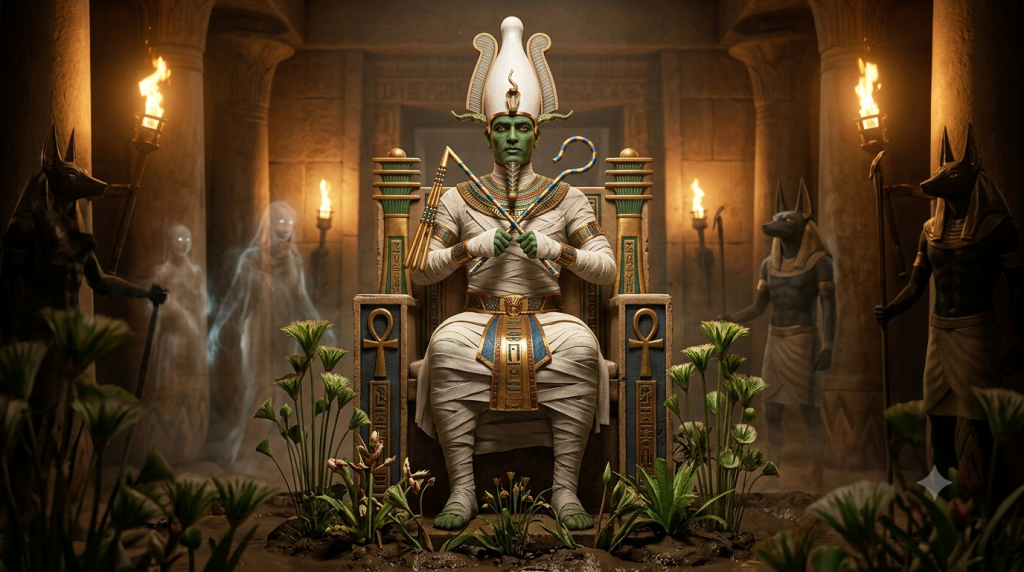
For more on the Egyptian tradition, the Ra article covers the solar deity with whom the Sphinx became identified in the New Kingdom as Horemakhet, Horus of the Horizon. The Horus article covers the falcon god whose identity the Sphinx embodied in its solar aspect. The Osiris article covers the god of the dead whose mythology made the Giza necropolis the sacred landscape the Sphinx was built to guard.
Never miss a myth
Thank you for being here. The site is brand new and every subscriber genuinely means something to me. If you're here, you care about this stuff as much as I do - and that's all the reason I need to keep going. New stories, videos and dark folklore from around the world, straight to your inbox. No algorithm. Just the stories, when they're ready.