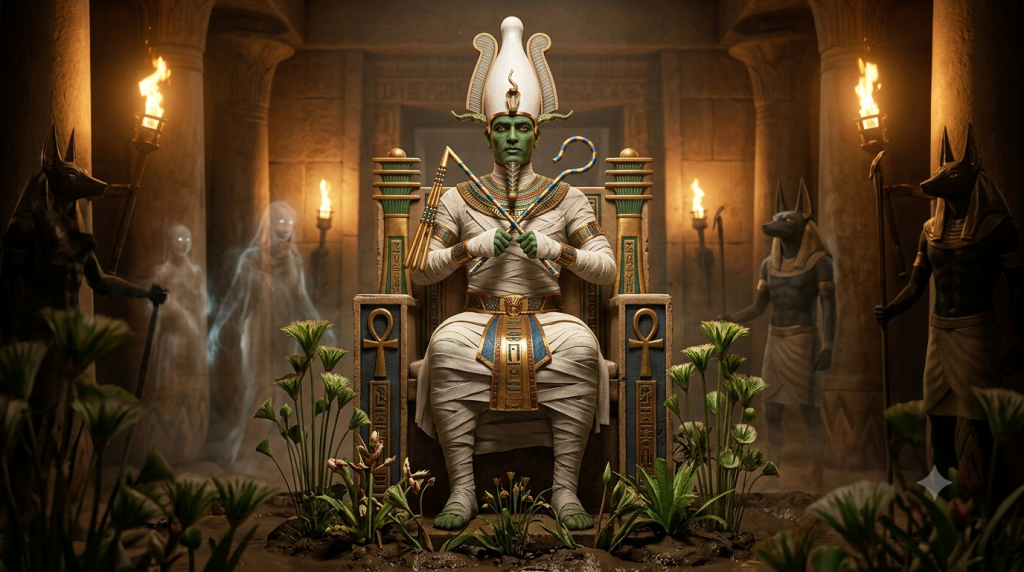
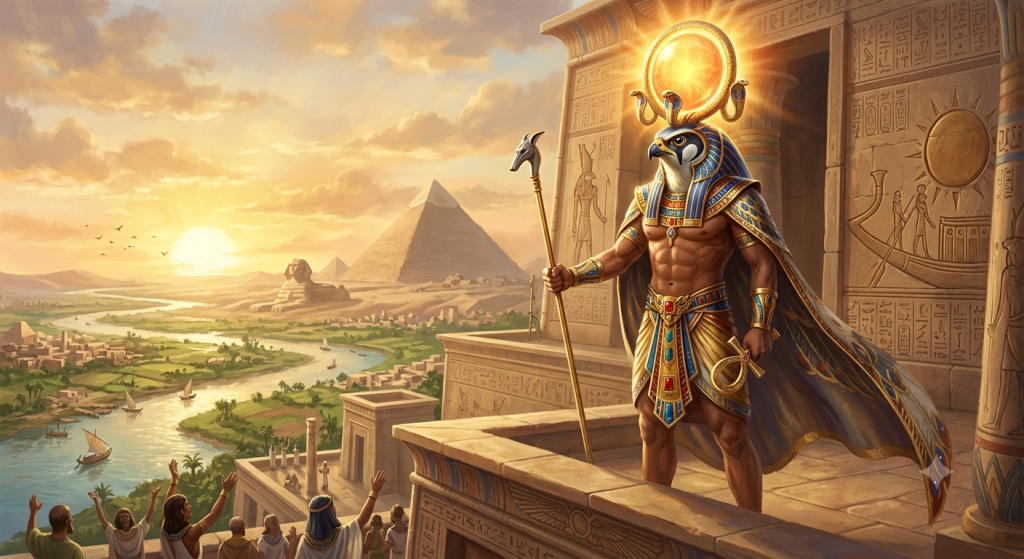
The Book of the Dead is not a book. It is not dead. And the name was given to it by a 19th century Prussian scholar who was not Egyptian, working from a papyrus produced centuries after most of the tradition it contains was developed.
The actual Egyptian title, written on the papyri themselves, is the Book of Coming Forth by Day. That is the name that tells you what the text is for: not a guide to death but a guide through death, a practical manual for the journey from the moment of dying to the successful emergence into paradise, the coming forth into the eternal day of the afterlife. It was not a text about death in the sense of death as an ending. It was a text about how to survive death and come out the other side.
This distinction matters because it changes everything about how the tradition should be understood. The Egyptians who commissioned these papyri were not preoccupied with death as such. They were preoccupied with what came after death, and they were preoccupied with it in a profoundly practical way: they wanted to know what they would encounter, what they would need to say, what names they would need to know, what spells they would need to have available. The Book of Coming Forth by Day was the preparation for a journey, and like any serious preparation for a difficult journey, it was as specific and as comprehensive as the traveller could make it.
Where It Came From
The Book of the Dead did not appear fully formed at a single moment. It evolved over nearly fifteen hundred years from older funerary traditions, and understanding its development is understanding how Egyptian funerary theology changed across the centuries.
The oldest ancestors of the Book of the Dead are the Pyramid Texts, carved on the interior walls of royal pyramids from around 2400 BCE onward. These texts were exclusively for pharaohs: the spells and declarations they contained were the property of the divine king and were inscribed in stone in the royal tomb to be available to the royal soul after death. They are the oldest religious writings in the world, and their content focuses on the pharaoh’s journey through the underworld, his identification with the gods, and his emergence into the eternal existence appropriate to divine royalty.
During the Middle Kingdom period, roughly 2100 to 1800 BCE, a revised and expanded collection of spells called the Coffin Texts appeared, inscribed not on pyramid walls but on the interior surfaces of coffins. This shift was significant: the Coffin Texts were available to wealthy non-royal Egyptians, not just pharaohs. The democratisation of the afterlife had begun. The journey through the underworld and the hope of resurrection were no longer exclusively royal possessions.
The New Kingdom, roughly 1550 BCE onward, saw the further development of these traditions into what we now call the Book of the Dead: a collection of spells written on papyrus scrolls that could be commissioned by anyone who could afford them, placed in the tomb with the deceased, and tailored to include the specific spells the commissioner or their family judged most important.
What It Was Not
The Book of the Dead was not a canonical scripture in the sense that the Bible or the Quran are canonical scriptures. There was no single authoritative text, no fixed sequence of chapters that every copy had to contain, no official body that determined what was orthodox. Different papyri contain different selections of spells from a corpus of over two hundred, arranged in different orders, with different vignettes illustrating them, produced by different scribal workshops to different standards of quality and beauty.
Some copies are magnificent works of art, produced by skilled scribes on the finest papyrus with detailed painted illustrations that rank among the most beautiful objects from the ancient world. The Papyrus of Ani, now in the British Museum, stretches over 23 metres and was produced around 1250 BCE for a royal scribe named Ani who worked in Thebes during the reign of Ramesses II. Its illustrations of the weighing of the heart, of Ani and his wife navigating the underworld, of the gods assembled in judgment, are among the finest examples of Egyptian painting that survive.
Other copies are much simpler: a few spells on a short scroll, the name of the deceased inserted into blank spaces left by the scribal workshop for that purpose. The Papyrus of Ani, for all its glory, was itself in some respects a pre-prepared document: a template papyrus onto which Ani’s name and titles were inserted at the appropriate points. The workshop had produced the master document. The client purchased what they could afford and their name was added.
This commercial dimension is important for understanding what the Book of the Dead was and who had access to it. The poor could not afford papyrus copies of any kind. They might have a few spells inscribed on their coffin, or amulets placed in their wrappings, or they might rely on the general efficacy of the mummification process and the prayers of their families. The Book of the Dead was a resource for those who could pay for it, and the quality and extent of the copy reflected the wealth of the commissioner. The afterlife, in one important sense, was not equal.
What the Spells Actually Did
The over two hundred spells in the Book of the Dead corpus cover an enormous range of specific concerns, and reading through them gives a detailed picture of what the Egyptians believed the journey after death actually involved.
Some spells deal with the preservation and restoration of the physical body. Spell 1 describes the funeral itself and the procession to the tomb. Spells dealing with the restoration of the head, the heart, the legs, and other specific body parts address the fear that the soul might arrive in the afterlife in an incomplete physical condition. The mummification process was designed to prevent this, but the spells provided additional assurance.
Many spells deal with the navigation of the underworld: knowing the names of the gates and their guardians, reciting the correct formulae at each threshold, presenting the right credentials to each challenge. The Book of Gates describes twelve sequential portals each guarded by a triad of divine beings, a gatekeeper, a watcher, and a herald. To pass through each gate required knowing the guardian’s name and the correct spell. The deceased who arrived at a gate without the necessary knowledge could be stopped and destroyed.
The famous Chapter 125, associated with the weighing of the heart, contains both the Negative Confession addressed to the forty-two assessors and the supplementary declarations made before Osiris. This chapter is the most important in the collection because it prepares the deceased for the most critical moment of the entire afterlife journey.
Other spells are more practically specific: spells to prevent the deceased from being forced to work in the afterlife, which is what the ushabti figures were designed to implement physically; spells to enable the soul to take the form of various animals; spells to allow the deceased to leave the tomb and return to the world of the living during the day; spells to provide food and drink in the afterlife. The comprehensiveness of the coverage reflects the Egyptian thoroughness in preparation: every possible difficulty was anticipated and a spell was provided for it.
The Papyrus of Ani and the Name Problem
The Papyrus of Ani was purchased in Luxor in 1888 by E. A. Wallis Budge, a curator at the British Museum, under circumstances that Egyptologists have found troubling ever since. Budge acquired it while the Egyptian antiquities authorities were distracted, smuggled it out of the country in pieces concealed in his luggage, and sold it to the British Museum for what was then a considerable sum. His translation of the papyrus, published in 1895, became the most widely read version of the Book of the Dead in English for most of the 20th century.
Budge’s translation has since been superseded by more accurate modern translations, particularly Raymond Faulkner’s 1972 version, because Budge worked with 19th century understanding of Middle Egyptian that subsequent scholarship has substantially refined. But his name for the text, the Book of the Dead, and his presentation of it as a unified canonical scripture rather than a customisable collection of spells, shaped how most Western readers have understood the tradition ever since.
The name the Prussian Egyptologist Karl Richard Lepsius gave to the text in 1842, Das Totenbuch, the Book of the Dead, was applied to a Ptolemaic period papyrus owned by a man named Iufankh that Lepsius was working from. The name was dramatic and memorable and it stuck, replacing the actual Egyptian title in almost every Western context. The Book of Coming Forth by Day became the Book of the Dead, and the text about surviving the afterlife became, in name at least, a text about death itself.
The Greenfield Papyrus
The longest known copy of the Book of the Dead is the Greenfield Papyrus, now in the British Museum under the reference EA10554,87. It measures 37 metres in length and was produced for a woman named Nesitanebisheru, the daughter of a high priest of Amun at Thebes, around 950 BCE. Its length alone gives some indication of the resources that could be devoted to afterlife preparation by someone at the highest level of Egyptian society: the papyrus scroll that accompanied this woman to her tomb was longer than many modern sports pitches.
The Greenfield Papyrus represents one end of the spectrum of what the Book of the Dead could be. At the other end are the small scrolls with a handful of spells that a family of modest means might commission for their dead. Between these extremes lay the full range of Egyptian investment in afterlife preparation, reflecting a society that took the journey after death with the same seriousness it took the journey through life, and tried to be as prepared for it as their resources allowed.
For more on the journey the Book of the Dead was designed to prepare the deceased for, the Duat article covers the Egyptian underworld in detail. The Weighing of the Heart article covers the judgment ceremony that Chapter 125 of the Book of the Dead specifically prepares for. The Anubis article covers the god who guides the dead through the underworld and operates the scales at the judgment.
Never miss a myth
Thank you for being here. The site is brand new and every subscriber genuinely means something to me. If you're here, you care about this stuff as much as I do - and that's all the reason I need to keep going. New stories, videos and dark folklore from around the world, straight to your inbox. No algorithm. Just the stories, when they're ready.