Isis is the most powerful magical practitioner in Egyptian mythology. This is not a matter of interpretation or emphasis. The tradition states it directly: she knew more magic than any other being in the cosmos, including the other gods, and that knowledge was the foundation of every significant thing she did. She reassembled Osiris’s dismembered body through magic. She conceived Horus through magic applied to a dead man. She saved her son from scorpion stings through magic. She tricked Ra himself into revealing his secret name through magic, and in doing so gained power over the most powerful being in the tradition.
Her name in ancient Egyptian, Aset or Eset, means queen of thrones. The hieroglyph of a throne that she wore on her head encoded her nature as the seat of royal power, the divine foundation on which legitimate kingship rested. She was the mother of Horus, which made her the divine mother of every pharaoh who identified with Horus. She was the wife of Osiris, which made her the divine widow of every dead king. She was simultaneously the foundation of living royal authority and the guardian of dead royal bodies, and she held both roles through a combination of magical power and unconditional devotion that the tradition presents as essentially unlimited.
Her worship lasted longer than that of any other Egyptian deity. The temple at Philae, dedicated to Isis on an island in the Nile near Aswan, was the last active Egyptian pagan temple in the ancient world: it was not closed until 535 CE, roughly a century after the official adoption of Christianity throughout the Roman Empire, because the Nubian people who worshipped there had negotiated an exemption from the religious edicts that closed other temples. Isis outlasted her tradition by centuries.
The Name and the Throne
The hieroglyphic representation of Isis’s name is a throne, and this is not simply a phonetic symbol. It encodes a theological claim about what she is. The throne is the seat of royal power, the object on which the authority to rule is physically located. Isis is not simply connected to the throne. She is the throne. The pharaoh who sits on it does not simply sit on a piece of furniture. He sits on the goddess, and she supports him, elevates him, and constitutes his right to rule through her divine nature.
This theology made Isis the most politically significant goddess in Egyptian religion. Every coronation was a moment of union between the new king and Isis. Every ruling pharaoh sat on the goddess. Every queen who bore the pharaoh’s heir participated in the Isis mythology through her role as mother of the future Horus. The connections between the goddess and the royal family were total and continuous, built into the physical objects of state rather than simply asserted in theological texts.
The Search and the Reassembly
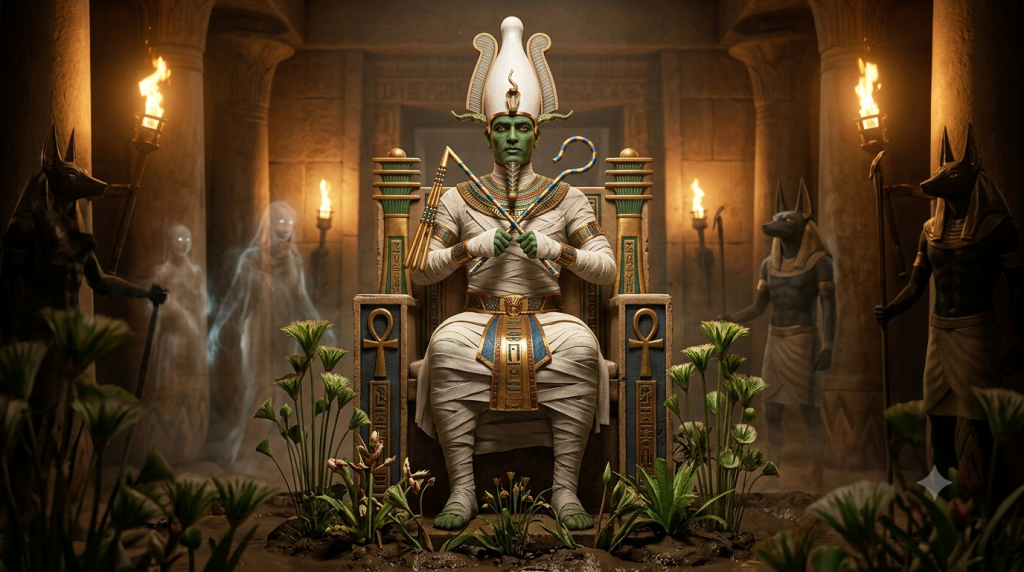
Isis’s defining mythological act is the search for Osiris and the reassembly of his body after Set scattered the pieces across Egypt. She travelled the length of the land with her sister Nephthys, recovering each piece, and with the help of Anubis and Thoth she put the body back together and embalmed it, creating the first mummy.
The magic she used to breathe temporary life into the reassembled body was understood by the tradition as the most powerful magical act ever performed: she animated a dead god long enough to conceive a child with him. Horus was the result. The heir who would avenge Osiris and reclaim the throne was conceived through magical power applied to a dead body, and Isis was the only being in existence capable of performing that working.
She then hid in the papyrus marshes of the Nile Delta with the infant Horus, protecting him from Set while he grew to adulthood. The Delta marshes were a liminal landscape, a boundary zone between the cultivated world and the wild, and they were appropriate as the hiding place for a divine child who was not yet ready to enter the world of power and conflict. Isis guarded Horus through a series of dangers described in the magical healing texts: scorpion stings, illnesses, attacks by hostile forces. Each time she protected him through the application of spells whose power derived from her own nature as the supreme magical practitioner.
The Secret Name of Ra
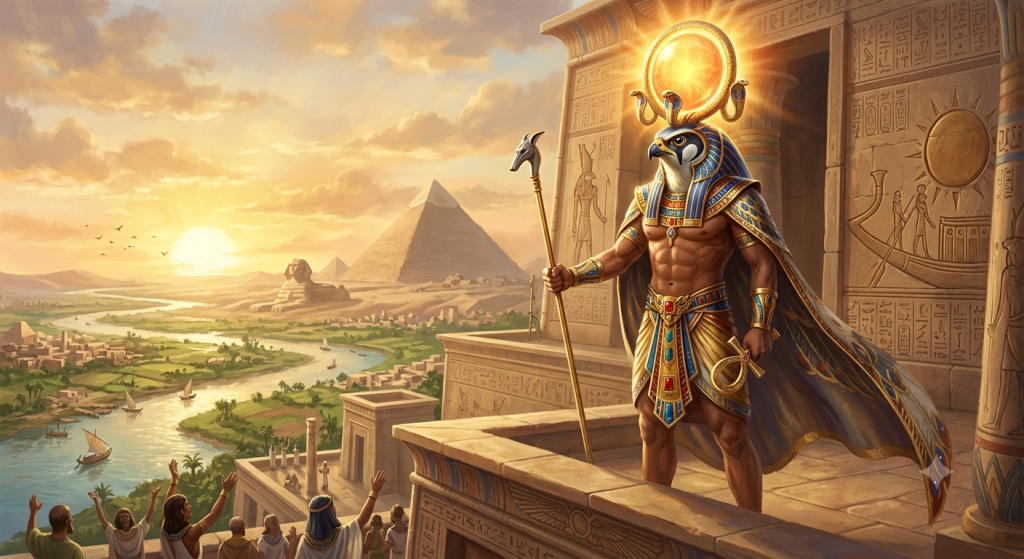
One of the most significant myths about Isis concerns her acquisition of power over Ra through knowledge of his secret name. Egyptian magical theology held that knowing the true name of a being gave you power over that being, because the name was not simply a label but the essence of the thing named. Ra, as the most powerful god in the cosmos, had a secret name that he had never revealed to any other being.
Isis gathered dust from Ra’s path and mixed it with his spittle, which fell to the earth when he drooled in his old age, to create a serpent. She placed the serpent in his path and it bit him. Ra was in agony from the venom and none of the other gods could heal him. Isis offered to heal him on one condition: that he reveal his secret name. Ra tried to deflect her by reciting his other names and titles, his epithets and aspects, everything by which he was known in the tradition. Isis refused each one. She waited until the pain was unbearable and then Ra spoke his true name into her heart, where only she could hear it.
She healed him. And she possessed his secret name, with all the power over him that entailed, for the remainder of the tradition. The most powerful goddess in Egyptian mythology gained power over the most powerful god through intelligence, patience, and the willingness to cause suffering in order to extract something that could not be obtained any other way. The tradition presents this without apparent moral discomfort. Isis wanted power commensurate with her nature, and she took it.
Isis Beyond Egypt
The spread of Isis’s worship beyond Egypt’s borders was one of the most remarkable religious phenomena of the ancient world. Her cult followed the trade routes of the Mediterranean, establishing temples in Greece, Rome, and across the Roman Empire. By the 1st century CE, Isis temples existed in Britain, in Afghanistan, and throughout the Eastern Mediterranean. Her cult had become a mystery religion, offering initiates a personal relationship with the goddess and the promise of her protection in this life and the next.
The Roman writer Apuleius, in his novel The Golden Ass written in the 2nd century CE, gives the most extended account of Isis worship in the Roman world: his protagonist Lucius, transformed into a donkey through a magical accident, is restored to human form by Isis’s intervention and subsequently dedicates himself to her service. The Isis that Apuleius describes is a universal goddess, identified with every female divine principle in the ancient world, who absorbs and exceeds all other goddesses: Queen Isis, the one who in truth art the holy and eternal saviour of the human race.
The images of Isis nursing the infant Horus, ubiquitous in Egyptian art from the New Kingdom onward and produced in enormous quantities during the Ptolemaic and Roman periods, are among the most striking examples of religious image transfer in ancient history. Scholars have debated for over a century whether these images directly influenced the Christian iconography of the Virgin Mary nursing the infant Jesus, or whether both traditions drew independently on the same underlying archetype of the divine mother and child. The visual similarities are undeniable. The question of influence or parallel development remains open.
For more on the Egyptian tradition, the Osiris article covers the husband whose death and resurrection Isis makes possible through her magic. The Horus article covers the son she conceives and protects, the divine prototype for every Egyptian pharaoh. The Set article covers the brother whose murder of Osiris sets the mythology in motion and against whose power Isis works throughout.
Never miss a myth
Thank you for being here. The site is brand new and every subscriber genuinely means something to me. If you're here, you care about this stuff as much as I do - and that's all the reason I need to keep going. New stories, videos and dark folklore from around the world, straight to your inbox. No algorithm. Just the stories, when they're ready.