September 23rd, 1954. Glasgow’s Southern Necropolis. The steelworks are burning at the far end of the cemetery, throwing tongues of flame into the fog. Somewhere among the headstones, hundreds of children, some barely old enough to walk, are searching for a monster.
It had iron teeth.
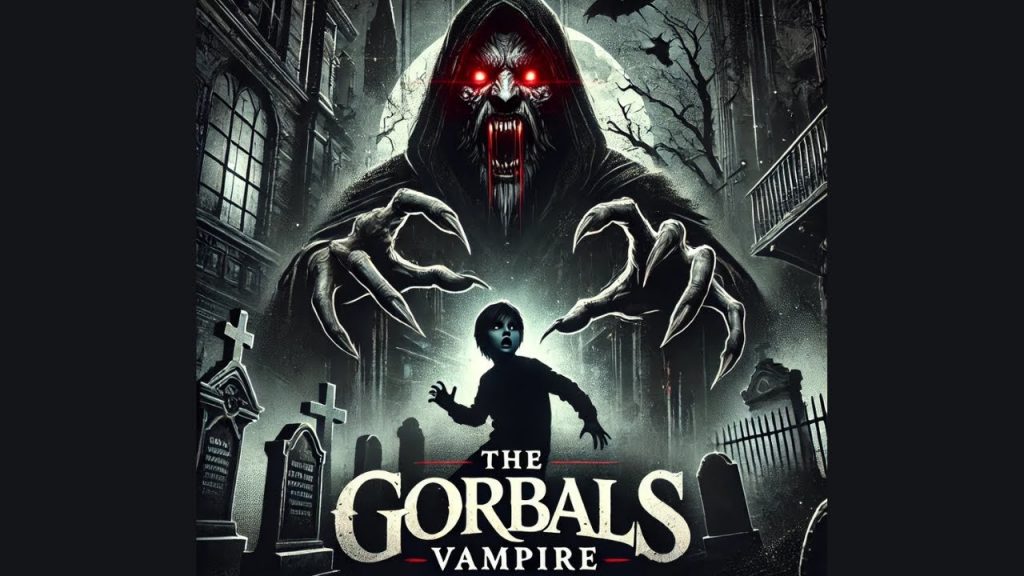
That was the detail that haunted the playgrounds of the Gorbals in the early weeks of September 1954. A whisper passed between children in the shadow of Glasgow’s tenements, growing louder with each telling. There was something in the Southern Necropolis. Something vast, seven feet tall by most accounts, that had already claimed two young boys, murdered and drained of blood. And it had iron teeth.
No adult would listen. That, perhaps, was the worst part.
The Gorbals in 1954
The Gorbals of the 1950s was not a comfortable place. One of Glasgow’s most densely packed and impoverished districts, its streets were lined with crumbling tenement blocks, its air thick with the smoke of industry, its children shaped by hardship in ways that made them fearless. These were not children who frightened easily. And they did not frighten now. Instead, they armed themselves.
Wooden stakes. Crosses. Knives. Improvised weapons of every description. Many brought their dogs. They moved through the Southern Necropolis with purpose, checking behind elaborate Victorian tombs, peering under benches, scanning the shadows that pooled around the older graves.
On the evening of September 23rd, PC Alex Deeprose received a call and made his way to the cemetery on Caledonia Road, expecting to find the usual vandals, perhaps, or older teenagers causing trouble among the graves. What he found instead stopped him cold. Hundreds of children swarmed across the cemetery. The oldest were around fourteen. The youngest could barely toddle.
And over it all, the steelworks burned.
One of the boys present that night, Tam Smith, later described the scene to the BBC: he remembered the red light and the smoke flaring up and making all the gravestones leap, figures walking about at the back all lined in red light. It was, by any measure, an extraordinary sight. A self-organised army of children, drawn together by nothing more than shared belief and the deep, instinctive knowledge that if something evil had come to their neighbourhood, someone was going to have to deal with it.
The police dispersed them. The children reconvened after dark. In true Glasgow fashion, an inconvenience like the constabulary was not going to stop the hunt.
Where the Story Came From
History does not record who first spoke the name. That is the nature of these things. They rarely have a single origin, a precise moment of creation. The rumour had taken shape on school playgrounds in the Gorbals and the nearby Hutcheson’s area during the first weeks of September. It spread the way all great rumours spread: person to person, each retelling adding weight and detail to the core horror.
A seven-foot creature. Iron teeth. Children taken in the night. Two boys, dead and drained.
No children had actually gone missing. No bodies had been discovered. But the story had already outrun the facts, which is precisely how the most powerful legends work.
The Southern Necropolis itself was the perfect setting for such a tale. Opened in 1840 to serve the people of the Gorbals, it holds the remains of more than a quarter of a million souls. Its Victorian architecture, elaborate stone tombs, towering monuments, and wrought-iron gates cast long shadows even on bright days. At night, with the steelworks flaring at the cemetery’s edge, it was a place where the boundary between the real and the imagined could feel very thin indeed.
Iron Teeth: Where Did the Detail Come From?
The specificity of the vampire’s iron teeth is one of the most curious elements of the story, and the one that would later trigger a national moral panic.
In the immediate aftermath of the hunt, blame fell quickly on American horror comics, which had recently arrived in Britain and were enormously popular with younger readers. Publications like Tales from the Crypt, The Haunt of Fear, and The Vault of Horror were held responsible for filling children’s heads with monsters. A December 1953 issue of Dark Mysteries featured a story called The Vampire with the Iron Teeth, and there it was, apparently: the smoking gun.
But academics were less convinced. They pointed out that horror comics were difficult to obtain in Scotland at the time, and that locally produced comics like The Beano and The Dandy were resolutely cheerful fare with nothing approaching a vampire in their pages. More significantly, the specific detail of iron teeth did not originate in any comic book at all.
It came from the Bible.
Daniel 7:7 describes a terrible vision: a fourth beast, dreadful and terrible and strong exceedingly, which had great iron teeth. This passage was actively taught in Glasgow’s schools at the time. Iron-toothed monsters had haunted Glasgow’s religious imagination for years before any American comic set foot on Scottish soil. There is also evidence that the image came from a poem taught in local schools, though the specific text has been lost to history. And the figure of Jenny wi’ the Iron Teeth, a Glasgow bogeyman with a documented local tradition, predates the Gorbals Vampire by decades and shares the defining detail precisely.
The children of the Gorbals had not been corrupted by foreign horror. They had updated something much older into something they could name, locate, and, crucially, hunt.
The Moral Panic That Followed
The story broke in the local press and spread with astonishing speed. Within days it was national news. Within weeks, it was international. Newspapers ran headlines questioning what children were reading. An unlikely coalition of Christians, communists, and the National Union of Teachers united around a single conclusion: American horror comics had sent Glasgow’s children hunting vampires through a cemetery at night.
The case reached Westminster in February 1955, cited during a parliamentary debate by Alice Cullen, the Labour MP for the Gorbals, who argued that legislation was urgently needed to protect children from the corrupting influence of imported horror publications. The crusade was successful. In the spring of 1955, Parliament passed the Children and Young Persons (Harmful Publications) Act, banning the sale to minors of comics depicting incidents of a repulsive or horrible nature.
The Act technically still stands today.
Meanwhile, in the United States, a near-identical panic had culminated in the creation of the Comics Code, which effectively killed off the horror comic genre in America. The Gorbals Vampire had become a transatlantic cause.
What Were the Children Really Hunting?
There is a question at the heart of the Gorbals Vampire story that the moral panic, with its convenient villain in the form of American comics, allowed everyone to neatly sidestep.
What were those children actually afraid of?
The Gorbals in 1954 was a place of real privation. Poverty, overcrowding, illness: these were not abstract concerns but daily realities for the families who lived there. Children growing up in such an environment understood danger in a visceral way that their elders might not have wished to acknowledge.
Some historians have suggested that the vampire represented a kind of externalised fear, that the monster in the graveyard was a way of making something vast and frightening into something that could be confronted, chased, defeated. You cannot hunt poverty with a sharpened stick. You cannot drive a stake through industrial decline. But you can search a graveyard. You can arm yourself, gather your friends, and go looking for the thing that frightens you.
There is something both heartbreaking and genuinely impressive about that. The children of the Gorbals did not hide under their beds. They picked up sticks and went to find the monster. It says something specific about Glasgow, and about what the city has always asked of its people.
The Gorbals Vampire Today
The Southern Necropolis still stands on Caledonia Road. You can walk its paths today among the Victorian monuments, the old stone crosses, the elaborate family tombs of Glasgow’s nineteenth-century middle classes. It is quieter now than it was that September night in 1954, though no less atmospheric.
The vampire itself lives on, not in the cemetery but in the city’s collective memory. A mural of the Gorbals Vampire, created by teenage artist Ella Bryson in collaboration with street artists Ejek, can be found in an archway on St Luke’s Place near the Citizens’ Theatre. It is a fitting tribute: vivid, slightly unsettling, part of the living urban fabric of the city that produced it.
The story is taught in schools. It appears in books about Scottish folklore, urban legend, and the history of moral panic. It has become, in its own way, exactly what those children perhaps always suspected it was: a genuine monster, too strange and too stubborn to ever truly die.
For more on Glasgow’s dark folklore tradition, the Maggie Murphy article covers the child-stealing figure of the back closes whose legend shares deep roots with the Gorbals Vampire. The Jenny wi’ the Iron Teeth article covers the iron-toothed bogeyman who almost certainly informed the vampire’s most distinctive detail. The Glasgow Folklore page has every article on the city’s strange history in one place.
Further Reading
If this article sparked your interest, these are the books worth reading next.
Scottish Urban Legends: 50 Myths and True Stories
by Aaron Mullins — fifty Scottish urban legends including stories from Glasgow, Edinburgh, and the Highlands. The kind of tradition that Maggie Murphy belongs to, collected properly in one volume.
Scottish Urban Myths and Ancient Legends
by Grace Banks and Sheena Blackhall — vampires, werewolves, devil encounters, and the school playground legends of Scotland. A genuinely good collection of the stories Scots have been telling each other for generations.
The Lore of Scotland: A Guide to Scottish Legends
by Jennifer Westwood and Sophia Kingshill — the most comprehensive collection of Scottish legend in print, covering Glasgow to Shetland, exploring origins and historical basis. Endorsed by Terry Pratchett as the real macabre.
Never miss a myth
Thank you for being here. The site is brand new and every subscriber genuinely means something to me. If you're here, you care about this stuff as much as I do - and that's all the reason I need to keep going. New stories, videos and dark folklore from around the world, straight to your inbox. No algorithm. Just the stories, when they're ready.