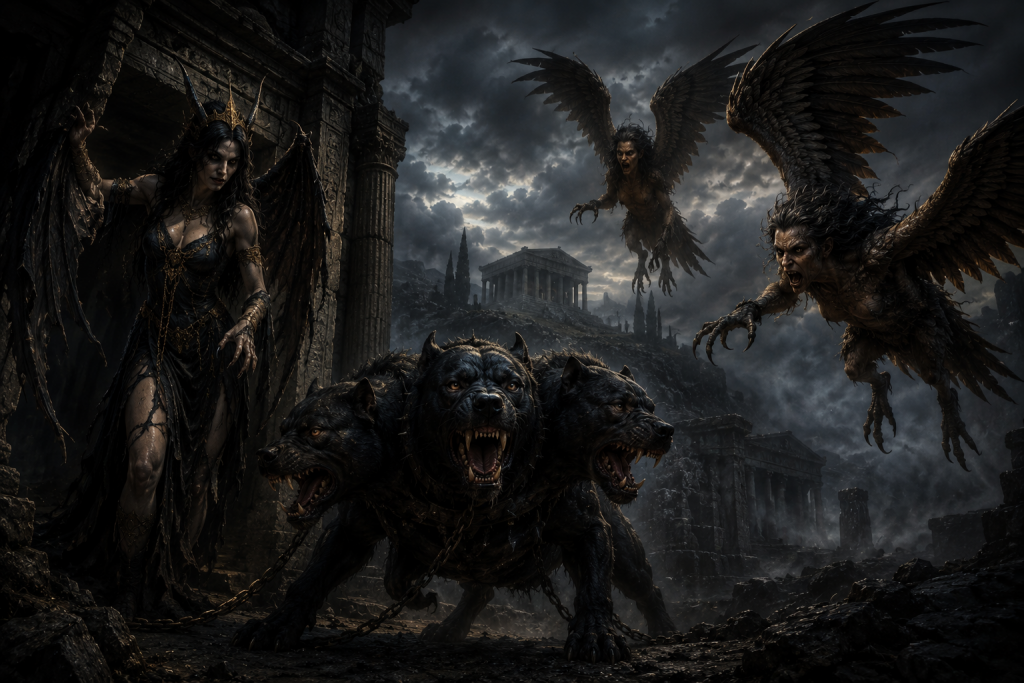
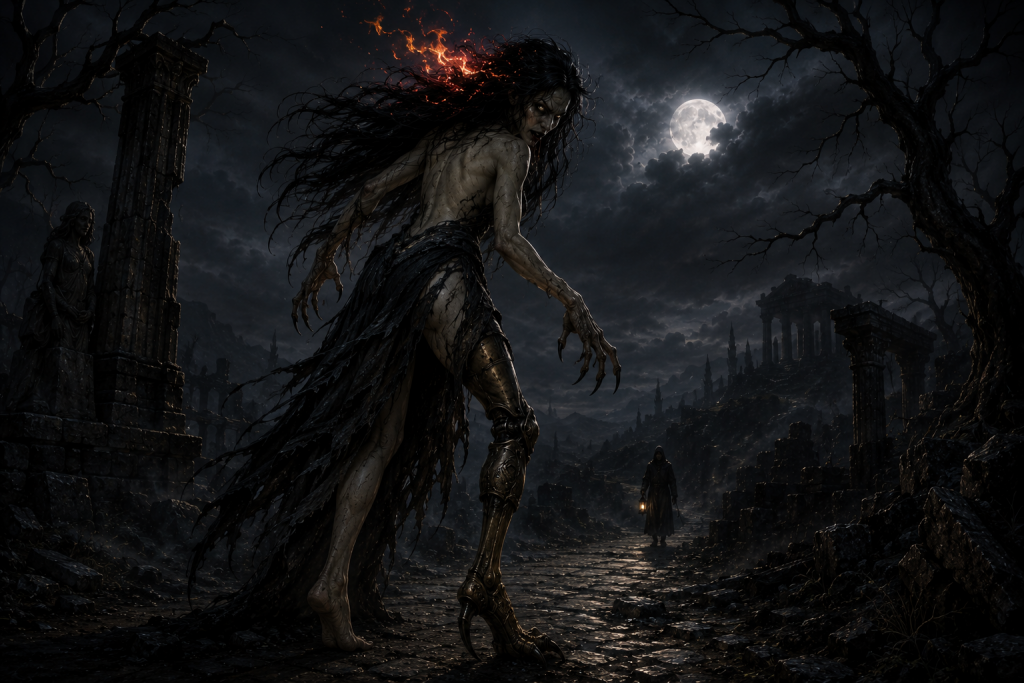
Mount Olympus is the highest mountain in Greece at 2,917 metres, a massif of extraordinary dramatic character rising from the Thessalian plain to peaks frequently hidden in cloud, and it was the home of the Olympian gods in ancient Greek mythology. What most treatments of Greek mythology do not address is what Mount Olympus became in Greek folk tradition after the ancient gods were officially replaced by Christianity: the mountain did not become ordinary. The gods left, but the supernatural did not.
In Greek folk tradition, Mount Olympus is understood as a place where Nereids gather, where the weather is controlled by forces that are not entirely natural, where the boundaries between the human world and the supernatural world are thinner than elsewhere, and where the old power that once belonged to the Olympians persists in diffuse and changed forms. The mountain did not lose its sacred character when Christianity arrived. It transformed its sacred character, as sacred mountains tend to do.
The Cloud Cap and the Weather
The cloud cap that frequently covers Olympus’s upper peaks is one of the most visually dramatic features of the mountain and one of the most consistently interpreted as supernatural in Greek folk tradition. The cloud is not simply weather. It is the continuation of the divine presence that the ancient tradition associated with the mountain, now anonymous and diffuse rather than attached to specific named gods, but no less real in the folk understanding.
The weather that Olympus generates is understood in communities around its base as reflecting the mountain’s mood rather than simply as meteorological phenomena. A sudden storm from the mountain is the mountain’s response to something, not a neutral atmospheric event. The communities that have lived in the shadow of Olympus for centuries developed a detailed folk meteorology that reads the mountain’s weather as a communication rather than simply as a condition.
The Nereids of Olympus
The Nereids of Greek folk tradition are particularly associated with Olympus in some regional accounts, gathering on its slopes for their dances and inhabiting its springs and streams. This association connects the folk supernatural tradition to the ancient mythological one: the ancient Olympus was surrounded by divine beings of various categories, and the folk Olympus preserves that quality of supernatural density in the Nereid tradition even as the specific ancient figures have been replaced.
The springs that emerge from Olympus’s slopes were understood as the gathering places of these supernatural women, and the folk warnings about approaching those springs carelessly, about making noise near them, about treating the water disrespectfully, reflect the same protective instinct that kept the ancient sacred springs of Greece in a state of ritual care.
The Saints and the Summit
The Christianisation of Olympus was achieved partly through the establishment of monasteries and hermitages on the mountain’s lower slopes, and partly through the association of the mountain’s summit with Christ and the saints rather than with the pagan gods. The highest peak, Mytikas, was understood in some folk traditions as a throne of divine power whose specific occupant had changed rather than whose sacred character had diminished.
The chapel of Saint Dionysios near the base of the mountain, associated with the patron saint of the region, represents the most formal Christianisation of the Olympus tradition: a Christian saint has taken up residence on the sacred mountain, not replacing the mountain’s sacred character but incorporating it into the new religious framework.
Further Reading
If this article sparked your interest, these are the books worth reading next.
The Iliad — Homer (Penguin Classics)
by Homer — the primary source for everything in this article, and still the most vivid account of the Trojan War ever written.
The Odyssey — Homer (Emily Wilson translation)
by Homer, translated by Emily Wilson — the best modern English translation, and the book that contains Odysseus’s own account of the horse.
The Trojan War: A Very Short Introduction
by Eric Cline — the clearest and most up to date account of what archaeology actually tells us about Troy and whether any of it happened.
For more on the mythology and folklore of Greece, the Nereid article covers the supernatural women whose tradition is associated with Olympus’s springs. The Zeus article covers the chief of the Olympian gods who made the mountain his home in the ancient tradition. The Greece folklore hub page has every article in the cluster.
Never miss a myth
Thank you for being here. The site is brand new and every subscriber genuinely means something to me. If you're here, you care about this stuff as much as I do - and that's all the reason I need to keep going. New stories, videos and dark folklore from around the world, straight to your inbox. No algorithm. Just the stories, when they're ready.