There are valleys in Scotland that feel wrong in a way you cannot quite articulate. Not threatening exactly, not hostile, but watchful. Glen Lyon is one of them. Stretching for over thirty miles through the highlands of Perthshire, it is one of the longest enclosed glens in Scotland, and the mountains on either side press close enough that the sky above feels rationed. The light changes in there differently than it does in open country. So does the silence.
I went to Glen Lyon to hunt legends. I came back with something I had not expected to find.
Killin: Where the Journey Begins
The road into Glen Lyon passes through Killin, a village at the western end of Loch Tay where the River Dochart comes crashing over a dramatic set of falls before broadening out toward the loch. It is a beautiful place, and a busy one in summer. But Killin has its own layers of history and strangeness that most visitors passing through on their way elsewhere never stop to notice.
The Stone Circle Hidden in Plain Sight
On the outskirts of Killin, tucked into the landscape with the particular invisibility of things that have been there so long they have simply become part of the scenery, sits a prehistoric stone circle. These monuments are scattered across Scotland in their hundreds, raised by people whose names we do not know, for purposes we can only partially reconstruct. Most archaeologists understand them as ceremonial sites connected to the movements of the sun and moon, to the marking of seasons that governed everything in a pre-agricultural and early agricultural world.
What strikes you about this particular circle is how easily it could be missed. It does not announce itself. It sits in its field and watches the surrounding landscape the way it has always done, and the surrounding landscape mostly ignores it in return. But stand inside it for a moment and pay attention, and something shifts. The geometry of the place is deliberate. Someone chose this specific ground, oriented these specific stones in this specific arrangement, and did so with a precision that required sustained collective effort. Whatever they were doing here mattered to them enormously.
The people who built these circles also told stories. Those stories are lost now. But the stones remain, and in a glen like this one, where the old things have a habit of persisting, that feels significant.
The Redcap’s Lair at Killin
Among the ruined structures in and around Killin, one carries a tradition darker than prehistoric ceremony. Tucked within the remains of an old fortification is what local tradition identifies as a Redcap’s lair.
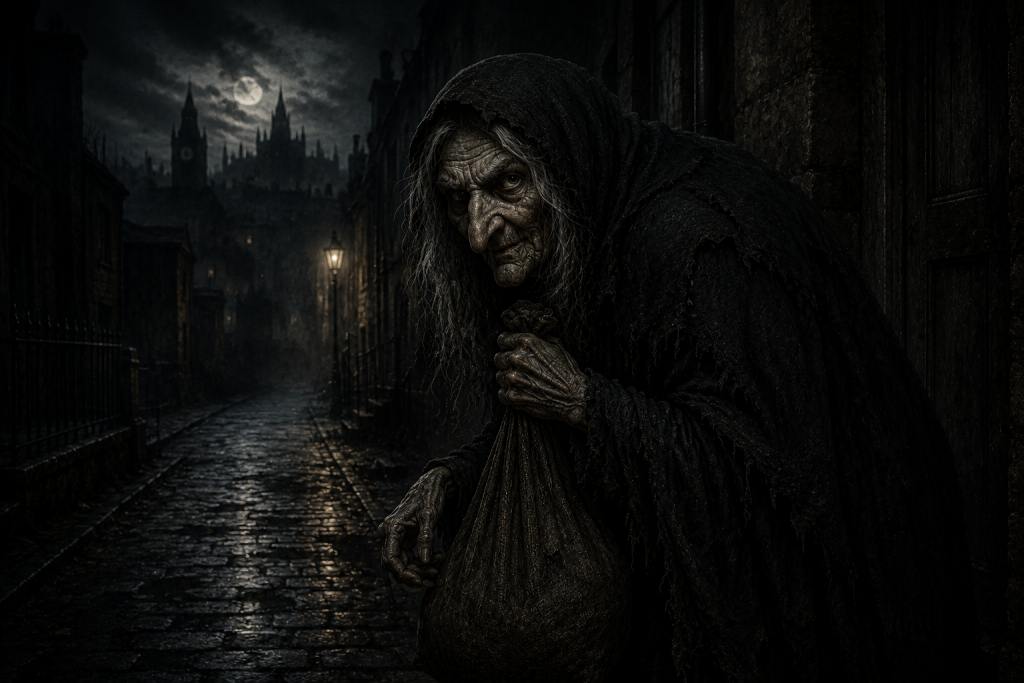
The Redcap is one of the most malevolent figures in Border and Highland Scottish folklore, a goblin-like creature that inhabits ruined towers and fortifications and keeps its cap red by soaking it in the blood of travellers it has killed. It is immensely strong and fast, and the traditional protections against it, iron and scripture, speak to how seriously it was once regarded. This was not a creature of gentle fairy tale. It was a warning about what inhabited the old, broken places.
Finding a site with a genuine local Redcap tradition in Killin was one of those moments where folklore stops being abstract. Someone, at some point, looked at this specific ruin and said: something lives in there, and it is not safe. That tradition survived long enough to be recorded, and it survived long enough for me to stand at the edge of those ruins and feel, very clearly, that I did not want to go inside.
Into the Glen: The Road to Glen Lyon
Beyond Killin the road narrows and the glen begins to assert itself. Glen Lyon has been inhabited for thousands of years, long enough to accumulate a density of legend that is almost unusual even by Scottish standards. The Picts were here. The early Celtic church was here. Clan MacGregor history is woven through the glen so thoroughly that certain locations feel less like geographical features and more like chapters in a very long and often violent family story.
The glen has a way of making you feel that time is not quite linear within its boundaries. Events from centuries ago feel closer here than they have any right to. This is partly the physical effect of the enclosed landscape, the way the mountains hold everything in and the outside world recedes. But it is also something about the specific quality of the place, a density of accumulated history that you can almost sense in the air.
I camped in the glen. It was not, in the end, an entirely comfortable experience.
Meggernie Castle: The Ghost With a Secret
Meggernie Castle stands roughly halfway along the glen, a pale tower house that has been watching the road through Glen Lyon since the sixteenth century. It is a private residence and has been for much of its history, but its reputation is entirely public.
The haunting of Meggernie Castle centres on one of the more specifically gruesome ghost stories in Scottish tradition. The legend concerns a nobleman who murdered his wife within the castle walls, apparently motivated by jealousy. Unable or unwilling to remove the body entirely, he is said to have divided it, burying the lower half in the grounds and concealing the upper half elsewhere within the castle.
What followed, in the tradition of the glen, was a haunting of corresponding division. The upper half of the woman’s ghost began to appear in the upper floors and tower of the castle, while the lower half, visible from the waist down, was encountered in the grounds and lower areas. Reports of both halves of the apparition span several centuries and multiple witnesses, including accounts from guests who had no prior knowledge of the legend and who described what they had seen before being told the story.
The upper portion of the ghost is said to appear in the tower room in particular, and those who have encountered it describe a sensation of intense cold followed by the appearance of a woman’s torso and face, the expression described variously as anguished or simply watchful. The lower half in the grounds is reported less frequently but has been described by enough independent witnesses over enough generations that Meggernie’s haunting has acquired a reputation well beyond the glen itself.
What the nobleman’s name was, and precisely when the murder took place, has been obscured by time. The castle’s history involves several families and several centuries of occupation. But the ghost endures, apparently indifferent to the question of who believes in her.
The Baobhan Sith: The Vampire of the Highland Night
Of all the legends associated with Glen Lyon and the wider Highland landscape through which I travelled, none required more careful attention than the Baobhan Sith. This is the creature I came to the glen specifically to investigate, and the glen, as it turned out, had something to say on the subject.
The Baobhan Sith, pronounced roughly baa-van shee, is one of the most dangerous figures in Scottish Gaelic supernatural tradition. She appears as a beautiful woman, typically dressed in green, and she approaches travellers, hunters, or men sheltering overnight in remote locations. She dances with them, or simply draws close, and then she kills them, draining their blood with a predatory efficiency that places her firmly in the vampire tradition despite the fairy classification.
Unlike the European literary vampire, the Baobhan Sith does not necessarily leave bite marks in the expected locations. She is sometimes said to have deer hooves beneath her green dress rather than feet, which is one of the tells in the traditional stories: if you are dancing with a beautiful woman on a Highland night and you notice hooves, it is already too late to do very much about it. Iron is the traditional protection, as it is against most fairy creatures in Gaelic tradition, and some accounts suggest that the arrival of dawn or the crowing of a cock will drive her off.
The classic Baobhan Sith story involves a group of hunters sheltering for the night who are visited by beautiful women, one for each man. One of the hunters becomes uneasy, notices something wrong, and hides among the horses, whose iron horseshoes the Baobhan Sith cannot approach. He survives the night. His companions do not.
Glen Lyon, remote, enclosed, with a tradition of things that come out of the dark toward travellers, is exactly the kind of landscape these stories grew in. The Baobhan Sith is a creature of isolation, of the long Highland night, of the moment when the fire burns low and the wind picks up and you become very aware of how far you are from anywhere.
If you want more like this, the Tales of Myth and Magic newsletter delivers new creatures, legends, and forgotten folklore straight to your inbox.
No fixed schedule. No noise. Just the stories, when they are ready.
Sign up here →The Night in the Glen
I did not expect what happened during the night I spent camping in Glen Lyon.
The glen had been quiet in the way remote places are quiet, a deep, textured silence full of wind and water and the occasional sound of something moving in the trees. Expected sounds. Manageable sounds.
Then came the giggling.
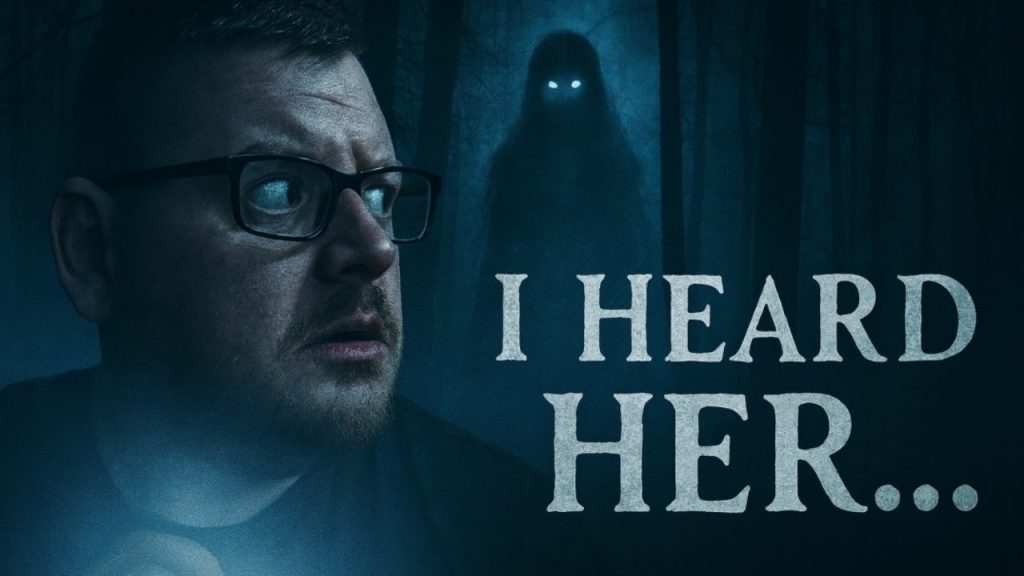
Not laughter exactly. Not a human sound in the way a laugh from a nearby campsite would be a human sound (you can hear it in the video). Something that had the shape of giggling without quite having its warmth. Coming from the trees. With nobody else around.
I had the recording equipment running. I want to be careful about what I claim here, because I am aware of how these things can sound, and I am aware of how the mind performs in darkness and isolation. But I heard what I heard, and the equipment captured what it captured, and I will let you make your own judgement when you watch the footage.
What I can say is that the sound stopped as suddenly as it had begun. The glen went back to its textured silence. And I lay awake for a considerable time afterward, thinking about women in green dresses and the tradition that says they come toward you across the dark ground with their hooves hidden beneath their skirts.
Glen Lyon has been telling this story for centuries. I am not sure I disbelieve it as completely as I did before I went.
A Valley That Remembers
I came back from Glen Lyon with the feeling that the place had been assessed rather than explored. The legends there are not decorative. They are not the kind of old stories that a landscape wears lightly, the way a tourist attraction wears a historical plaque. They feel functional, still active, still doing whatever work such stories have always done in a landscape like that one.
The stone circle in Killin marks something that mattered to people four thousand years ago. The Redcap’s lair is a warning that outlasted the ruin it was attached to. Meggernie Castle keeps its ghost in both halves and neither half will settle. And somewhere in the trees along the floor of Glen Lyon, something giggled in the dark at a man with a camera and a recording device, and then went back to wherever it came from.
If you love Scottish folklore, if you are drawn to the places where the old stories are still doing their work, Glen Lyon is a valley worth your attention. Go in daylight, ideally. Keep iron about your person. And if you hear giggling in the trees at night and there is nobody else around, you will have to decide for yourself what to do about it.
Further Reading
If this article sparked your interest, these are the books worth reading next.
Scottish Urban Legends: 50 Myths and True Stories
by Aaron Mullins — fifty Scottish urban legends including stories from Glasgow, Edinburgh, and the Highlands. The kind of tradition that Maggie Murphy belongs to, collected properly in one volume.
Scottish Urban Myths and Ancient Legends
by Grace Banks and Sheena Blackhall — vampires, werewolves, devil encounters, and the school playground legends of Scotland. A genuinely good collection of the stories Scots have been telling each other for generations.
The Lore of Scotland: A Guide to Scottish Legends
by Jennifer Westwood and Sophia Kingshill — the most comprehensive collection of Scottish legend in print, covering Glasgow to Shetland, exploring origins and historical basis. Endorsed by Terry Pratchett as the real macabre.
Never miss a myth
Thank you for being here. The site is brand new and every subscriber genuinely means something to me. If you're here, you care about this stuff as much as I do - and that's all the reason I need to keep going. New stories, videos and dark folklore from around the world, straight to your inbox. No algorithm. Just the stories, when they're ready.