In 2004, in the Romanian village of Marotinu de Sus, a family dug up their recently buried uncle. They cut out his heart. They burned it. Then they mixed the ashes with water, and drank.
This was not the distant past. This was the twenty-first century. And to the family who did it, it was necessary.
Before Dracula, There Was the Strigoi
Bram Stoker’s Dracula arrived in 1897 and gave the world a vampire it could not forget. Aristocratic, articulate, haunting the Gothic architecture of Transylvania in a way that felt almost romantic. But Stoker’s creature was built on something older and considerably less elegant. Buried beneath the literary vampire, beneath the capes and the coffins and the castle on the hill, lies the original Romanian terror: the Strigoi.
The Strigoi is not romantic. It does not seduce. It does not spare you. It returns from the dead because it cannot help itself, because something in its nature or its history has made it unable to stay in the ground, and it comes back first for the people it loved most.
The word itself carries its meaning in the sound. Strigoi connects to the Romanian word striga, to scream, and reaches further back to the Latin striga and strix, a night creature of Roman belief that flew in darkness and fed on blood and flesh. When Roman civilisation spread into the Dacian territories that would become Romania, the Latin nightmare merged with something already present in the local imagination, and the Strigoi was the result.
If you are interested in reading more about vampires, you can check out the main vampire page here. The video below covers Vlad the Impaler and many others, if you are interested!
Two Kinds of Strigoi
Romanian folklore makes a distinction that most people outside the tradition do not realise exists. There are two types of Strigoi, and while they share a name and certain qualities, they are fundamentally different things.
The Strigoi Viu is a living person. Not undead, not a revenant, but a human being walking among the community who carries within them the seed of what they will become. A Strigoi Viu possesses abilities that mark them as something apart: they can shapeshift, halt rainfall, destroy crops, spread sickness, and drain the vitality and even the material wealth from those around them. More unsettling still, their soul can leave their body while they sleep and commune with others of their kind in the dark.
They look entirely ordinary. That is the point. A neighbour, a family member, someone you have known for years, might be a Strigoi Viu and show no sign of it until the damage is already done.
Certain conditions at birth were believed to produce a Strigoi Viu. Being the seventh child of the same sex in a family. Being born with a caul, the membrane sometimes found covering a newborn’s head. Physical anomalies at birth. Being born out of wedlock. None of these things condemned a person through any fault of their own, which gave the belief a particular cruelty: you could be marked before you had drawn your first breath.
When a Strigoi Viu dies, the transformation completes. They become the Strigoi Mort.
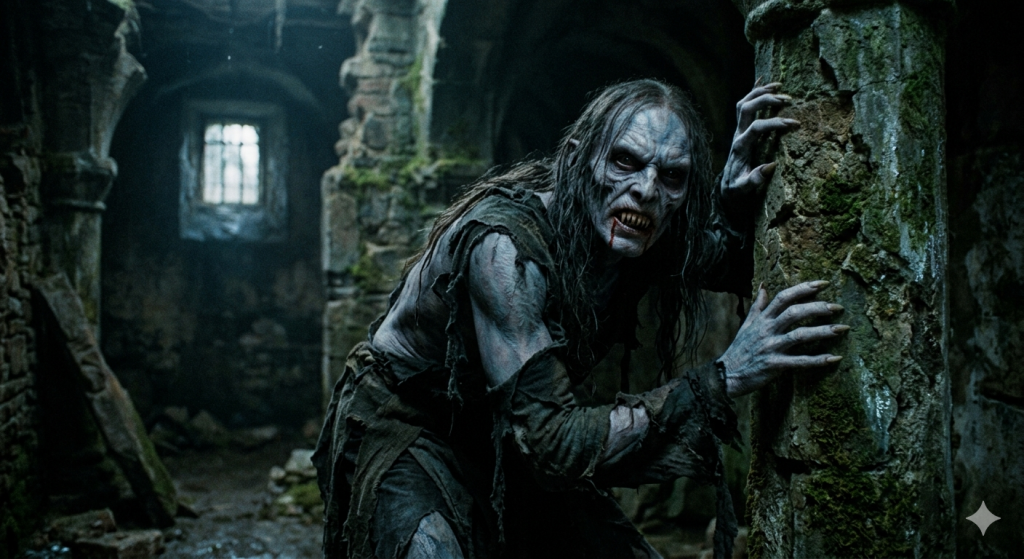
The Strigoi Mort is the creature that came to shape European vampire mythology. A reanimated corpse, risen from the grave, returning to the world of the living not out of choice but out of compulsion. It feeds on the blood and life force of the living, weakening its victims gradually, causing mysterious illness and death. And it comes first, almost always, for the people it knew in life. For family. For the people who loved it and grieved for it and never suspected that the grief would need to run in the opposite direction.
According to Romanian tradition, a Strigoi Mort cannot simply wander freely. For the first seven years after death it must return to its grave, bound to the earth that holds it. After seven years that obligation ends, and it can go anywhere. It can become anyone’s problem, not just the village that buried it.
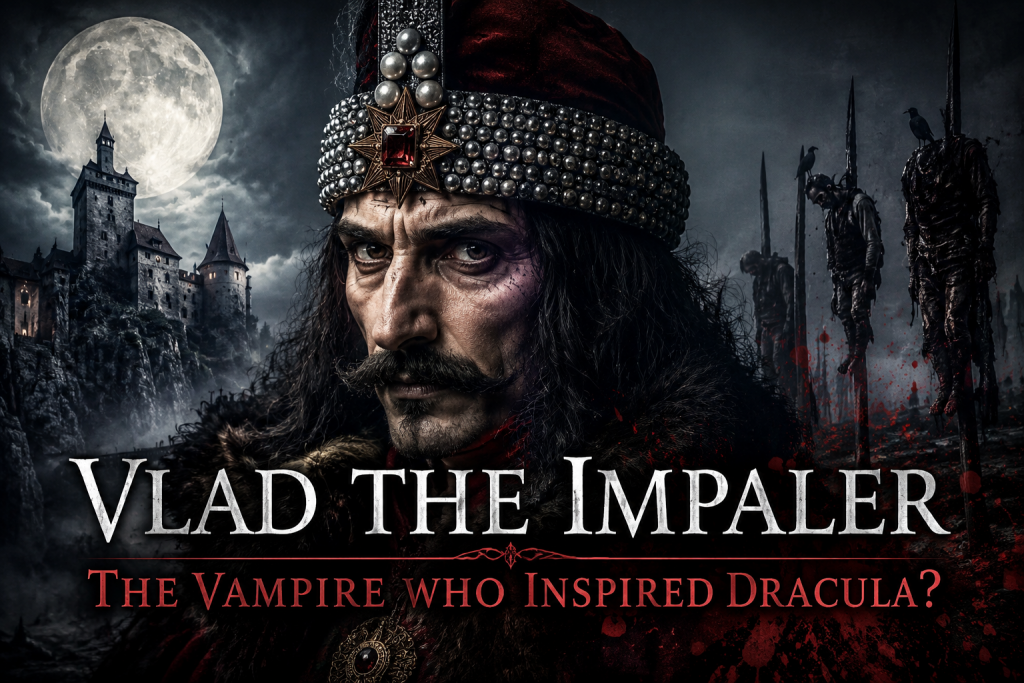
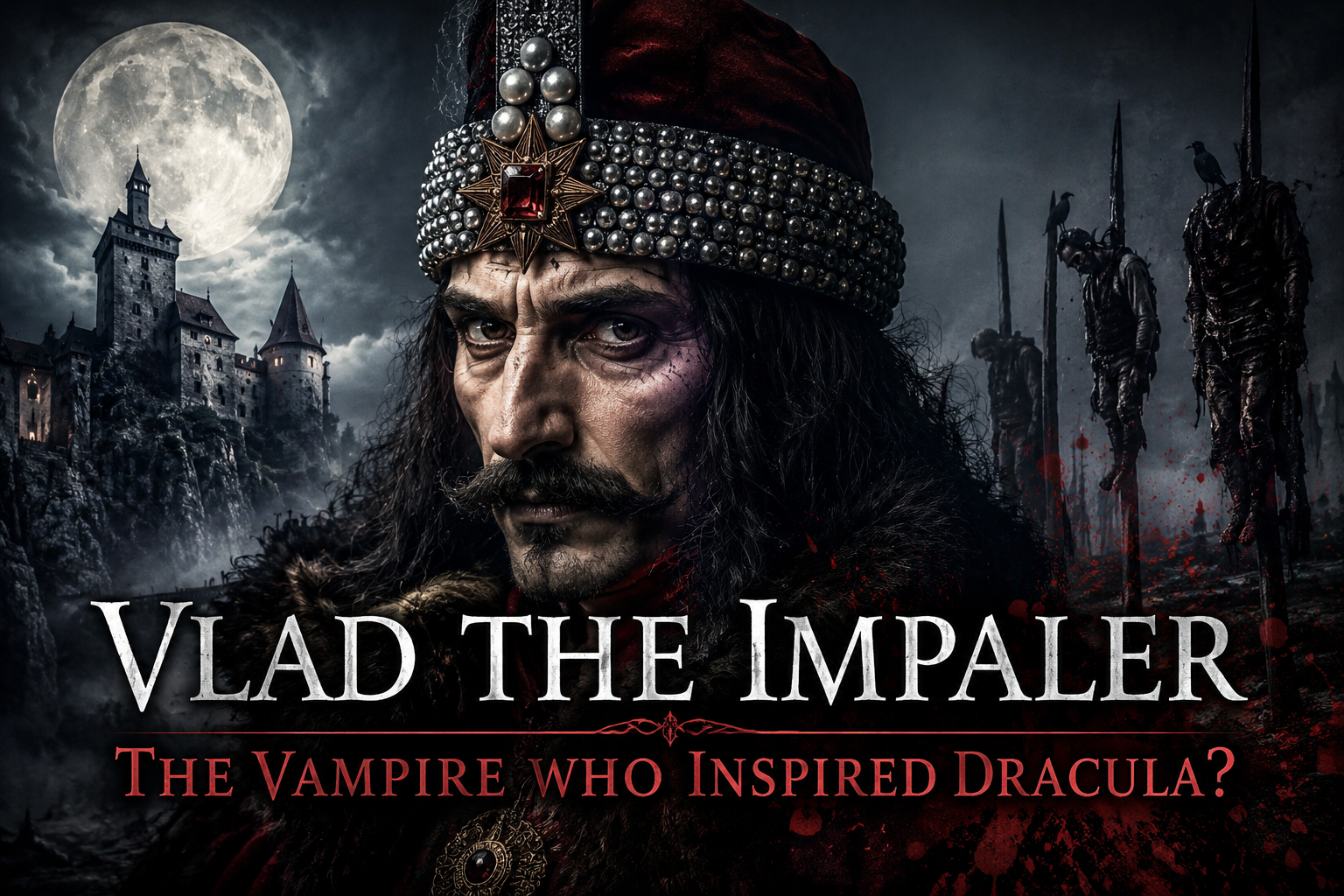
The most famous figure to emerge from Romanian vampire tradition, at least in the Western imagination, is not the Strigoi but Vlad the Impaler, whose name Bram Stoker borrowed for his fictional count. The Vlad the Impaler article covers the real history of the man and why the Dracula connection is considerably more complicated than popular culture suggests.
How the Dead Come Back
Romanian folklore was meticulous about the conditions that produced a Strigoi, because understanding the cause was the only way to attempt prevention.
A person who died without proper burial rites was at risk. Someone who had lived a sinful or violent life. Someone whose body was crossed by a cat before burial, since cats were believed capable of animating corpses in certain traditions. A person who had drowned, or who had committed suicide, or who had been murdered and left unavenged. The unquiet circumstances of a death could produce an unquiet dead.
The signs that a Strigoi Mort was active were specific and communal. Livestock dying without explanation. Milk curdling. Crops failing. A pattern of unexplained illness moving through a family or a village, one member sickening and dying, then another, then another. People waking from vivid dreams of the recently deceased, dreams that felt less like memory and more like visitation.
When these signs appeared, the village knew what to think.
The Prevention and the Cure
The body of a suspected Strigoi required attention before and after burial.
Before burial, preventive measures were taken with grim practicality. Garlic placed in the mouth. The burial shroud sewn shut. A stake driven through the body to pin it to the earth. Heavy stones placed over the coffin. The corpse positioned face down in the grave, so that if it woke and tried to claw its way out it would dig deeper rather than upward. Coins in the mouth. Nails through the shroud. The crossing of thresholds protected with thorns, doors marked with paint or garlic, fires kept burning through the night.
If prevention had failed and a Strigoi Mort was already suspected to be active, the village moved to the cure. The body was exhumed. What they looked for was the mark of the undead: a corpse that had not decomposed as it should have, fresh blood on the lips or at the fingertips, a body still supple rather than stiff. This was the evidence, by the standards of the tradition, that the dead had been rising.
The response was not gentle. A stake through the heart, usually iron rather than the wooden stake of later fictional tradition. Decapitation, with the head placed face down in the coffin or buried separately. The heart removed and burned. In some traditions the ashes of the heart were mixed with water and drunk by the surviving family, to break whatever hold the Strigoi had established over them.
These were not the acts of credulous or primitive people. They were the acts of communities facing what they understood to be a real and active threat, using the tools their tradition gave them, and doing what they believed necessary to protect the living from the dead.
The Case of Toma Petre
The 2004 case in Marotinu de Sus, the one described at the opening of this article, is not an isolated historical curiosity. It is the most recent documented instance of a tradition that has never fully gone away.
Toma Petre had died several months earlier. His niece began to suffer from what she described as nightly visitations. Her health declined. The family recognised the pattern. They went to the cemetery, dug up Toma Petre’s body, and found it in a condition they interpreted as evidence of Strigoi activity. They removed his heart, burned it, mixed the ashes with water, and drank.
Romanian authorities launched an investigation. The family did not deny what they had done. From their perspective there was nothing to deny. They had followed the tradition as they understood it, to protect the living from someone they had loved, and they were entirely serious about it.
The case attracted international media attention and was treated largely as a story about superstition surviving into the modern age. But for the people of that village it was not superstition. It was necessity.
What the Strigoi Really Fears
The protections against the Strigoi reflect a fascinating blend of pre-Christian belief and Christian practice that characterises so much of Romanian folk tradition.
Garlic, thorns, iron, the positioning of the body: these reach back to a much older set of beliefs about the nature of the dead and the vulnerability of the living. The cross, holy water, priestly blessing, the prayers of the Church: these arrived with Christianity and were absorbed into a tradition that was already ancient, the two systems layering over each other rather than one replacing the other.
The result is a set of protective practices that operate simultaneously on the spiritual and the physical. You seal the body to the earth. You mark your home against entry. You call the priest to bless the graveyard. You are not taking chances on any single system of defence because the thing you are defending against is serious enough to warrant all of them.
Informally, villages maintained people who knew how to handle a Strigoi situation: elders with knowledge of the right rituals, sometimes called on to lead exhumations and coordinate whatever needed to be done. These figures operated between the community and the clergy, carrying knowledge that was passed down through practice rather than written down.
If you want more like this, the Tales of Myth and Magic newsletter delivers new creatures, legends, and forgotten folklore straight to your inbox.
No fixed schedule. No noise. Just the stories, when they are ready.
Sign up here →The Real Ancestor of Dracula
Bram Stoker never visited Transylvania. He researched Romania from afar, drawing on written accounts and notes, and shaped what he found into something that served his novel. The word Strigoi does not appear in Dracula. But the architecture of the story, the blood-drinking revenant, the connection to Transylvania, the vulnerability to religious symbols, the need to return to native earth, all of this traces back through European vampire folklore to the Strigoi at its root.
The vampire of modern fiction and film is polished, aestheticised, often made into something that carries its own appeal. The Strigoi is what the fear looked like before it was dressed up for an audience. It is a dead person who will not stay dead, who comes back for the people who are grieving it, who makes illness and misfortune personal by attaching them to a face you recognise.
That is a different order of horror from the literary vampire. It is the horror of something intimate turned threatening, of love and grief weaponised by whatever force refuses to let the dead rest.
Romania has never fully let go of it. The red thread tied around a coffin, the nails in a shroud, the garlic near a grave, these things are still found. The tradition has not ended. It has simply gone quieter, retreating into gesture and habit and the memory of why those gestures were first made.
In the villages of Romania, the past is sometimes buried very lightly.
Further Reading
If this article sparked your interest, these are the books worth reading next.
The Encyclopedia of Vampires, Werewolves and Other Monsters
by Rosemary Ellen Guiley — the most comprehensive reference on the vampire tradition across world cultures.
In Search of Dracula
by Raymond McNally and Radu Florescu — the book that connected Bram Stoker’s Dracula to the historical Vlad the Impaler.
Dracula (Penguin Classics)
by Bram Stoker — if you have not read the original, it is considerably better and considerably stranger than you expect.
Want to learn more about the history of Vampies? Click below to watch the documentary
Never miss a myth
Thank you for being here. The site is brand new and every subscriber genuinely means something to me. If you're here, you care about this stuff as much as I do - and that's all the reason I need to keep going. New stories, videos and dark folklore from around the world, straight to your inbox. No algorithm. Just the stories, when they're ready.