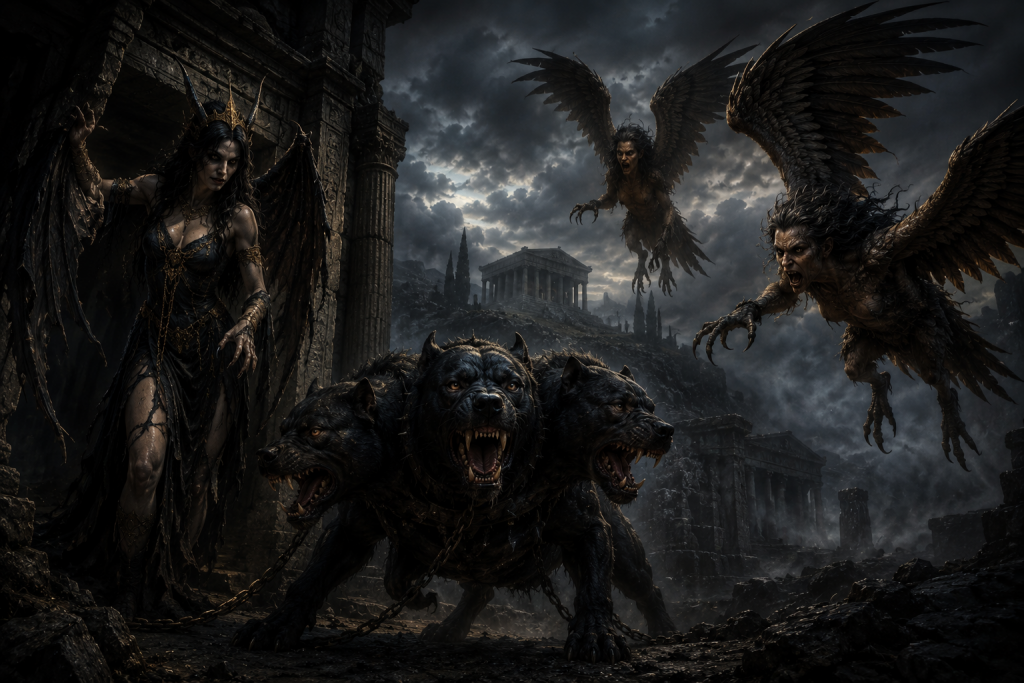
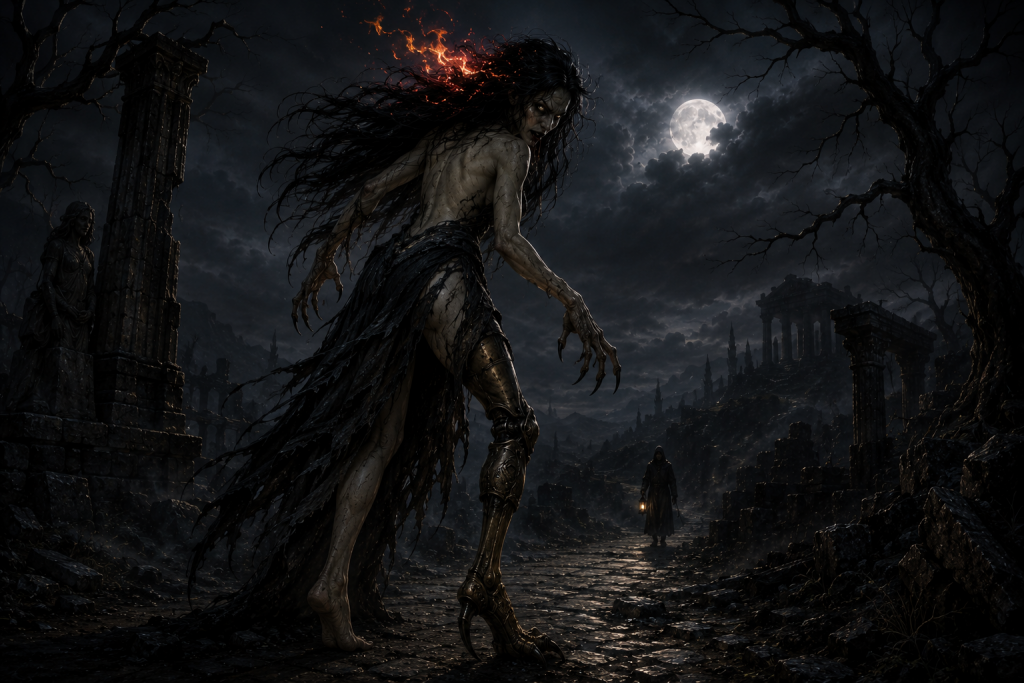
The Stoicheio is one of the most disturbing figures in Greek folk tradition, a supernatural spirit that is created rather than born, deliberately bound into the foundations or walls of a building through a ritual that requires a human sacrifice. The shadow of the first person to pass a building site at a specific moment can be measured and built into the foundation, and the person whose shadow is taken will die within the year, their life force permanently incorporated into the structure. Alternatively, in more extreme versions of the tradition, an actual person — or an animal substituted for a person — is killed and buried in the foundation, their spirit becoming the Stoicheio who guards the building.
The building that has a Stoicheio is a protected building. The spirit guards against collapse, against enemies, against supernatural attack. A bridge with a Stoicheio in its foundations will not fall. A castle with a Stoicheio will not be taken. But the protection comes at a cost that makes the Stoicheio tradition one of the most ethically disturbing in Greek folklore: someone had to die, or have their shadow stolen, to make the building strong.
The Shadow Measurement
The shadow measurement ritual is documented across Greek folk tradition and represents the most widespread form of Stoicheio creation. A master builder who wants to protect a new building identifies the first person to pass the construction site on a specific auspicious day. He measures that person’s shadow with a string. The string is then buried in the foundation, and with it the person’s life force. The person will not know what has happened to them. They will simply become ill and die within the year, their shadow having been literally taken from them.
This belief had practical consequences: people in communities where construction was underway would avoid walking past building sites, particularly in the morning when shadows were long and the measurement was easiest to perform. The master builder’s ability to take shadows was understood as a specific professional skill, part of the craft knowledge that made him capable of creating buildings that lasted and buildings that did not.
The Bridge of Arta
The most famous Stoicheio story in Greek tradition is the ballad of the Bridge of Arta, one of the most widely known pieces of Greek folk poetry, which describes a bridge that collapses every night whatever the builders construct during the day. A supernatural voice tells the master builder that the bridge will only stand if his wife is built into the foundations. He lures her to the site with false news of a dropped ring in the foundations. She descends to look for it. The workers wall her in. She curses the bridge: as she trembles, let the bridge tremble; as strangers pass, let them fall; but let her brothers pass safely, for one of them is a stranger in a foreign land.
The ballad exists in versions across the Balkans and southeastern Europe under different names and with different bridges and different victims, which suggests it encodes a very ancient tradition of foundation sacrifice that was practised across the region and that survived in folk memory long after the practice itself had ended.
The Stoicheio as Guardian
The Stoicheio, once created, is the building’s guardian spirit. In Greek folk tradition it can manifest as a snake living in the foundations, as a shadow that moves independently of any person, or as a presence felt rather than seen. Old buildings of particular solidity and age are often understood to have a Stoicheio, and the spirit’s continued presence is the explanation for why the building has stood when others around it have fallen.
Further Reading
If this article sparked your interest, these are the books worth reading next.
The Iliad — Homer (Penguin Classics)
by Homer — the primary source for everything in this article, and still the most vivid account of the Trojan War ever written.
The Odyssey — Homer (Emily Wilson translation)
by Homer, translated by Emily Wilson — the best modern English translation, and the book that contains Odysseus’s own account of the horse.
The Trojan War: A Very Short Introduction
by Eric Cline — the clearest and most up to date account of what archaeology actually tells us about Troy and whether any of it happened.
For more on the folklore of Greece, the Kallikantzaroi article covers the Christmas goblins of Greek tradition. The Drakos article covers the Greek folk dragon. The Greece folklore hub page has every article in the cluster.
Never miss a myth
Thank you for being here. The site is brand new and every subscriber genuinely means something to me. If you're here, you care about this stuff as much as I do - and that's all the reason I need to keep going. New stories, videos and dark folklore from around the world, straight to your inbox. No algorithm. Just the stories, when they're ready.