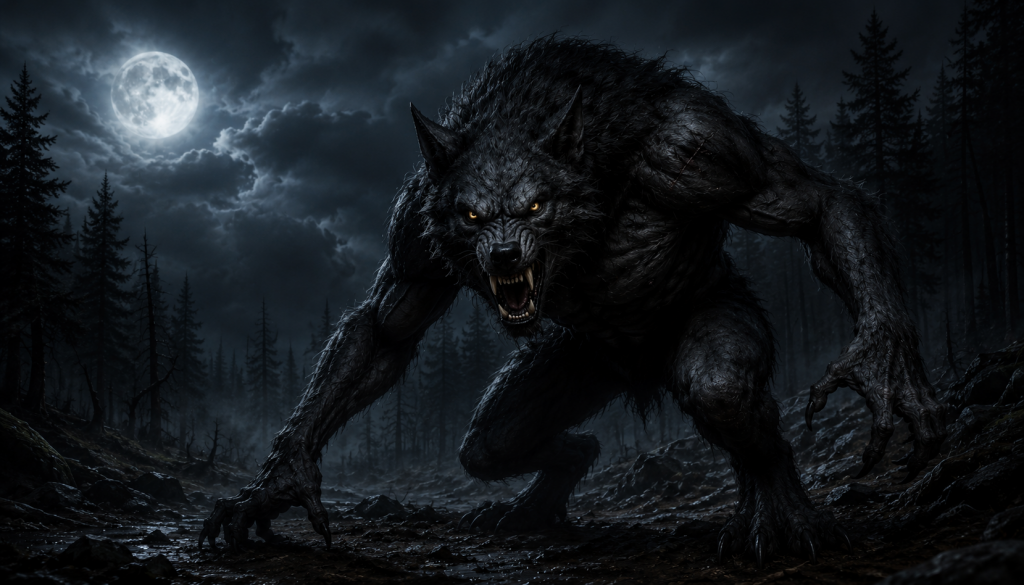
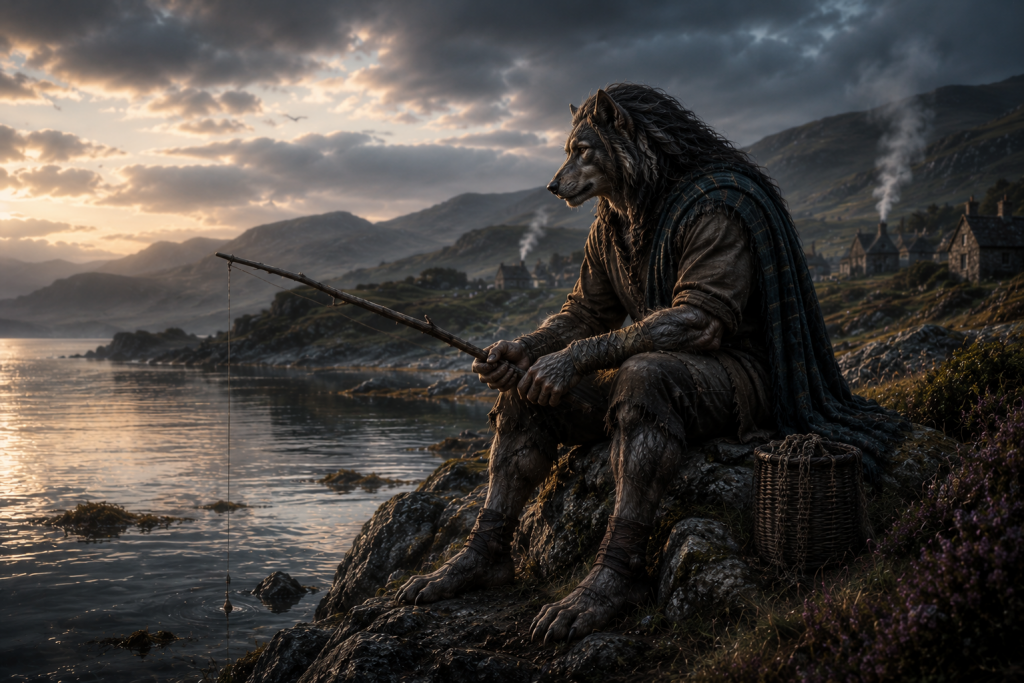
The Skinwalker is a figure from Navajo tradition and it requires a different kind of introduction from most of the creatures covered on this site, because unlike the Vukodlak or the Loup-Garou or the Beast of Gévaudan, it belongs to a living tradition whose community has strong feelings about how it should be discussed, who should discuss it, and whether it should be discussed at all by outsiders.
The short version is this: in Navajo belief, a Skinwalker is a yee naaldlooshii, which translates roughly as with it he goes on all fours. It is a human practitioner of witchcraft who has gained the power to transform into animals by violating the most serious taboos of Navajo culture. The transformation into a wolf or other animal is not a curse, not a punishment, not a supernatural accident. It is something chosen and worked for and paid for by actions that place the practitioner entirely outside the moral community of the Navajo people.
What it is paid for is something this article will not describe in detail, partly out of respect for Navajo requests that these specifics not be disseminated, and partly because those specifics are not necessary for understanding what the tradition is about.
What Distinguishes the Skinwalker From European Werewolves
The Skinwalker is not a werewolf in the European sense and the comparison, while tempting, obscures more than it illuminates. The European werewolf tradition, even in its most diabolical forms, treats werewolf transformation as something that happens to a person from outside: a curse, a pact, a belt given by the devil. The person who becomes a werewolf through the European tradition is often presented as a victim of supernatural forces or as a sinner whose corruption has found external expression.
The Skinwalker is neither. It is a practitioner who has chosen a path of power that requires the deliberate destruction of their relationship with their community, their family, and the spiritual order that governs Navajo life. The power is real in the tradition and so is the cost. It is not something that happens to people. It is something people do.
The wolf form is one of several animal forms the yee naaldlooshii can take. It can also become a bear, a crow, a coyote, or other animals. The wolf form is the most commonly described in accounts from outside the Navajo community, partly because of the overlap with European werewolf traditions that outside observers have been alert to, and partly because the wolf form appears most frequently in the accounts that have circulated most widely.
The Tradition and Outsiders
Navajo tradition generally holds that discussing Skinwalkers at all, particularly with outsiders, is something to be approached with caution. The belief is that talking about them can attract their attention or invite harm. Many Navajo people decline to discuss the tradition in any detail with non-Navajo people for this reason, and the accounts that have circulated most widely in popular culture come primarily from non-Navajo sources or from Navajo individuals who have chosen to speak despite the general caution around the subject.
The Skinwalker Ranch in Utah, made famous by popular media, is not a Navajo site and the Skinwalker tradition is not Ute tradition, though the name has attached itself to the location through popular usage. This conflation of the Navajo tradition with a specific piece of Utah real estate is characteristic of how non-Native popular culture has handled the Skinwalker material, absorbing it into general supernatural entertainment without particular attention to its origins or its community’s relationship to it.
The Broader Shapeshifter Tradition
The yee naaldlooshii belongs to a broader Navajo witchcraft tradition that includes several categories of practitioner with different abilities and different relationships to the harm they cause. The Skinwalker is the most dramatically transformative of these but not the only one, and placing it in this broader context helps avoid the common misunderstanding that treats it as simply the Navajo version of the European werewolf.
Similar shapeshifter traditions exist across many Native American peoples. The Wendigo tradition of the Ojibwa involves possession and transformation. Various Plains peoples have shapeshifter traditions involving animal forms. Each belongs to its own specific cultural context and should be understood within that context rather than collapsed into a generic Native American shapeshifter category.
Further Reading
If this article sparked your interest, these are the books worth reading next.
The Beast of Gévaudan
by Jay M. Smith — the most thorough historical investigation into the creature that terrorised southern France between 1764 and 1767, and what the historical record actually reveals about what it was.
The Werewolf Book: The Encyclopedia of Shape-Shifting Beings
The most comprehensive reference on the werewolf tradition across world cultures — every regional variant, every historical case, every folkloric and literary expression of the shape-shifting being.
The Werewolf in Lore and Legend
by Montague Summers — the classic scholarly treatment of werewolf belief, drawing on primary sources from across Europe. Dense, serious, and still the best single academic treatment of the tradition.
For more on the werewolf and shapeshifter traditions of the world, the Nahual article covers the Mesoamerican shapeshifting sorcerer tradition. The Rougarou article covers the Louisiana Cajun werewolf whose tradition developed alongside Native American communities in North America. The Dark Origins of the Werewolf article covers the broader history of werewolf belief.
Never miss a myth
Thank you for being here. The site is brand new and every subscriber genuinely means something to me. If you're here, you care about this stuff as much as I do - and that's all the reason I need to keep going. New stories, videos and dark folklore from around the world, straight to your inbox. No algorithm. Just the stories, when they're ready.