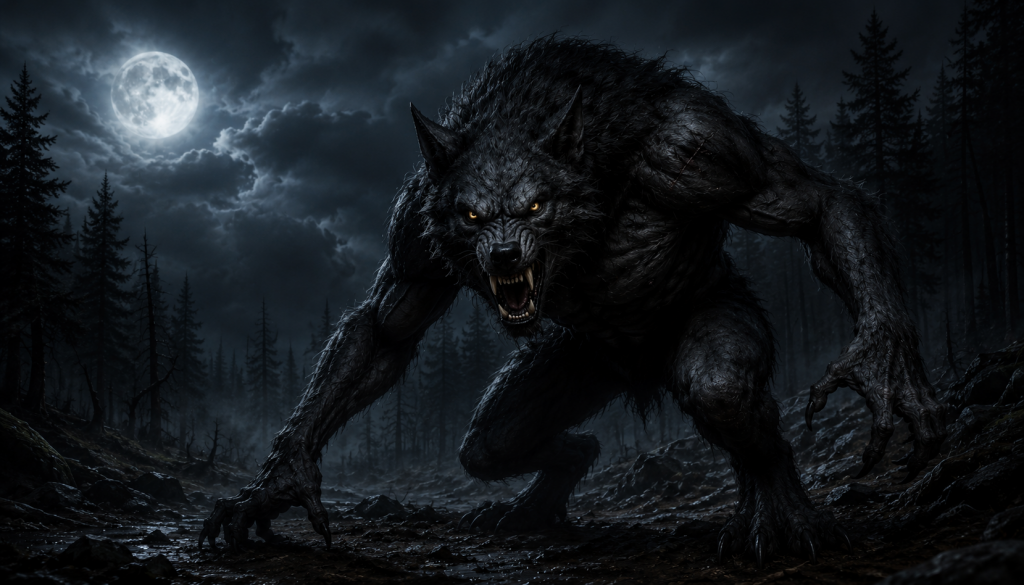
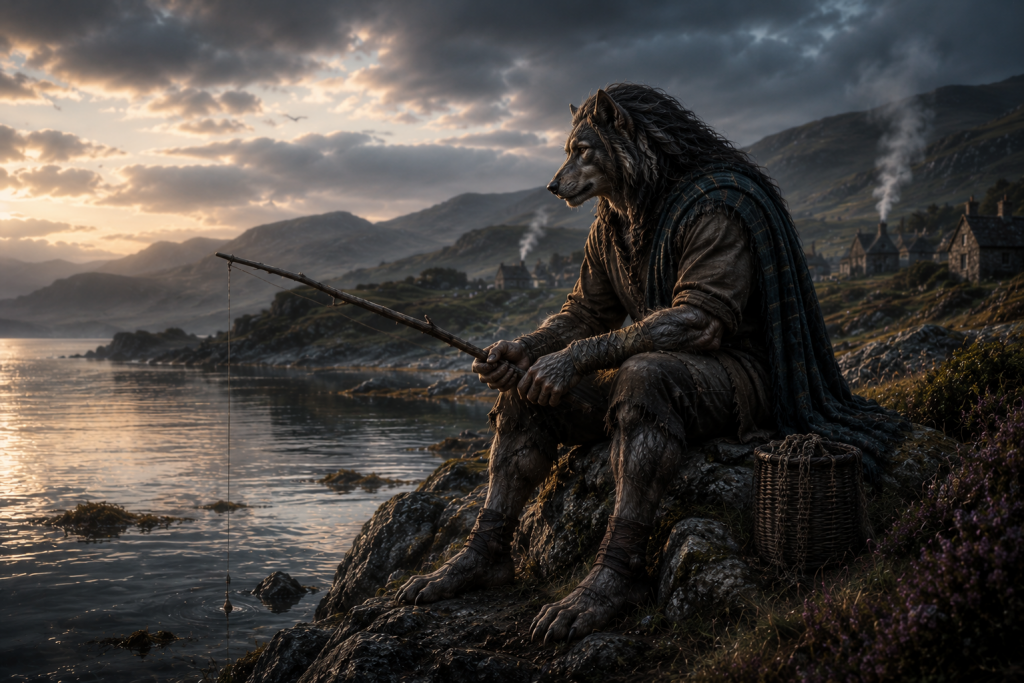
In the twelfth century, the Welsh clergyman Gerald of Wales recorded one of the most detailed and most unusual werewolf accounts in medieval literature. A priest travelling through the woods of Meath encountered a wolf that spoke to him and asked him to administer last rites to his dying wolf-wife. The wolf explained that they were people of Ossory, a kingdom in what is now County Kilkenny, and that their people had been cursed by Saint Natalis to produce two werewolves in every generation who would spend seven years in wolf form before returning to human life and being replaced by two others.
Gerald recorded this account in his Topographia Hibernica, his survey of Irish geography and folklore completed around 1188, and he treated it not as legend but as a reported incident that a credible witness had described to him. He wrestled in the text with whether a wolf could receive the sacraments, concluded that it could if it was genuinely human in nature, and presented the whole thing as genuine information about the customs of the Irish that his English and Welsh readers should know.
The Account in Detail
The priest’s encounter as Gerald recorded it is rich in specific detail. The wolf came to him at his campfire and asked him not to be afraid. It explained the curse: Saint Natalis had cursed the people of Ossory so that every seven years two of their number would take wolf form and live as wolves. If they survived the seven years, they returned to human form and two others took their place. The wolf and his companion were five years into their current seven-year period.
His wife was dying, the wolf explained, and needed the last rites. He asked the priest to follow him to where she lay. The priest followed, found an elderly she-wolf lying weak on the ground, and administered the sacraments. To show him that she was truly human, the wolf peeled back the wolf skin from her face, revealing an old woman’s face beneath. When the priest had finished, the skin was drawn back and she was a wolf again.
The wolf then accompanied the priest safely through the night and left him at dawn, telling him to continue his journey without fear and promising that no harm would come to him in those woods.
Saint Natalis and the Curse
The attribution of the werewolf curse to Saint Natalis is one of the most distinctive elements of the Irish tradition. Saints in the Irish tradition had a long history of placing curses on peoples and places, and the curse of metamorphosis was within the range of what an Irish saint was understood to be able to do. Saint Natalis, also called Naille, was a real historical figure, an Irish monk of the sixth century connected with the Ossory region, which gives the account a specific geographical and hagiographical grounding that a purely invented story would not necessarily have.
The seven year cycle, consistent with the Arcadian tradition of Lycaon where transformation also lasted seven years, connects the Irish werewolf to a broader Indo-European pattern of seven-year supernatural periods. Whether this connection reflects genuine shared tradition or coincidence across independent developments is uncertain, but the recurrence of the specific number across widely separated werewolf traditions is one of the more interesting structural features of the global tradition.
Gerald’s Credibility Question
Gerald of Wales was a careful enough observer to acknowledge the incredulity his account would face. He noted that he was reporting what had been told to him by credible witnesses, that he had no means of verifying it personally, and that the theological questions it raised about the sacraments and the nature of beings that were human in soul but animal in body were genuinely difficult. He consulted with a bishop about whether the administration of last rites to a wolf-human was valid. The bishop said it was.
The passage is one of the clearest examples in medieval literature of a serious intellectual engaging honestly with a piece of folk belief he neither dismisses nor fully endorses. Gerald believed the Irish were strange and their customs were strange, and the wolf-people of Ossory were part of the strangeness he was documenting. Whether he believed the specific incident or simply believed that this was the kind of thing that happened in Ireland is a question his text does not fully resolve.
Further Reading
If this article sparked your interest, these are the books worth reading next.
The Beast of Gévaudan
by Jay M. Smith — the most thorough historical investigation into the creature that terrorised southern France between 1764 and 1767, and what the historical record actually reveals about what it was.
The Werewolf Book: The Encyclopedia of Shape-Shifting Beings
The most comprehensive reference on the werewolf tradition across world cultures — every regional variant, every historical case, every folkloric and literary expression of the shape-shifting being.
The Werewolf in Lore and Legend
by Montague Summers — the classic scholarly treatment of werewolf belief, drawing on primary sources from across Europe. Dense, serious, and still the best single academic treatment of the tradition.
For more on the werewolf tradition, the Loup-Garou article covers the French tradition where the seven year period also appears. The Lycaon article covers the Greek origin of the werewolf and the nine year transformation period in the Arcadian tradition. The Werewolf Trials of Europe article covers the broader history of werewolf belief and prosecution.
Never miss a myth
Thank you for being here. The site is brand new and every subscriber genuinely means something to me. If you're here, you care about this stuff as much as I do - and that's all the reason I need to keep going. New stories, videos and dark folklore from around the world, straight to your inbox. No algorithm. Just the stories, when they're ready.