
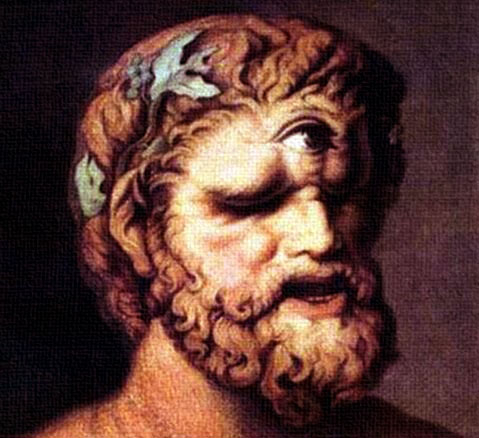
The Cyclops: The One-Eyed Giant of Ancient Greece and the Eerie Truth Behind the Legend
Something was in the cave on the coast of Sicily. Something enormous. And when Odysseus and his men crept inside
Ancient Mythology · Greece
Greek mythology has been retold so many times and in so many forms that it can be difficult to see it clearly anymore. The creatures have appeared in films and video games and young adult novels and theme park attractions, and each retelling smooths away a little more of what made them unsettling in the first place. The Minotaur becomes a tragic figure. The Cyclops becomes a special effect. The Hydra becomes a boss battle.
What they actually were, in the tradition that created them, is more interesting and considerably more disturbing than any of those versions suggest.
Greek mythology is not a children’s story. It is the religious and cosmological framework of a civilisation that lasted for centuries, and the monsters that appear in it are not there for entertainment. They are there because they serve a function, and understanding that function changes how you read them entirely.
The creatures of Greek mythology tend to fall into a few broad categories, though the tradition rarely makes those categories explicit. Some are divine punishment, sent by gods to afflict communities that had offended them or to test heroes whose destiny required a suitably impossible obstacle. The Hydra is not simply a dangerous animal. It is a problem that gets worse the more directly you attack it, which is either a piece of practical wisdom or a theological statement depending on how you read it.
Some are the consequence of divine interference in human affairs, the Minotaur being the most uncomfortable example, a creature that exists because of what the gods did to the family of Minos and that is imprisoned in a labyrinth because there is no other way to contain what that interference produced. The Minotaur is not the villain of its own story. It is the victim of one, and the tradition is ambiguous enough about this that it has sustained argument for two and a half thousand years.
Others are simply ancient, present in the world before the gods imposed any kind of order on it, remnants of a prior age that the heroes of the mythological tradition are tasked with clearing away. The Sphinx does not appear because someone summoned it. It is simply there, at the gates of Thebes, asking its question, and the city pays the price until someone finally answers correctly.
A significant number of Greek monsters occupy a liminal position, existing at the boundary between the human world and something beyond it. Cerberus guards the entrance to the underworld, which is not simply a scary dog job but a cosmological function. The dead must stay dead. The living must not cross over without permission. Cerberus is the enforcement mechanism for a boundary that the entire Greek understanding of existence depends on, and the heroes who bypass him, Heracles, Orpheus, Psyche, are doing something that the tradition treats as genuinely transgressive rather than merely adventurous.
The Empusa belongs to a similar category, a shapeshifting creature associated with Hecate and with the spaces between the living world and the underworld, capable of taking forms that blur the boundary between human and something else entirely. The Harpies carry the dead and torment the living and exist in the space between divine punishment and natural phenomenon, which is where a great deal of Greek mythology is most comfortable operating.
Greek mythology needs its monsters because it needs its heroes, and heroes require something proportionate to their abilities to overcome. The creatures in this section are not obstacles in any simple sense. They are the measure of the heroes who face them. The Chimera tells you something about Bellerophon. The Gordons tell you something about Perseus. The Centaurs tell you something about the fragile boundary between civilisation and the wild that Greek culture was perpetually anxious about maintaining.
The Cyclops encountered by Odysseus is one of the most carefully constructed episodes in Greek literature precisely because it is not simply a monster story. It is a story about cunning versus strength, about the rules of hospitality and what happens when they are violated, and about the consequences of pride in a world where the gods are paying attention. Polyphemus loses his eye. Odysseus loses years of his journey home. The Cyclops prays to his father Poseidon. Nobody in that story comes out entirely well, which is one of the things that makes Greek mythology so durable.
The articles in this section treat Greek mythology as what it was rather than what popular culture has made of it. The creatures are examined in their original context, with attention to what the tradition actually says about them rather than what later retellings have decided they mean. Where there are multiple versions of a story, as there almost always are in Greek mythology, that is noted and explored rather than flattened into a single definitive account.
A significant portion of the content in this section examines the world of Homer’s Odyssey, both through its creatures and through the larger questions the poem raises. Circe, Calypso, Scylla and Charybdis, the Lotus Eaters, and the Sirens are each examined as figures in their own right rather than simply as obstacles in a hero’s journey. Alongside them sit two investigative pieces asking whether the Trojan War actually happened and whether Odysseus was a real person, both drawing on the archaeological and documentary evidence that has accumulated since Schliemann first excavated Troy in 1870. The original material rewards serious attention, and that is what these articles attempt to give it.
Something was in the cave on the coast of Sicily. Something enormous. And when Odysseus and his men crept inside
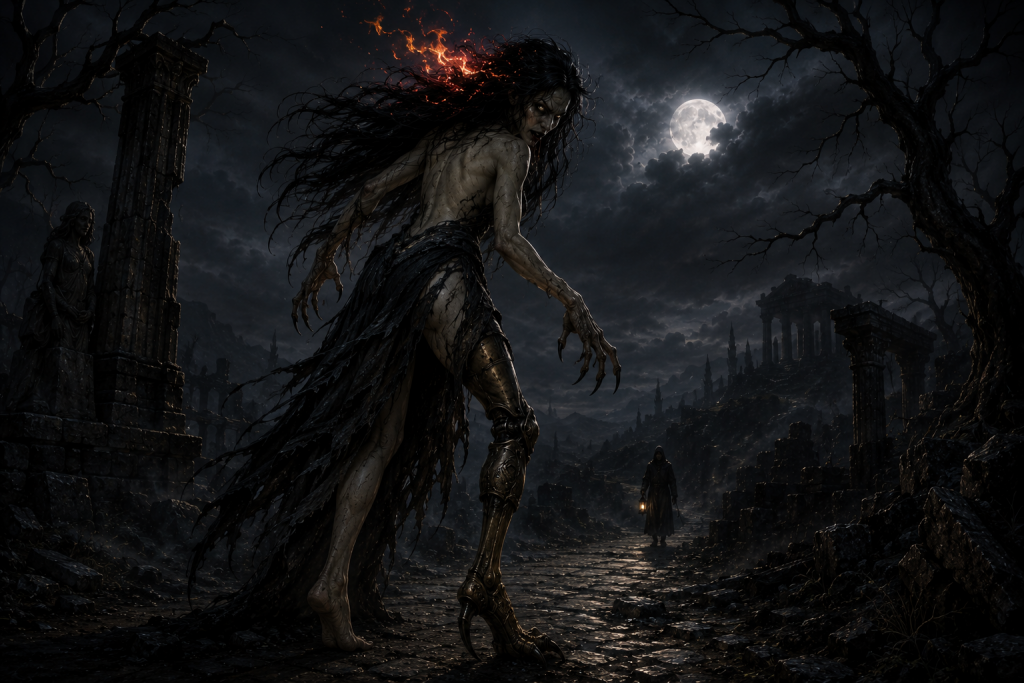
In Aristophanes’s comedy The Frogs, written in 405 BC, the god Dionysus is travelling to the underworld with his servant
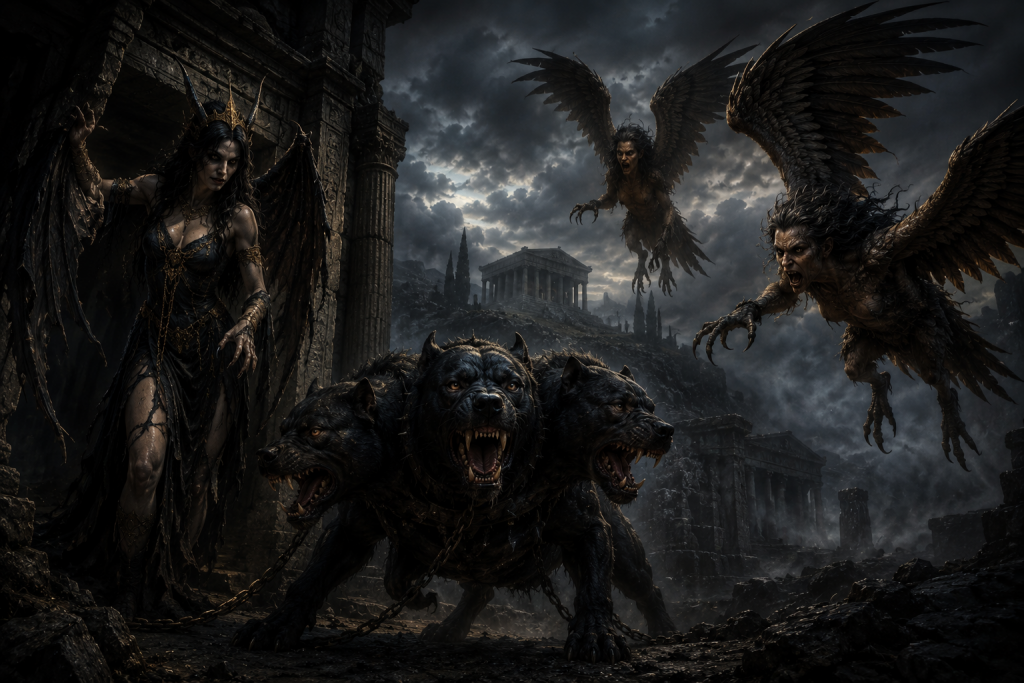
Greek mythology has a monster problem, but not the one you might expect. The problem is not that it has