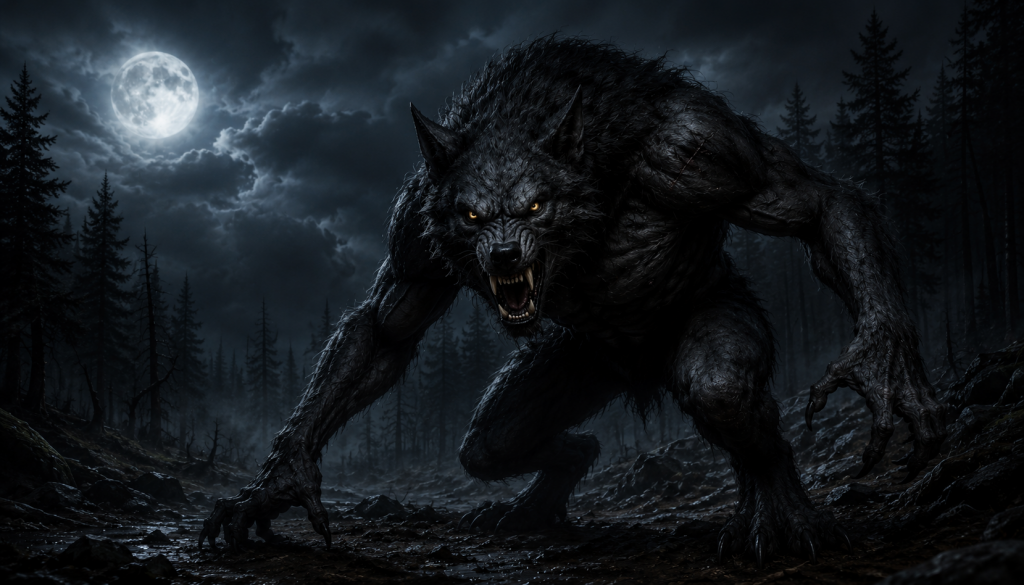
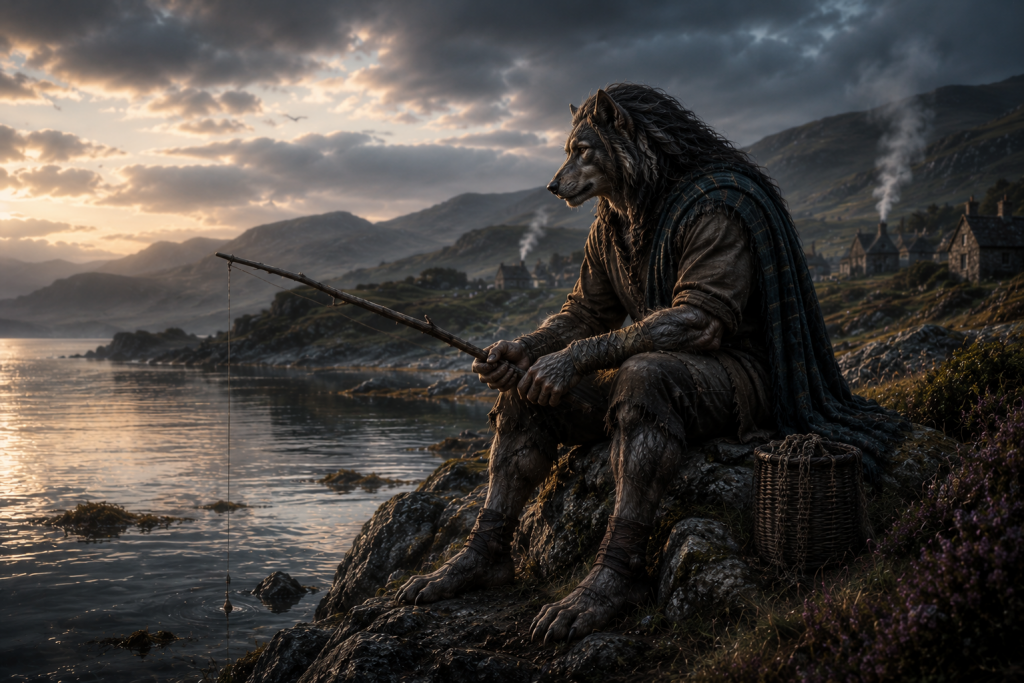
The Cynocephali are human beings with the heads of dogs, and they appeared on the edges of medieval world maps, in the travel writing of Marco Polo, in the letters of Prester John, in the accounts of Alexander the Great’s campaigns in India, and in the natural histories of Pliny the Elder with a consistency that tells you something important about how medieval Europeans understood the world beyond their experience: it was populated with creatures that were almost human but not quite, that occupied the boundary between the human and the animal, and that raised questions about the nature of humanity that the Church found genuinely difficult to answer.
The Cynocephali were not understood as supernatural monsters in the way that the Vukodlak or the Aswang were understood. They were understood as a real race of beings, living in a specific geographic location, India or Ethiopia or somewhere in the deep east, who had dog heads and human bodies and who communicated through barking. The question of whether they had souls, whether they could be converted to Christianity, whether a priest could administer the sacraments to them, was a live theological debate in the medieval period rather than an obvious absurdity.
The Ancient Sources
The Cynocephali tradition in Western literature begins with the ancient Greeks. Ctesias of Cnidus, a Greek physician at the Persian court in the fifth century BCE, described dog-headed people in his account of India, Indika. Megasthenes, the Greek ambassador to the Mauryan Empire in the fourth century BCE, included them in his own Indian account. Pliny the Elder, summarising Greek geographical knowledge in his Natural History in the first century CE, described them as living in the mountains of India, communicating by barking, wearing animal skins, and subsisting on game.
These ancient accounts were transmitted through the medieval period as part of the classical inheritance that European scholars received and treated as authoritative. Pliny’s Natural History was a standard reference text throughout the medieval period, and his Cynocephali travelled with it into every European library that held the book.
Saint Christopher
The most significant individual Cynocephalus in the medieval tradition is Saint Christopher, whose Eastern Orthodox iconographic tradition depicts him with a dog head. The dog-headed Christopher appears in Byzantine icons, in Eastern European church paintings, and in the tradition of the Coptic church, representing a version of the saint’s legend in which he was a Cynocephalus who converted to Christianity and was subsequently given a human form as a reward for his faith.
The Western tradition of Saint Christopher, the giant who carried the Christ child across a river, does not include the dog head, and the two traditions represent the same figure at different stages of their development rather than two different saints. The dog-headed Christopher is the earlier version, reflecting the tradition’s origin in the Cynocephali material, and his conversion story was used in early medieval missionary theology as a demonstration that even the most alien-seeming creature could receive Christian faith.
The Theological Problem
The Cynocephali posed a genuine theological problem for medieval European Christianity. If they existed, were they human? If they were human, did they have souls? If they had souls, could they be saved? If they could be saved, was there an obligation to missionise them? Saint Augustine addressed the question directly in the City of God, acknowledging that if Cynocephali existed and were descended from Adam they must be human regardless of their appearance, but expressing scepticism about whether they actually existed.
The question was not academic to missionaries. If you were travelling to India or Africa and encountered people who looked very different from Europeans, the theological framework you had been given told you that dog-headed people might be out there, and that even dog-headed people might have souls worth saving. The Cynocephali tradition shaped how European missionaries approached the question of human diversity and what forms humanity could take.
The Werewolf Connection
The Cynocephali belong in a werewolf and shapeshifter context because they represent the extreme of the wolf-human boundary that the werewolf tradition explores: not a temporary transformation but a permanent hybrid state, a being that is permanently both human and canine rather than shifting between the two. Where the werewolf crosses the boundary periodically and returns, the Cynocephalus inhabits the boundary permanently, which is both more stable and more troubling as a category.
The medieval tradition that placed Cynocephali at the edges of the known world, in the territories beyond European experience, reflects the same anxious fascination with the boundary between human and animal that drives the werewolf tradition. The question the Cynocephali posed — what is human if it can look like this? — is the same question the werewolf poses from the other direction: what is human if it can behave like this?
Further Reading
If this article sparked your interest, these are the books worth reading next.
The Beast of Gévaudan
by Jay M. Smith — the most thorough historical investigation into the creature that terrorised southern France between 1764 and 1767, and what the historical record actually reveals about what it was.
The Werewolf Book: The Encyclopedia of Shape-Shifting Beings
The most comprehensive reference on the werewolf tradition across world cultures — every regional variant, every historical case, every folkloric and literary expression of the shape-shifting being.
The Werewolf in Lore and Legend
by Montague Summers — the classic scholarly treatment of werewolf belief, drawing on primary sources from across Europe. Dense, serious, and still the best single academic treatment of the tradition.
For more on the shapeshifter traditions of the world, the Lycaon article covers the Greek mythological origin of the werewolf and its own boundary-crossing themes. The Dark Origins of the Werewolf article covers the broader history of werewolf and shapeshifter belief. The Werewolf Trials of Europe article covers the period when the Cynocephali and the werewolf coexisted in European learned imagination.
Never miss a myth
Thank you for being here. The site is brand new and every subscriber genuinely means something to me. If you're here, you care about this stuff as much as I do - and that's all the reason I need to keep going. New stories, videos and dark folklore from around the world, straight to your inbox. No algorithm. Just the stories, when they're ready.