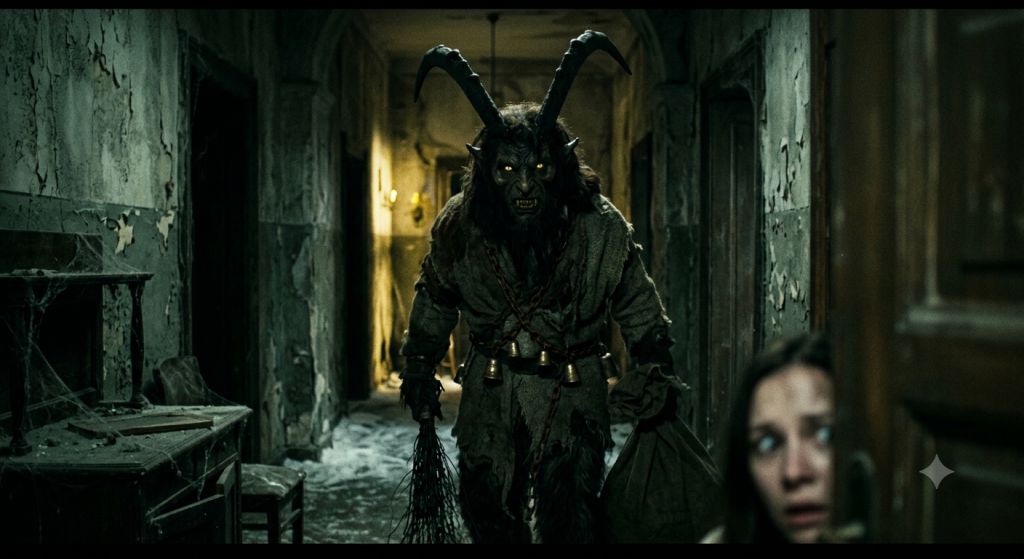
Iceland has thirteen Father Christmases. They do not live at the North Pole. They do not have workshops staffed by elves. They do not travel by sleigh pulled by flying reindeer. They are trolls, the sons of a child-eating giantess named Grýla and her lazy husband Leppalúði, and they live in a cave in the Icelandic highlands for most of the year, descending one by one in the thirteen days before Christmas to visit human settlements and cause the specific forms of mischief that their individual names describe. The first arrives on the 12th of December. The last arrives on Christmas Eve. They leave in the same order, one per day, after Christmas, the last departing on Epiphany. Their relationship with the children they visit is not simply that of gift-givers: they leave small presents in shoes left on windowsills for children who have been good, and rotting potatoes for children who have not, and they maintain throughout their visit the possibility of significantly worse consequences for the particularly naughty, since their mother Grýla is always in the background, and Grýla eats children.
The Yule Lads tradition is one of the most thoroughly Icelandic things in existence: bleak, specific, darkly comic, rooted in a landscape of volcanic rock and winter darkness, and entirely resistant to the globalisation of Christmas imagery that has made most of the world’s Christmas traditions interchangeable. Understanding it properly requires understanding the specific character of Iceland — its isolation, its literary tradition, its relationship with the supernatural landscape — as well as the specific history of a tradition that is both much older and much more recently standardised than it appears.
The Medieval Background: Grýla Comes First
The Yule Lads cannot be understood without understanding Grýla, because Grýla is not a secondary character in their tradition. She is the primary figure, and the Yule Lads are her children in both the literal and the genealogical sense: the tradition of child-threatening at Christmas in Iceland begins with Grýla and the Yule Lads develop as her offspring, inheriting her threatening character while expressing it in more specific and less catastrophically violent forms.
Grýla appears in Icelandic sources from the thirteenth century, making her one of the earliest documented figures in the Icelandic supernatural tradition. The skald Snorri Sturluson mentions her in his Edda, compiled around 1220, which places her in the mainstream of the Old Norse literary tradition rather than in the marginal folk tradition where she is sometimes categorised. Medieval descriptions of Grýla emphasise her monstrous physical characteristics — multiple tails, multiple noses, multiple eyes, a bag specifically designed for carrying children — and her specific hunger for the flesh of naughty children, whom she collects during the Christmas season and boils in a pot.
The specific detail of the multiple tails, each with a hundred bags, each bag containing twenty naughty children, gives Grýla a theoretical child-eating capacity of thirty thousand children per Christmas expedition, which is the folk tradition’s way of making a threat feel genuinely unlimited rather than finite. The bag is the central instrument of her hunting: like the Homem do Saco of Portugal and the various sack-carrying child-threatening figures of European folklore, Grýla’s bag is where the children go and from which they do not return. The specificity of the bag and the vagueness of what happens inside it are precisely calibrated to maximise the effectiveness of the threat on the imagination of the child being threatened.
The Yule Lads are mentioned in the Icelandic folk tradition from at least the seventeenth century, though the specific thirteen with their individual names and characteristics were not standardised until the early modern period. The medieval tradition describes simply a group of supernatural beings associated with Grýla who came down from the mountains at Christmas, and the elaboration of this group into thirteen distinct individuals with distinct personalities appears to have developed gradually through the oral tradition before being fixed in literary form.
The Thirteen Lads: Names, Characters, and Methods
The thirteen Yule Lads and their individual characteristics represent one of the most elaborately detailed supernatural catalogues in European Christmas folklore, and the specificity of their individual misbehaviours is one of the most distinctively Icelandic elements of the tradition. Each Lad has a name that describes his particular activity, and each activity is a specific form of domestic interference that would have been recognisable and irritating to the Icelandic farm households that maintained the tradition.
Stekkjastaur, Sheep-Cote Clod, arrives first on the 12th of December. His name refers to a clod or a stiff-legged figure, and his specific activity is the harassment of sheep in the sheep cote, attempting to suckle from the ewes and generally disrupting the livestock that were central to the Icelandic farm economy. The detail of attempting to suckle from sheep is simultaneously grotesque and comic, which is the characteristic register of the Yule Lad tradition throughout.
Giljagaur, Gully Gawk, arrives second on the 13th of December. He hides in gullies and ditches, waiting for the opportunity to sneak into the cowshed and steal milk. Milk was one of the most valuable commodities on an Icelandic farm, and the theft of milk by supernatural means was a specific form of magical harm — called milk theft in the broader Nordic tradition — that was taken seriously as both an economic threat and a supernatural attack.
Stúfur, Stubby, arrives third on the 14th of December. He is unusually short and steals pans to eat the crusts and food residue left on them. The detail of stealing pans for their crusts rather than for the food itself places him in the tradition of the supernatural scavenger who takes the residue of human activity rather than its primary products.
Þvörusleikir, Spoon Licker, arrives fourth on the 15th of December. He steals and licks the long-handled wooden spoons used in Icelandic cooking, which were carved objects of some value in a pre-industrial household economy. The tradition notes that he is thin and malnourished-looking, presumably because stealing spoon residue is not a nutritionally adequate diet even by supernatural standards.
Pottaskefill, Pot Scraper, arrives fifth on the 16th of December and steals unwashed pots to lick the residue from them. He is sometimes understood as upgrading from Þvörusleikir’s spoon-licking to the more substantial pot-scraping, which would make him the more successful of the two food-scavenging Lads.
Askasleikir, Bowl Licker, arrives sixth on the 17th of December. He hides under beds and waits for someone to put down their askur, the traditional Icelandic lidded wooden bowl from which food was eaten, so that he can steal it and lick it clean. The specific detail of hiding under the bed establishes him in the same physical space as the night-threatening supernatural beings of European tradition generally, and makes his activity more sinister than simple bowl theft: he is present in the most intimate domestic space, waiting.
Hurðaskellir, Door Slammer, arrives seventh on the 18th of December. He is particularly active at night and derives his specific pleasure from slamming doors when people are trying to sleep. The supernatural disruption of sleep is one of the most widely documented forms of household spirit mischief across European tradition, and Door Slammer represents the Yule Lad tradition’s contribution to this category.
Skyrgámur, Skyr Gobbler, arrives eighth on the 19th of December. He has a specific obsession with skyr, the Icelandic fermented dairy product that sits somewhere between yoghurt and cheese and has been a staple of the Icelandic diet since the settlement period. The specificity of the skyr obsession grounds the Lad firmly in Icelandic food culture in a way that makes him untranslatable: there is no equivalent figure in traditions where skyr is not eaten, because skyr is the point.
Bjúgnakrækir, Sausage Swiper, arrives ninth on the 20th of December. He hides in the roof beams of the farmhouse and uses a hook to steal sausages that have been hung to smoke or dry. The specific location in the roof beams is consistent with the tradition of supernatural beings that inhabit the liminal spaces of the domestic structure — above the living space but below the outdoors — and the hook as a tool of theft is one of the more practically specific details in the Yule Lad tradition.
Gluggagægir, Window Peeper, arrives tenth on the 21st of December. He peers through windows looking for things to steal, which makes him both a thief and a voyeur, the only Yule Lad whose mischief is primarily observational rather than immediately active. The window-peeping detail connects him to the broader tradition of supernatural beings who watch humans from outside the domestic space, a tradition that is particularly developed in the Scandinavian and Germanic supernatural traditions.
Gáttaþefur, Doorway Sniffer, arrives eleventh on the 22nd of December. He has an extraordinarily large nose — disproportionate even by Yule Lad standards — and uses it to sniff out laufabrauð, the traditional Icelandic Christmas bread that is deep-fried and decorated with intricate cut patterns. The laufabrauð detail is another Icelandic-specific element: laufabrauð is made in the weeks before Christmas in a process that involves the whole household and that produces a bread of considerable beauty and cultural significance, making its theft by a large-nosed supernatural being both comic and genuinely irritating.
Ketkrókur, Meat Hook, arrives twelfth on the 23rd of December. Like Bjúgnakrækir, he uses a hook, but his target is meat rather than sausages — specifically the smoked lamb that was one of the most prized foods in the traditional Icelandic Christmas feast. He lowers his hook through the smoke hole in the roof or through any available gap, attempting to snag the best pieces of meat from the larder.
Kertasníkir, Candle Stealer, arrives last on the 24th of December, Christmas Eve. He follows children and steals their candles, which historically meant leaving them in the dark — a genuinely threatening consequence in a period before electric light, when candles were both expensive and essential for navigating the long Icelandic winter night. In the contemporary tradition he is sometimes reinterpreted as stealing electric torches or other light sources, updating the specific threat while maintaining its basic character.
The 1746 Law and What It Tells Us
The most extraordinary document in the history of the Yule Lads tradition is an Icelandic law passed in 1746 that explicitly forbade parents from using Grýla and the Yule Lads to frighten their children. The law stated that parents should not terrify their children with tales of these supernatural beings, and it represents one of the very few examples in European history of a government passing legislation specifically to regulate the content of the stories that parents told their children at Christmas.
The law’s existence is evidence of several things simultaneously. It confirms that the tradition was genuinely widespread: you do not pass laws against practices that are marginal. It confirms that the tradition was genuinely frightening children: the authorities were sufficiently concerned about the psychological effect on Icelandic children to make the child-threatening use of Grýla and the Lads explicitly illegal. And it confirms that the tradition was considered excessive even by the standards of a culture that was generally comfortable with rather robust approaches to child discipline: the law distinguishes between acceptable and unacceptable levels of supernatural child-threatening, which implies that some level was considered acceptable.
The law also had essentially no effect. The tradition continued without significant interruption, and Icelandic parents continued to use Grýla and the Yule Lads to manage their children’s behaviour at Christmas for the following two and a half centuries. The persistence of the tradition in the face of legal prohibition is a minor but genuine example of folk culture’s resistance to official regulation, and it places Iceland in the same category as the Alpine communities that maintained the Krampus tradition against five centuries of Church opposition: the tradition survived because it addressed a genuine need in the community that the authorities’ preferred alternatives did not meet.
The Literary Standardisation: Jóhannes úr Kötlum
The thirteen Yule Lads as they are known today — with their specific names, their specific arrival and departure schedule, and their specific individual characters — were not fully standardised until the twentieth century, and the agent of standardisation was a single poem by a single author: Jólasveinavísur, the Yule Lad verses, written by the Icelandic poet Jóhannes úr Kötlum and published in 1932 in his collection Jólin koma.
Jóhannes’s poem described each of the thirteen Lads in verse, giving them their individual characters, their specific arrival dates, and their specific misbehaviours in the form that has become canonical. The poem was written in a deliberately traditional style that made it sound like something much older than it was, and it was so well suited to the tradition it described that it was quickly adopted as the definitive account of the Yule Lads rather than as a literary creation. It has since been set to music, memorised by generations of Icelandic schoolchildren, and translated into multiple languages, and it is the primary source through which most people outside Iceland encounter the Yule Lad tradition.
The poem’s influence on the tradition it described is an interesting case of a literary text shaping the folk tradition rather than simply recording it. Before Jóhannes’s poem, the Yule Lads were a group of supernatural beings associated with Grýla whose individual characters were not standardised across all regions of Iceland. Different communities had different lists of Lads with different names and different activities, and the thirteen-Lad structure was not universally accepted. After the poem, the thirteen became canonical and the regional variants gradually faded as the literary standard displaced them.
The Transformation From Threats to Gift-Givers
The modern Yule Lads, who leave presents in children’s shoes for thirteen nights before Christmas, are significantly more benign than their predecessors in the older tradition. The transformation from threatening supernatural beings who might harm children to mischievous gift-givers who might leave a potato in your shoe if you have been bad represents a substantial softening of the tradition, and it happened over the course of the twentieth century through a combination of influences.
The most important influence was the globalisation of the Santa Claus gift-giving tradition, which provided a model of the Christmas supernatural being as primarily a gift-giver rather than a threat. The Yule Lads’ adoption of the gift-giving role — leaving presents in shoes rather than stealing food and disrupting sleep — represents the assimilation of the Icelandic tradition to the globalised Christmas norm while maintaining the specifically Icelandic character of the Lads themselves.
The shoe-leaving custom is now the central practice of the Yule Lad tradition as experienced by contemporary Icelandic children. Children place a shoe on the windowsill each evening from the 12th of December onward, and wake the following morning to find either a small gift or a potato, depending on their behaviour. The thirteen nights of shoe-leaving create a sustained period of anticipation that some Icelandic parents regard as superior to the single-night delivery of the Santa Claus tradition: rather than one morning of gift-opening, Icelandic children have thirteen mornings of discovery, each one associated with a specific Lad whose arrival they have been expecting.
The Yule Lads as Icelandic Identity
The Yule Lads occupy a specific place in Icelandic national identity that goes beyond simple seasonal tradition. They are one of the most distinctively Icelandic elements of the Christmas season, resistant to replacement by the globalised Santa Claus in a way that most other national Christmas traditions have not been, and they are actively promoted as cultural heritage in ways that reflect a specific Icelandic consciousness about the importance of maintaining indigenous tradition against the homogenising pressure of global popular culture.
The town of Ákureyri in northern Iceland maintains a Yule Lad theme throughout the Christmas season, with figures of the individual Lads appearing in public spaces and the arrival of each one marked as a minor local event. The National Museum of Iceland has exhibits on the Yule Lad tradition and on Grýla. Icelandic children’s books, films, and television programmes featuring the Yule Lads are produced continuously, ensuring that each new generation encounters them as living figures rather than historical curiosities.
The international interest in the Yule Lads that has developed alongside the broader interest in Scandinavian culture in the early twenty-first century has reinforced rather than diluted their Icelandic identity. Unlike Krampus, which was adopted by global culture and detached from its Alpine origins, the Yule Lads have remained strongly associated with Iceland specifically, partly because their individual characters are so deeply embedded in specifically Icelandic domestic life that they resist easy transplantation into contexts where skyr is not eaten and laufabrauð is not made.
For more on the Christmas folklore tradition, the Grýla article covers the monstrous mother of the Yule Lads and her own ancient history in the Icelandic tradition. The Yule Cat article covers the giant Christmas cat who accompanies Grýla’s family and threatens those without new clothes. The Krampus article covers the Alpine equivalent of the threatening Christmas figure and the five centuries of suppression that failed to remove him. The Christmas hub page has every article in the cluster.
Never miss a myth
Thank you for being here. The site is brand new and every subscriber genuinely means something to me. If you're here, you care about this stuff as much as I do - and that's all the reason I need to keep going. New stories, videos and dark folklore from around the world, straight to your inbox. No algorithm. Just the stories, when they're ready.