
There is a hill on the edge of the village of Aberfoyle in the Trossachs, a gentle green mound rising from the ground beside the old churchyard, unremarkable in its dimensions and extraordinary in its reputation. It is called Doon Hill, though it has been known by other names across the centuries, and the tradition attached to it is one of the most specific and most compelling in the entire canon of Scottish fairy belief.
A man walked up that hill one evening in May 1692 and did not come back down.
He was not a credulous villager or an uneducated peasant susceptible to superstition. He was the Reverend Robert Kirk, the Minister of Aberfoyle, a graduate of the University of Edinburgh, a scholar who read Greek and Hebrew and who had translated the Psalms into Scottish Gaelic for the use of Highland congregations that had no Bible in their own language. He was a man of considerable learning, genuine piety, and an intellectual seriousness that commanded respect in his own time and has commanded the attention of scholars ever since.
He was also the author of the most detailed and serious academic study of fairy belief ever produced in the British Isles, a work called The Secret Commonwealth of Elves, Fauns and Fairies, which he completed shortly before his death and which remained in manuscript for over a century before being published and recognised as the remarkable document it is.
Robert Kirk knew more about the fairy world than almost anyone alive in his time. And one evening in May 1692, he walked up the hill that stood above the village where he had his church and his home, and whatever he found there kept him.
Who Robert Kirk Was
Robert Kirk was born in Aberfoyle in 1644, the seventh son of the Minister of Aberfoyle, which in the folk belief of the time was itself a significant circumstance. The seventh son, and particularly the seventh son of a seventh son, was understood in Scottish tradition to be born with the second sight and with a particular sensitivity to the supernatural world, a connection to things beyond ordinary perception that could be a gift or a burden depending on how it was managed.
He was educated at the University of Edinburgh and subsequently at St Andrews, receiving the Master of Arts degree that qualified him for the ministry. He served as minister at Balquhidder before returning to Aberfoyle, where he had been born, to take up the ministry his father had held. He was, by all accounts, an effective and conscientious minister who served his congregation with genuine care.
His scholarly work in Scottish Gaelic is not incidental to his story. The translation of the Psalms he produced was a significant contribution to the religious life of Gaelic-speaking Highland communities at a time when access to scripture in their own language was limited, and the effort required to produce it speaks to a man who took both his scholarship and his pastoral responsibilities seriously.
The Secret Commonwealth, the work he is now chiefly remembered for, was completed around 1691, a year before his death. It was an attempt to describe systematically what was known and believed about the fairy world in the Scottish Highlands and Islands, based on his own observations and on the accounts of those with the second sight whom he had spoken with over many years of ministry in the Highland region. It was not written as a collection of entertaining stories. It was written as a serious attempt to understand a phenomenon that Kirk believed was real.
The Secret Commonwealth
The Secret Commonwealth of Elves, Fauns and Fairies is unlike any other document in the British supernatural tradition. It is not folklore collection in the sense that later Victorian collectors understood that term. It is not a piece of imaginative literature. It is a theological and philosophical inquiry, written by a minister of the Church of Scotland who believed that the beings he was describing were genuinely real and that understanding them was a legitimate and important intellectual project.
Kirk described the fairy world with a specificity and a seriousness that his contemporaries found difficult to categorise. He wrote about the physical nature of fairy bodies, which he described as of a middle nature between man and angel, of a substance subtler than matter but not purely spiritual. He described their communities and their social organisation, their relationship to the human world, their interest in human affairs, and the specific individuals, the people with the second sight, who could perceive them.
He was careful to distinguish the fairy world as he understood it from both the dismissive scepticism of those who denied the existence of any supernatural beings beyond what orthodox theology recognised and the credulous popular belief that treated fairy encounters as simple entertainment. He was making a more difficult and more interesting argument: that the beings described in the traditions of the Gaelic world were real, that they had a nature that could be understood, and that understanding them was not incompatible with Christian belief.
This was not an easy position to hold in the Scotland of 1691, and Kirk appears to have been aware of the intellectual risks he was taking. The Secret Commonwealth was not published in his lifetime. Whether he chose not to publish it or was prevented from doing so by circumstances is not entirely clear from the record.
The Evening of the 14th of May, 1692
The account of what happened to Robert Kirk on the evening of his death is preserved in several versions that agree on the basic facts while differing in certain details, which is itself characteristic of genuine oral tradition rather than literary invention.
Kirk went out after supper, as was apparently his habit, to walk on the fairy hill, the small mound that rose above the village near the old churchyard. This was not an unusual thing for him to do. He had walked on that hill many times. He had an established relationship with the place, rooted in both his personal inclination and his scholarly interest in what the tradition said about such mounds.
He was found, a short time later, lying on the hill. He died shortly afterward, or was apparently dead when found, depending on which version of the account you follow. He was buried in the churchyard at Aberfoyle, and his grave is still there, a flat stone in the old kirkyard with an inscription in Latin.
The official account is simple and unremarkable. A minister in his late forties had a sudden illness or a stroke while walking on a hillside near his home and died. It happens. There is nothing in this version that requires any explanation beyond the ordinary fragility of human health.
The other account is considerably more interesting.
What the Tradition Says
In the tradition that grew up around Aberfoyle and that Kirk’s own cousin Graham of Duchray was among the first to record, the official account was not what had actually happened.
Kirk had not simply died on the hill. He had been taken. The fairy hill had claimed him, taken him in as a captive to the fairy world beneath it, and what had been found on the hill and subsequently buried in the churchyard was not Kirk himself but a stock, a substitute body left by the fairies in place of the person they had taken, a device well established in Scottish fairy tradition as the means by which the fairy world acquired human beings without immediately announcing the fact.
Kirk, in this account, was still alive. He was alive in the fairy hill, a captive of the Secret Commonwealth he had spent so long describing, taken perhaps as a consequence of knowing too much, of having described in precise and accurate detail the nature and the practices of beings who did not necessarily welcome that kind of documentation.
The tradition goes further. Kirk reportedly appeared to his cousin Graham of Duchray after his death, in a vision or an apparition, and told Graham that he was not dead but was held in the fairy hill and that there was one specific chance to free him. Kirk’s wife was pregnant at the time of his death. At the baptism of the child, Kirk would appear in the room, and if Graham of Duchray could throw an iron knife over Kirk’s head at the moment of his appearance, the iron would break the fairy hold and Kirk would be freed.
Graham of Duchray was at the baptism. Kirk appeared, as promised. Graham, overwhelmed by the apparition or simply too slow, did not throw the knife.
Kirk was not freed. He remains, in the tradition of Aberfoyle, in the hill.
The Pine Tree and the Living Tradition
Doon Hill today is accessible by a short walk from the village of Aberfoyle, a well-maintained path through woodland leading to the top of the small mound. At the summit stands a Scots pine, a large and distinctive tree that has become the focal point of a living tradition that has accumulated around Kirk’s story over the three centuries since his disappearance.
The tree is covered in clootie offerings, strips of cloth and ribbon and other small tokens tied to its branches by visitors who have made wishes or left requests or simply wanted to leave some mark of their visit to a place they felt the weight of. This practice, the clootie tradition, is ancient in Scotland and Ireland, associated with sacred wells and holy trees and places understood to be points of contact between the human world and something else.
The pine at the top of Doon Hill is known as Robert Kirk’s tree, and the tradition holds that Kirk’s spirit is imprisoned within it, that the tree is in some sense him, or at least the point of his connection to the world above the hill. Visitors who want to make a request of the fairy world, or who want to communicate with Kirk himself, leave their offerings on the tree.
This is a living tradition, actively maintained by people who visit the hill with genuine intention rather than purely touristic curiosity. The tree is always decorated. New ribbons appear regularly. The hill receives visitors throughout the year.
Whether this represents genuine folk belief surviving into the twenty-first century, or a romantic revival of something that had been lost and was reconstructed from literary sources, or some combination of the two, is a question worth asking. What is not in question is that Doon Hill has a quality that visitors consistently remark on, a specific atmosphere that the short walk from the car park in Aberfoyle does not entirely prepare you for.
The hill is quiet in a particular way. The tree is extraordinary in its decoration and its presence. And the story of the man who walked up the hill and never came back down has a grip on the imagination that three centuries have done nothing to loosen.
If you want more like this, the Tales of Myth and Magic newsletter delivers new creatures, legends, and forgotten folklore straight to your inbox.
No fixed schedule. No noise. Just the stories, when they are ready.
Sign up here →The Second Sight and What Kirk Understood
One of the most significant aspects of The Secret Commonwealth is Kirk’s treatment of the second sight, the ability to perceive the fairy world and the supernatural generally that was understood in Highland tradition as an inherited gift or burden carried by specific individuals.
Kirk was not simply describing the second sight from the outside, as an interesting cultural phenomenon observed in his congregations. The tradition of Aberfoyle, supported by the detail that he was a seventh son and by the evident intimacy of his knowledge of fairy belief, suggests that Kirk himself may have had the second sight, that his careful and detailed account of the fairy world was based partly on his own experience of perceiving it.
If this is true, it changes the nature of his walks on the fairy hill considerably. He was not an ordinary man walking on an ordinary hill. He was a man with the second sight walking on a fairy mound, a man who could perceive what was in and around that hill in ways that other people could not, and who had spent decades studying the nature of the world he was perceiving.
The fairy world, in Kirk’s own account, did not always welcome the attention of those who could see it. The second sight was understood as a faculty that the beings of the Secret Commonwealth could sometimes resent, that being observed accurately and described precisely was not something they were entirely comfortable with. A man who had written the most detailed and accurate description of the fairy world ever produced was, in the terms of the tradition he was describing, a man who had made himself conspicuous to beings who valued their privacy.
The walk on the evening of the 14th of May was not his first walk on that hill. But the tradition says it was his last, and the tradition offers an explanation for why.
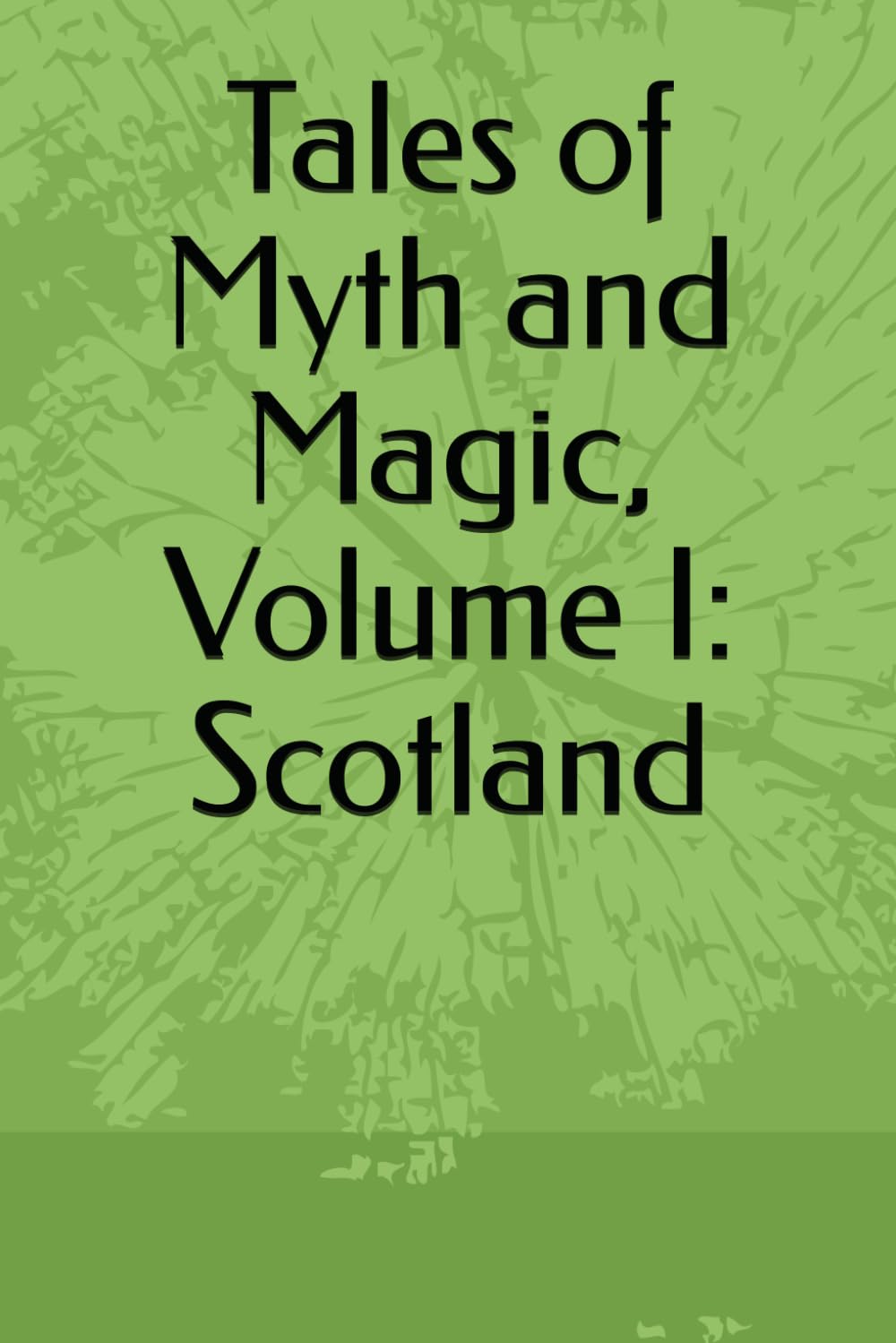
If you enjoyed this article, the creatures and legends of Scotland are collected in my book Tales of Myth and Magic, Volume I: Scotland — 25 tales told in full, each traced to its earliest sources, with a map, glossary, and full bibliography. Available in paperback for £11.99.
Find Out More →Further Reading
If this article sparked your interest, these are the books worth reading next.
Scottish Urban Legends: 50 Myths and True Stories
by Aaron Mullins — fifty Scottish urban legends including stories from Glasgow, Edinburgh, and the Highlands. The kind of tradition that Maggie Murphy belongs to, collected properly in one volume.
Scottish Urban Myths and Ancient Legends
by Grace Banks and Sheena Blackhall — vampires, werewolves, devil encounters, and the school playground legends of Scotland. A genuinely good collection of the stories Scots have been telling each other for generations.
The Lore of Scotland: A Guide to Scottish Legends
by Jennifer Westwood and Sophia Kingshill — the most comprehensive collection of Scottish legend in print, covering Glasgow to Shetland, exploring origins and historical basis. Endorsed by Terry Pratchett as the real macabre.
Never miss a myth
Thank you for being here. The site is brand new and every subscriber genuinely means something to me. If you're here, you care about this stuff as much as I do - and that's all the reason I need to keep going. New stories, videos and dark folklore from around the world, straight to your inbox. No algorithm. Just the stories, when they're ready.