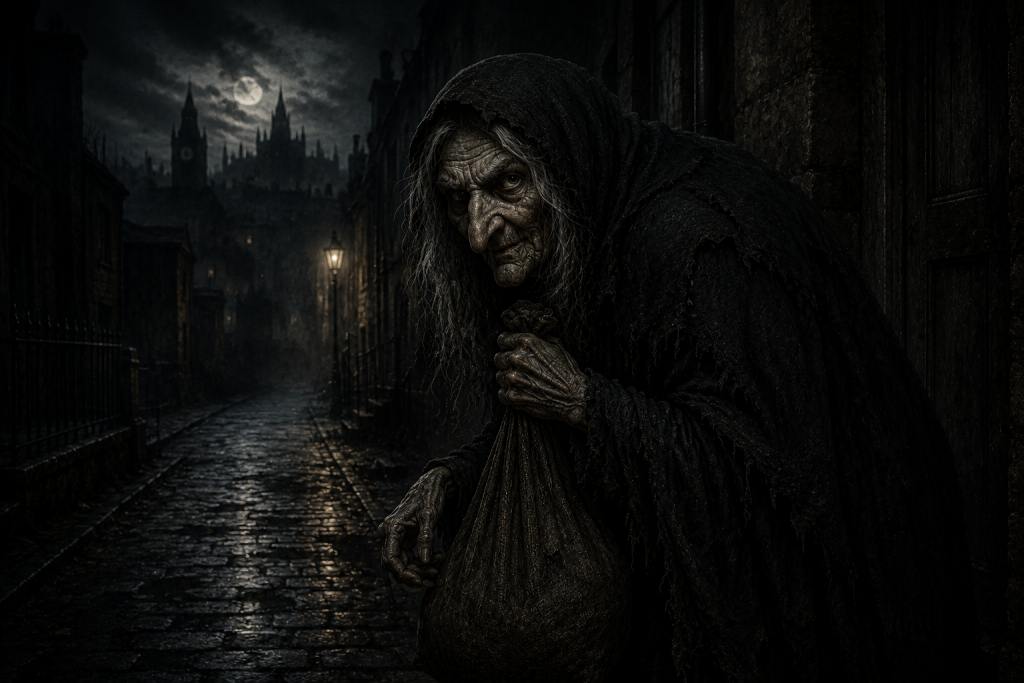

He saw the railways before the first locomotive had turned a wheel. He saw ships sailing through the glens of the Highland interior before any canal had been cut. He saw the destruction of a noble family in such specific detail that when the last of their line inherited the title, deaf and mute from childhood illness, and watched all four of his sons die before him, the people of Ross-shire remembered what had been said and shook their heads.
Coinneach Odhar, the Brahan Seer, is Scotland’s prophet, a man whose predictions have been argued over, documented, disputed, and marvelled at for centuries. He is called Scotland’s Nostradamus, though the comparison undersells both the specificity of his predictions and the darkness of his end. Nostradamus died in his bed. Coinneach Odhar, if the tradition is correct, was thrown head-first into a barrel of burning tar on the orders of a noblewoman whose husband’s infidelity he had been unwise enough to confirm.
He made his final prophecy as they dragged him toward the flames. It came true in every particular.
Who Coinneach Odhar Was
The biography of the Brahan Seer comes to us through oral tradition rather than documentary record, and the honest thing to say at the outset is that this creates genuine uncertainties that the article will not pretend away.
According to the most widely accepted version of the legend, Coinneach Odhar was born Kenneth Mackenzie in the early seventeenth century at Baile-na-Cille in the Parish of Uig on the Isle of Lewis. His name in Gaelic means Dark Kenneth or Sallow Kenneth, a physical description rather than a moral one, and it is the name by which Highland tradition has always known him.
He lived at Loch Ussie near Dingwall in Ross-shire and worked as a farm labourer from about 1675 on the Brahan estate, the seat of the Seaforth Mackenzie chiefs. This is not a glamorous biography. The man who became Scotland’s most celebrated prophet was a farm worker, without standing or wealth, whose only distinction was the faculty he carried with him from Lewis that the Highland tradition calls the second sight.
The second sight, it should be noted, was not understood in Highland tradition as a gift. The Second Sight has never been regarded as witchcraft in Scotland: it is seen more as a curse. It came unbidden. It showed things the seer would often rather not have seen. And it produced, in those who possessed it, a specific isolation, the loneliness of knowing things that nobody else around you can verify until the future confirms them.
The Stone
Legend has it that he gained clairvoyance after napping on a fairy hill and finding a small stone with a hole carved through its centre in his coat when he woke up, peering through this object bestowed the second sight upon him but cost him his vision in that eye.
The stone is one of the most consistent details in the Brahan Seer tradition. One interesting aspect of the claimed visionary powers of the Brahan Seer is that he was said to use a white or blue stone with a hole in the centre in which he saw distant or future events, as in crystal gazing. He would peer through the hole and the visions would come, unbidden and specific, of things happening elsewhere at that moment or of things that had not yet happened at all.
Popular legend has it that his mother had witnessed spirits wandering near a graveyard and had prevented one spirit from returning after her wanderings. She finally allowed the spirit to go back to rest and she had been given the stone as a gift in return. The stone passed from mother to son, and with it the sight.
What became of the stone is itself part of the tradition. Before his execution, Coinneach Odhar reportedly threw it into Loch Ussie, saying that it would one day be found in the belly of a fish. It has not been found. The loch has not been drained. The stone, wherever it is, keeps its secrets in the cold water near Dingwall.
The Prophecies That Came True
The range of prophecies attributed to Coinneach Odhar spans from the intimate and local to the historically sweeping, and the ones most often cited as fulfilled are specific enough in their detail to require more than a dismissive explanation.
He described great black, bridleless horses belching fire and steam, drawing lines of carriages through the Highland glens, a vision that would be fulfilled more than two hundred years later with the arrival of the railways. In the seventeenth century, a man describing what sounds unmistakably like a steam locomotive running through the Highland landscape was describing something that had no framework to be understood in. The railways arrived in the Highlands in the nineteenth century. The description fits.
Strange as it may seem to you this day, he said, time will come, and it is not far off, when full-rigged ships will be seen sailing eastward and westward by the back of Tomnahurich, near Inverness. A hundred and fifty years later the Caledonian Canal linked the Lochs along the Great Glen. Tomnahurich is a hill on the edge of Inverness. Ships passing by its back meant ships travelling through the interior of Scotland, which was physically impossible until the canal was cut.
Coinneach Odhar spoke of the day when Scotland would once again have its own Parliament. This would only come, he said, when men could walk dry-shod from England to France. The opening of the Channel Tunnel in 1994 was followed a few years later by the opening of the first Scottish Parliament since 1707.
Almost a hundred years prior to the event, Dark Kenneth reportedly fell to his knees in the moorlands and said: Oh Drumossie, thy bleak moor shall, ere many generations have passed away, be stained with the best blood of the Highlands. Glad am I that I will not see the day, for it will be a fearful period. This was thought to relate to the Battle of Culloden where 1,250 Jacobite soldiers were slain.
He was also reported to have said that Scotland’s Parliament would return when a man could walk from England to France without getting their feet wet. Some read the Channel Tunnel as the fulfilment of exactly this condition. Others find the interpretation a stretch. The Parliament is not in dispute.
In nearby Strathpeffer he predicted that when a fifth spire was built in the town a ship would snag its anchor on the newest one. This happened in 1932 when an airship made an emergency landing and was tied up to the spire of the new church.
The North Sea oil fields were predicted. The Highland Clearances were predicted, with the specific observation that the sheep shall eat the men, as families were driven from the Highlands and the land they farmed was given over to the grazing of sheep.
The Seaforth Prophecy: The Curse That Fulfilled Itself
Of all the predictions attributed to Coinneach Odhar, none is as specific, as documented in its fulfilment, or as devastating in its consequences as the Seaforth Prophecy. This is the one that killed him, and the one that came true in every detail across the following century.
The story goes that in about 1675, Lady Isabella Seaforth, the wife of Kenneth Mor Mackenzie, the third Earl of Seaforth, summoned Coinneach Odhar and asked him to tell her news about her husband, who was in Paris at the time. This was the kind of request that the second sight was expected to answer, a straightforward enquiry about the wellbeing of someone at a distance.
Coinneach told her that her husband was well. Lady Isabella, sensing that he was withholding something, pressed him for more. He resisted, apparently understanding that what he had seen was not something she wanted to hear. She threatened him. He told her.
Her husband was kneeling before a French woman fairer than herself. He was not in any danger. He was in considerably better spirits than his wife was about to be.
Lady Isabella’s response was immediate and absolute. She ordered Coinneach Odhar seized and condemned him to death. As he was taken away, he made his final prophecy, a detailed curse on the house that was killing him. He described the end of the Seaforth line in terms so specific that the fulfilment, when it came, was unmistakable.
The long descended line of Seaforth will, ere many generations have passed, end in extinction and sorrow. I see the last head of his house both deaf and dumb. He will be the father of four fair sons, all of whom he will follow to the tomb. He will live careworn, and die mourning, knowing that the honours of his line are to be extinguished forever, that no future chief of the Mackenzies shall bear rule at Brahan or in Kintail.
Francis Humberston Mackenzie, deaf and dumb from scarlet fever as a child, inherited the title in 1783. He had four children who died prematurely and the line came to an end.
Every element of the prophecy was fulfilled. The deaf and mute heir. The four sons who died before their father. The extinction of the line. Brahan Castle itself, the proud seat of the Seaforths, fell into decay and was demolished in 1953. The estates that had been in Mackenzie hands for generations passed to strangers.
The Question of Coinneach Odhar
The Brahan Seer tradition contains a historical complication that honest treatment of the subject requires acknowledging, and that honest treatment also requires putting in its proper context.
There is no historical evidence that a prophet known as Kenneth Mackenzie existed. The Brahan Seer is regarded by some to be the creation of the folklorist Alexander Mackenzie whose accounts occur well after some of the events the Seer is claimed to have predicted.
Most of what is known today about the Brahan Seer and his prophecies has no written basis earlier than Alexander Mackenzie’s 1877 book, in which he said he had collected together oral stories told in Gaelic about the Seer across the Highlands over the previous two hundred years, translated them, and published them.
There is a Coinneach Odhar in the historical record, but he appears in the wrong century. There are two records for a Coinneach Odhar, a sixteenth century man who was accused of witchcraft. There is a Scottish Parliament record, dated 1577, for a writ of his arrest. This places him a full century before the events of the Seaforth story are supposed to have occurred, and before the Seaforth branch of the Mackenzies had even come into existence.
Elizabeth Sutherland argued that there was most likely a genuine man named Kenneth Mackenzie who was a faithful dependent of the third Earl of Seaforth who left his employ in unfortunate circumstances and wandered the local countryside. He then got conflated with the genuine historical Coinneach Odhar who is on record twice on trial for witchcraft in the sixteenth century. This figure then became a magnet for a whole variety of stories about local prophecies.
This is the most intellectually satisfying account of the Brahan Seer tradition. It does not require the existence of a single supernatural prophet. It requires only that a real man with a reputation for second sight became, over two centuries of oral transmission, the attributed source of every Highland prophecy that had not found a home elsewhere, and that the story of his death at the hands of Lady Seaforth was constructed around a genuine historical incident involving a different Coinneach Odhar a century earlier.
None of this, it should be said, explains the Seaforth Prophecy. If the prophecy was attributed to Coinneach Odhar after the events it describes had already occurred, it is an elaborate construction of hindsight rather than foresight. If it genuinely predated the events, which the oral tradition insists it did, the question of how it was known remains. The prophecy was specific. The fulfilment was complete. Either someone in the Highland tradition knew, generations in advance, that the Seaforth line would end in this precise way, or they did not.
Whatever we make of these stories and although there are many uncertainties to the life, times and prophecies of Kenneth Mackenzie or Coinneach Odhar, it is without doubt that his memory in this part of the Scottish Highlands has come down to us as the Brahan Seer blazing with legend.
Chanonry Point
There is a stone slab by the lighthouse at Chanonry Point, near Fortrose, that is said to mark the spot where he died. The inscription reads: This stone commemorates the legend of Coinneach Odhar better known as the Brahan Seer. Many of his prophecies were fulfilled and tradition holds that his untimely death by burning in tar followed his final prophecy of the doom of the House of Seaforth.
Chanonry Point is a narrow spit of land jutting into the Moray Firth from the Black Isle, a place of extraordinary beauty and of one of the most reliable dolphin-watching spots in Britain. The bottlenose dolphins of the Moray Firth congregate there to feed on the salmon running through the tidal race, and on any decent day the point attracts a steady stream of visitors with cameras and binoculars.
The stone is there among them, largely unnoticed by most of the visitors watching the dolphins. The lighthouse stands behind it. The water where Lady Isabella ordered the prophet burned runs cold and clear in front.
Whether Coinneach Odhar actually died there, whether he existed in the form the tradition describes, whether the prophecies were genuinely made before their fulfilments, are questions the stone does not answer and the tradition does not fully resolve.
What the stone records is that the legend is real, that it has been maintained in this part of Scotland without interruption for centuries, and that the people who maintained it took it seriously enough to mark the place of his death in permanent stone.
The Prophecies That Have Not Yet Come True
Not all of Coinneach Odhar’s attributed predictions have been fulfilled, and the unfulfilled ones are worth noting for the specific and somewhat alarming quality of what they describe.
When there are seven bridges over the Ness, Inverness will be consumed with fire from the black rain and tumble into the sea. Inverness currently has more than seven bridges spanning the River Ness. The city has not tumbled into the sea. The prophecy is either yet to be fulfilled, wrongly attributed, or simply incorrect. The people of Inverness, understandably, prefer the latter interpretation.
The Eagle Stone at Strathpeffer, a small Pictish standing stone, has fallen twice in its history and has now been cemented into the ground to prevent a third fall. The Brahan Seer predicted that if the stone fell three times the nearby loch would burst its banks and flood the village. It has fallen twice already and is now cemented into place. The cementing is perhaps the most pragmatic response to a prophecy that anyone has ever managed. If it cannot fall, it cannot fulfil the condition. Whether the tradition agrees is another matter.
If you want more like this, the Tales of Myth and Magic newsletter delivers new creatures, legends, and forgotten folklore straight to your inbox.
No fixed schedule. No noise. Just the stories, when they are ready.
Sign up here →The Sight He Carried
The Brahan Seer tradition ultimately rests on the same foundation as the Big Grey Man, the Flannan Isles, and the other great Scottish mysteries documented on this site: the gap between what can be explained and what actually happened.
The historical Coinneach Odhar is elusive. The dating is wrong. The documentary evidence is thin. The prophecies as we have them were committed to writing centuries after they were supposedly made, and the oral transmission across those centuries was neither controlled nor systematic.
And yet. The Caledonian Canal did carry ships through the glens. The railways did come to the Highlands. The last Seaforth was deaf and mute and outlived his four sons. Scotland did get its Parliament back when a tunnel connected England to France. The specific, the dateable, the verifiable elements of what Coinneach Odhar is said to have foreseen came to pass in ways that the tradition had described.
Whether one man with a holed stone saw all of this from a hillside in Lewis, or whether the tradition built itself around fragments of genuine folk wisdom and genuine human pattern recognition and genuine second sight, is a question the Highland mist is not going to clear up.
The stone is in the loch. The dolphin-watchers stand above the place where the prophet burned. The Eagle Stone is cemented into the earth of Strathpeffer.
And the seventh bridge stands over the Ness.
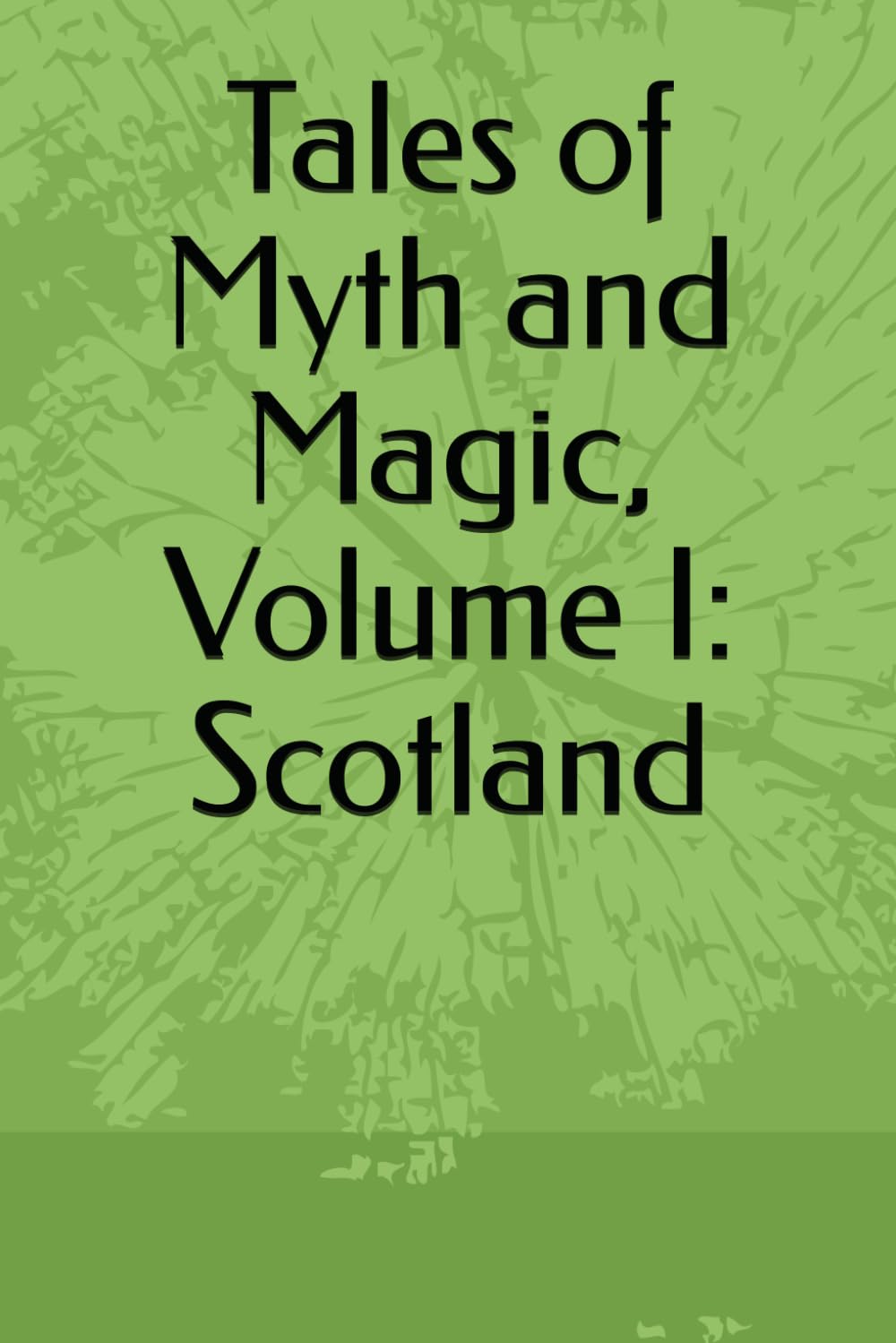
If you enjoyed this article, the creatures and legends of Scotland are collected in my book Tales of Myth and Magic, Volume I: Scotland — 25 tales told in full, each traced to its earliest sources, with a map, glossary, and full bibliography. Available in paperback for £11.99.
Find Out More →Further Reading
If this article sparked your interest, these are the books worth reading next.
Scottish Urban Legends: 50 Myths and True Stories
by Aaron Mullins — fifty Scottish urban legends including stories from Glasgow, Edinburgh, and the Highlands. The kind of tradition that Maggie Murphy belongs to, collected properly in one volume.
Scottish Urban Myths and Ancient Legends
by Grace Banks and Sheena Blackhall — vampires, werewolves, devil encounters, and the school playground legends of Scotland. A genuinely good collection of the stories Scots have been telling each other for generations.
The Lore of Scotland: A Guide to Scottish Legends
by Jennifer Westwood and Sophia Kingshill — the most comprehensive collection of Scottish legend in print, covering Glasgow to Shetland, exploring origins and historical basis. Endorsed by Terry Pratchett as the real macabre.
Never miss a myth
Thank you for being here. The site is brand new and every subscriber genuinely means something to me. If you're here, you care about this stuff as much as I do - and that's all the reason I need to keep going. New stories, videos and dark folklore from around the world, straight to your inbox. No algorithm. Just the stories, when they're ready.