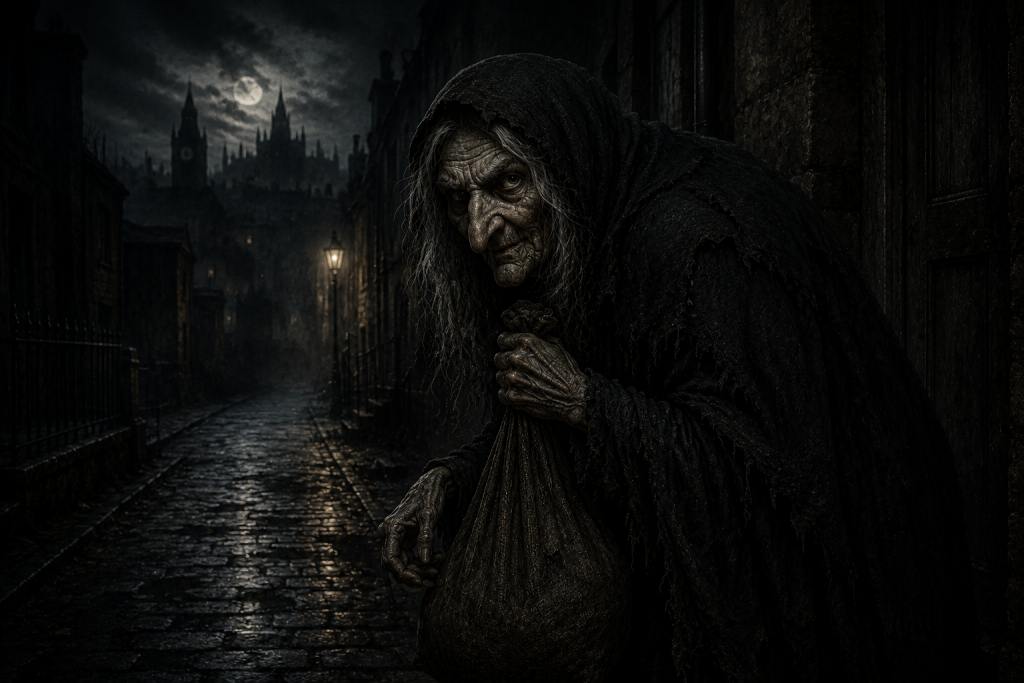

There are ghost stories that come with a castle attached, a named historical victim, a date carved into a stone somewhere you can go and stand on. And then there are the other kind. The kind with no fixed address, no named witness, no date anyone can point to with any confidence, passed from one Scottish childhood to the next at sleepovers and round campfires and in the dark on the top bunk after the lights went out, told in a slightly different version every single time because nobody ever wrote it down properly in the first place.
The story of Wee Jeanie and the toe belongs firmly to this second category. It shares its bones with a tale that has been whispered to frightened children across the world for generations, a story so old and so well-travelled that nobody can say with any certainty where it first began, only that it keeps turning up, in different clothes and different names, wherever people gather in the dark to frighten each other.
In Scotland, the version that has stuck is this one.
It began, as these things so often do, on an ordinary afternoon.
Wee Jeanie was out digging in the garden, turning over the soil the way children do when they have nothing better to do and the earth looks worth investigating, when her spade struck something that was not a stone and not a root and not anything she had an immediate name for.
She dug around it carefully and lifted it out of the earth.
It was a toe. A big toe, to be specific, large and pale and belonging to nobody she could see anywhere in the garden. It was cold and waxy. Jeanie held it at arm’s length for a moment, turning it over in the grey afternoon light, and made the decision that any curious child in any version of this story has always made.
She took it inside.
Jeanie wrapped the toe in a cloth and tucked it under her pillow for safe keeping.
Jeanie went to bed as usual, and the house settled into its ordinary nighttime sounds, and she was somewhere between awake and asleep when she first heard it. Not a knock. Not a slam. Something smaller and more patient than that, a sound from somewhere outside, working its way in.
Wee Jeanie. I want my toe back. I’m at the garden gate.
She lay still.
Wee Jeanie. I want my toe back. I’m at the front door.
Wee Jeanie. I want my toe back. I’m in the hall.
She pulled the covers up.
Wee Jeanie. I want my toe back. I’m on the stairs.
Wee Jeanie. I want my toe back. I’m at your door.
Wee Jeanie. I want my toe back.
I’M RIGHT BESIDE YOU!
A Tale That Has Travelled a Long Way
If Wee Jeanie’s story feels familiar even to those who have never heard it told under that name, there is a good reason for that.
A story called The Big Toe has been circulating across the English-speaking world since at least the nineteenth century, documented by American folklorists who collected versions from multiple states with remarkably consistent structure: a child finds a toe in the ground, brings it home, and is visited that night by a voice moving steadily closer, asking for it back. The story was collected, polished, and given its widest audience by Alvin Schwartz in his 1981 anthology Scary Stories to Tell in the Dark, a book that introduced the structure to several generations of children who then passed it on in the only way stories like this survive, by telling it to each other in the dark, slightly changed each time, reshaped by every new teller to fit their own voice, their own setting, their own name for the child at the centre of it.
Whether the Scottish version of this story descended from American collections, or whether a similar tale grew up independently in the tenements and crofts and council houses of Scotland in the way that such stories grow wherever people have always gathered in the dark to frighten each other, is exactly the kind of question folk tradition refuses to answer cleanly. Stories do not carry passports. They migrate, reskin, shed details, pick up new ones, and arrive in each new telling wearing the local colour of wherever they have landed without anyone having consciously decided to put it there.
What Wee Jeanie brings to the basic structure is specific: the Scottish name that makes it feel like a story about somebody’s neighbour’s cousin rather than an abstract child in an unnamed American town, the matter-of-fact quality of the telling that suits the particular Scottish relationship with the uncanny, which has always preferred understatement to elaboration, and the knowledge that this version is being told by someone who grew up somewhere with real ghosts in its own soil, real castles and real darkness and real things buried in the ground that might have reasons to want themselves back.
Why the Structure Works So Well
It is worth stepping back from the story for a moment to consider why this particular shape, four lines, one changing detail, a single escalating shout at the very end, has proven durable enough to survive being retold across an unknown number of Scottish childhoods without anyone needing to write it down properly in order for it to keep spreading.
The repetition is doing very specific work. Each time the listener hears the same sentence return, their mind relaxes slightly into the pattern, anticipating the rhythm rather than the content, and it is precisely that relaxation that the final line is designed to violate. The location changing while everything else stays fixed creates a constant, accumulating sense of approach without ever requiring the storyteller to describe anything happening in between: no footsteps, no creaking floorboards, nothing the audience’s imagination does not supply for itself, which is always more effective than anything a teller could describe directly.
The final line abandons the entire pattern at once, raises in volume where every previous line stayed quiet, and lands at exactly the moment when even a listener who has heard the story before has been lulled back into the rhythm and briefly forgotten what is coming.
This is the same mechanism that drives the most effective ghost stories in the Scottish tradition. The sudden silence before something appears. The moment a familiar pattern is violated rather than simply continued. Wee Jeanie’s story compresses that mechanism into its purest and most portable possible form, four short lines that anyone can remember well enough to retell from memory around a fire or in the dark on a camping trip, which is exactly why it has survived this long without ever needing a fixed location, a named victim, or a documented history to give it legitimacy.
Stories like this do not need evidence. They need only a teller willing to wait for the right moment, and a listener who has momentarily forgotten to be sceptical. Scotland has always produced both in abundance.
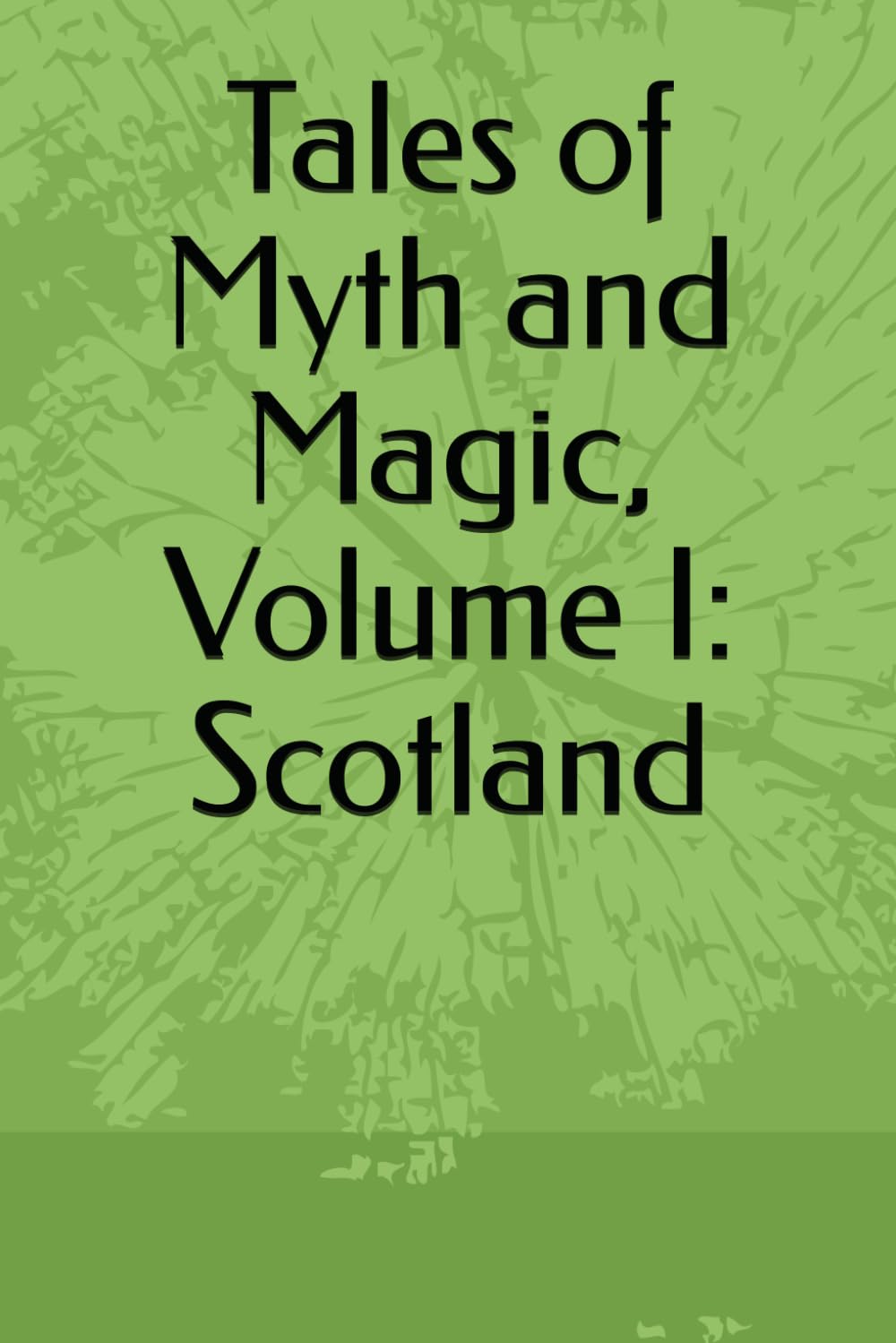
If you enjoyed this article, the creatures and legends of Scotland are collected in my book Tales of Myth and Magic, Volume I: Scotland — 25 tales told in full, each traced to its earliest sources, with a map, glossary, and full bibliography. Available in paperback for £11.99.
Find Out More →Further Reading
If this article sparked your interest, these are the books worth reading next.
Scottish Urban Legends: 50 Myths and True Stories
by Aaron Mullins — fifty Scottish urban legends including stories from Glasgow, Edinburgh, and the Highlands. The kind of tradition that Maggie Murphy belongs to, collected properly in one volume.
Scottish Urban Myths and Ancient Legends
by Grace Banks and Sheena Blackhall — vampires, werewolves, devil encounters, and the school playground legends of Scotland. A genuinely good collection of the stories Scots have been telling each other for generations.
The Lore of Scotland: A Guide to Scottish Legends
by Jennifer Westwood and Sophia Kingshill — the most comprehensive collection of Scottish legend in print, covering Glasgow to Shetland, exploring origins and historical basis. Endorsed by Terry Pratchett as the real macabre.
For more on the Glasgow folklore tradition this story belongs to, the Jenny wi’ the Iron Teeth article covers another figure passed down through Scottish childhoods in exactly the same way. The Maggie Murphy article covers the child-stealing legend that circulated through Glasgow tenements for generations. The Glasgow Folklore page has every article on the city’s dark tradition in one place.
Never miss a myth
Thank you for being here. The site is brand new and every subscriber genuinely means something to me. If you're here, you care about this stuff as much as I do - and that's all the reason I need to keep going. New stories, videos and dark folklore from around the world, straight to your inbox. No algorithm. Just the stories, when they're ready.