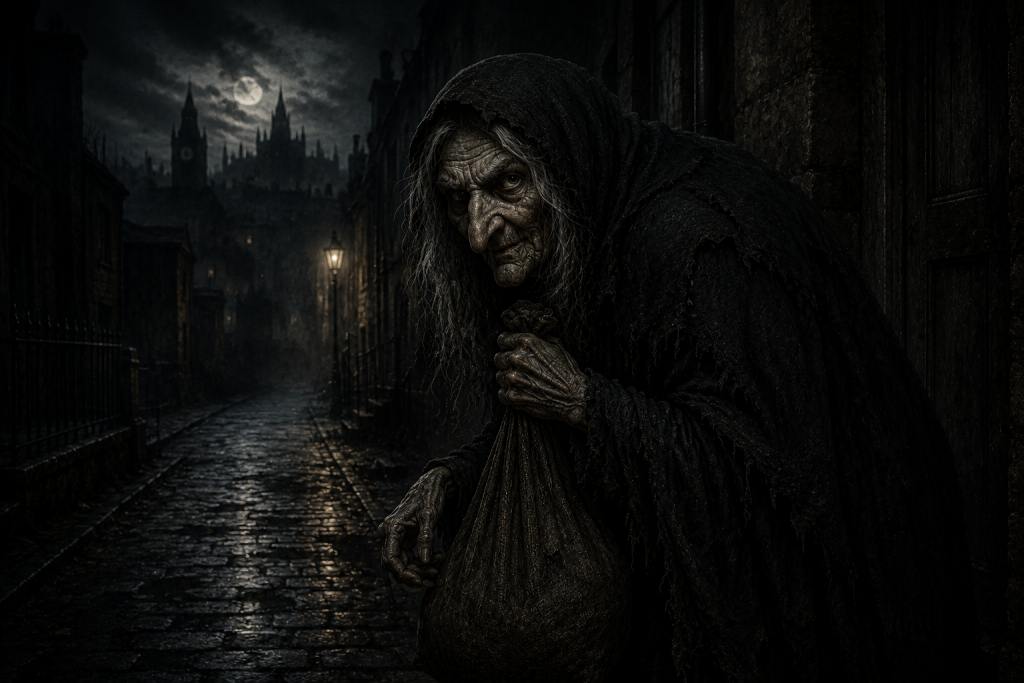

Scotland’s water creature tradition is extraordinarily rich. The Kelpie haunts the rivers and freshwater lochs. The Each-Uisge lurks in the sea lochs and the deepest Highland waters. The Shellycoat rattles along the riverbanks in the dark. But in the isolated marshes and loch systems of Argyll and the western Highlands, there is something that does not fit neatly into any of these categories, something that is not quite a water horse and not quite a water spirit and not quite anything else the tradition has a ready name for.
The Boobrie is a creature that the folklore of the region describes with enough specificity and enough consistency to suggest that the people who told stories about it were pointing at something real, or at least at something they genuinely believed to be real. What it actually was, where it came from, and what it was doing in the isolated loch systems of the western Highlands are questions that the tradition raises without entirely resolving.
It is large. It is loud. It is hungry in a way that makes what it chooses to eat particularly alarming. And it is not, despite appearances, simply a very big bird.
What the Boobrie Looks Like
The Boobrie’s most commonly described form is that of an enormous water bird, resembling a great northern diver or loon but vastly larger than any known species, with white streaks on its neck and breast and a long bill that curves like an eagle’s rather than the straight bill of an ordinary diving bird. Its feet are webbed but clawed, a combination that belongs to no bird in the natural world, and its eyes in most accounts have a quality of intelligence and attention that sits uneasily with the bird classification.
Its call is one of the most distinctive and most consistently noted features in the accounts. The Boobrie does not make the sounds you would expect from a large bird. Its voice is described as resembling the roar of an angry bull, a deep, resonant sound that carries across the water and that people who heard it at a distance could not always identify with confidence until they had seen the source. A sound like a bull from the middle of a loch with no cattle anywhere near it was the kind of sensory experience that lodged in the memory and generated stories.
The size is difficult to fix precisely because the accounts vary, but all of them agree on large. Considerably larger than any bird the witnesses had previously encountered. Large enough to take the prey it is described as taking, which includes fully grown otters and live lambs, neither of which a bird of ordinary dimensions could manage.
What It Eats
The Boobrie’s diet as described in the tradition is one of the more unsettling aspects of the creature, partly because of what it chooses and partly because of the implications of its choosing.
Otters and lambs are the most commonly cited prey. Otters are formidable animals for their size, fast and aggressive and not easily taken even by large predators. A creature that routinely hunted otters was a creature of significant size and capability. Lambs were the economic lifeblood of the farming communities of Argyll, and their disappearance without explanation, without the tracks or remains that an ordinary predator would leave, was the kind of loss that required explanation.
Some accounts extend the Boobrie’s appetite to cattle, specifically to the livestock being transported by boat across the sea lochs of the region. The Boobrie in these accounts lurks beneath the surface near the regular crossing routes and capsizes or attacks the boats, taking the animals in the water. This behaviour, the ambush of water crossings, connects the Boobrie to a much broader tradition of dangerous creatures associated with the specific risks of travel by water in a landscape where water crossings were a daily practical necessity.
Whether a community’s missing lamb was actually taken by an eagle, an otter, a fox, or simply wandered into a bog and was never found, the Boobrie provided a satisfying and specific explanation. The creature was real, it lived in the loch, it had taken the lamb. The explanation was complete, and it was far more emotionally satisfying than the honest answer of not knowing.
The Shapeshifting
The Boobrie’s most significant supernatural characteristic, and the one that most clearly places it in the tradition of Scottish water creature folklore rather than simply in the category of large unknown animals, is its ability to change form.
The bird form is apparently the Boobrie’s preferred or natural form, the one it is most commonly seen in and the one most consistently described in the accounts. But the tradition is clear that this is not the only form available to it. The Boobrie can take the shape of other aquatic creatures, most commonly a large water insect in some accounts, a giant water horse in others, and in some versions of the tradition a form that is described only as something seen beneath the surface, something large moving in the dark water that does not have a name.
This shapeshifting ability immediately connects the Boobrie to the Kelpie and the Each-Uisge, both of which are shapeshifters using their alternative forms as lures, as methods of approaching prey more closely than their natural form would allow. The Boobrie’s motivation for shapeshifting is less clearly predatory in the accounts, but the capacity itself places it in this family of creatures rather than in the family of simply very large birds.
The shapeshifting also explains something that might otherwise seem inconsistent in the tradition. If the Boobrie is a large bird, it should be visible from a significant distance and should leave evidence of its presence, feathers, footprints in soft ground near the water, the remains of its prey. The fact that it does not always leave such evidence, that it appears and disappears in ways that do not entirely correspond to the behaviour of a physical bird, is accounted for by the shapeshifting tradition. What you see is not always what is there. What is there can become something else before you look again.
The Lochs of Argyll
The Boobrie is most strongly associated with the loch systems of Argyll, the complex network of freshwater and sea lochs that define the western Highland landscape in one of the most intricate and beautiful coastlines in Europe. This is a landscape of extraordinary variety, the lochs ranging from small, dark hill lochs enclosed by steep ground and rarely visited to the great sea lochs that cut deep into the mainland and have always been the arteries of movement and trade in the region.
The isolated lochs in particular, the ones set back from the main routes, surrounded by rough grazing and visited mainly by the shepherds and drovers who worked the land, are the ones most consistently associated with Boobrie sightings in the tradition. These are places where something unusual in the water would be encountered by people who were alone, at some distance from the nearest settlement, in conditions where the light on the water and the sounds of an enclosed valley could easily distort perception.
Loch Awe, Loch Etive, and the various smaller loch systems throughout Argyll and the islands appear in Boobrie accounts, and the Isle of Bute’s own Loch Fad, a freshwater loch running almost through the centre of the island, has a local association with the creature that connects the tradition specifically to the island landscape visible from Wemyss Bay across the Firth of Clyde.
The sea lochs introduce a maritime dimension to the tradition that the freshwater loch accounts do not have. A creature comfortable in both freshwater and saltwater environments, moving between the inland lochs and the sea through the connections that the Argyll geography provides, is a creature with a range that could account for sightings across a very large area and that would be extremely difficult to corner or confirm through direct observation.
The Natural History Beneath the Legend
The question of what might underlie the Boobrie tradition, what animal or animals or combination of experiences generated the specific characteristics described in the accounts, has attracted various answers over the years.
The great northern diver is the most obvious candidate for the bird form. It is a large, striking bird with distinctive markings, a haunting call that carries considerable distance across water, and a habit of diving and surfacing that can be genuinely startling if you are not expecting it. It is present in Scottish waters and has been a familiar feature of the Highland loch landscape for as long as people have been living there.
But the great northern diver is not that large, its call is eerie rather than bull-like, and it does not take lambs or otters. The Boobrie’s characteristics exceed what the diver can account for, which leaves several possibilities. The tradition may represent an exaggerated or distorted account of diver behaviour, amplified over generations of retelling. It may represent a genuine folk memory of a larger bird species, perhaps the great auk or a related bird, now extinct, that was known to the communities of the western Highlands before its disappearance. Or it may represent a genuinely composite tradition, multiple different sightings and experiences attributed to a single creature because the existing name provided the most convenient label.
The bull-like roar is the detail most difficult to account for through ordinary natural history. Several animals can produce surprising sounds, and the acoustics of an enclosed loch valley can distort and amplify in ways that make identification difficult. But a sound consistent enough and distinctive enough to be described in the same terms across multiple independent accounts over a significant period of time suggests either a genuine unusual sound source or a very stable piece of folk description being passed from one account to the next.
A Creature of the Margins
The Boobrie inhabits the margins of the Scottish supernatural tradition in a way that is itself characteristic. It is not as famous as the Kelpie or the Each-Uisge. It does not have the dramatic narrative presence of the Nuckelavee or the cosmological scale of the Mester Stoorworm. It is a regional creature, specific to a specific landscape, described in terms that are specific enough to suggest genuine observation but elusive enough to resist definitive classification.
This marginality is not a weakness. It is what makes the Boobrie interesting. The creatures at the centre of any mythological tradition are usually the ones that have been worked over and polished by generations of retelling until they are smooth and consistent and fit comfortably into recognisable categories. The creatures at the edges, the ones that have not been fully domesticated by narrative, retain something rougher and stranger and potentially more honest about the actual experiences that generated them.
The Boobrie sits at the edge. It is large and it is loud and it takes things from the margins of the settled world, lambs from the pastures, otters from the waterside, livestock from the boats crossing the sea lochs. It lives in the isolated places that the farming communities of Argyll necessarily visited but never entirely owned. It belongs to the water in the way that all Scottish water creatures belong to the water, which is to say that it belongs to the thing that was there before the settlements and will be there after them.
If you want more like this, the Tales of Myth and Magic newsletter delivers new creatures, legends, and forgotten folklore straight to your inbox.
No fixed schedule. No noise. Just the stories, when they are ready.
Sign up here →The Loch at Dusk
There is a particular quality to an isolated Highland loch at dusk that anyone who has experienced it will recognise. The light goes out of the water gradually, and as it does the surface becomes less readable, less obviously just water. Things moving beneath it are visible for longer than they would be in full daylight, shapes that the eye registers but cannot immediately interpret. The sounds of the surrounding landscape change as the birds settle and the wind drops and the acoustics of the enclosed space become more prominent.
This is the Boobrie’s hour. Not because the creature is specifically nocturnal in the tradition, but because the conditions that make it most plausible, that make the large dark shape in the water most visible and the bull-like call most carrying and the sense of something large and present most convincing, are the conditions of the transitional light.
The Boobrie tradition was made by people who knew their local lochs intimately and who found, in those lochs at certain times and in certain lights, something that their accumulated knowledge of the natural world could not fully account for. They gave it a name and a set of characteristics and they warned each other about it, and the warnings were specific enough and consistent enough to be passed down through generations.
Whatever was in those lochs, it made an impression that lasted.
The lochs of Argyll are still there. The light still goes out of them gradually at dusk. And on the isolated ones, the ones set back from the roads and the settlements, the ones where the rough grazing runs down to the water’s edge and the hills close in on both sides, the surface is still not entirely readable in that particular light.
Watch what moves beneath it.
Listen for what sounds like a bull but is coming from the water.
Then decide whether you want to be standing on that shore when the light goes completely.

If you enjoyed this article, the creatures and legends of Scotland are collected in my book Tales of Myth and Magic, Volume I: Scotland — 25 tales told in full, each traced to its earliest sources, with a map, glossary, and full bibliography. Available in paperback for £11.99.
Find Out More →Further Reading
If this article sparked your interest, these are the books worth reading next.
Scottish Urban Legends: 50 Myths and True Stories
by Aaron Mullins — fifty Scottish urban legends including stories from Glasgow, Edinburgh, and the Highlands. The kind of tradition that Maggie Murphy belongs to, collected properly in one volume.
Scottish Urban Myths and Ancient Legends
by Grace Banks and Sheena Blackhall — vampires, werewolves, devil encounters, and the school playground legends of Scotland. A genuinely good collection of the stories Scots have been telling each other for generations.
The Lore of Scotland: A Guide to Scottish Legends
by Jennifer Westwood and Sophia Kingshill — the most comprehensive collection of Scottish legend in print, covering Glasgow to Shetland, exploring origins and historical basis. Endorsed by Terry Pratchett as the real macabre.
Never miss a myth
Thank you for being here. The site is brand new and every subscriber genuinely means something to me. If you're here, you care about this stuff as much as I do - and that's all the reason I need to keep going. New stories, videos and dark folklore from around the world, straight to your inbox. No algorithm. Just the stories, when they're ready.