Most folklore creatures have a consistent form. The Kelpie is a water horse. The Banshee is a wailing woman. The Minotaur is half man, half bull. The tradition fixes what they look like because the appearance is part of the meaning: the shape tells you something about what the creature is and what it represents.
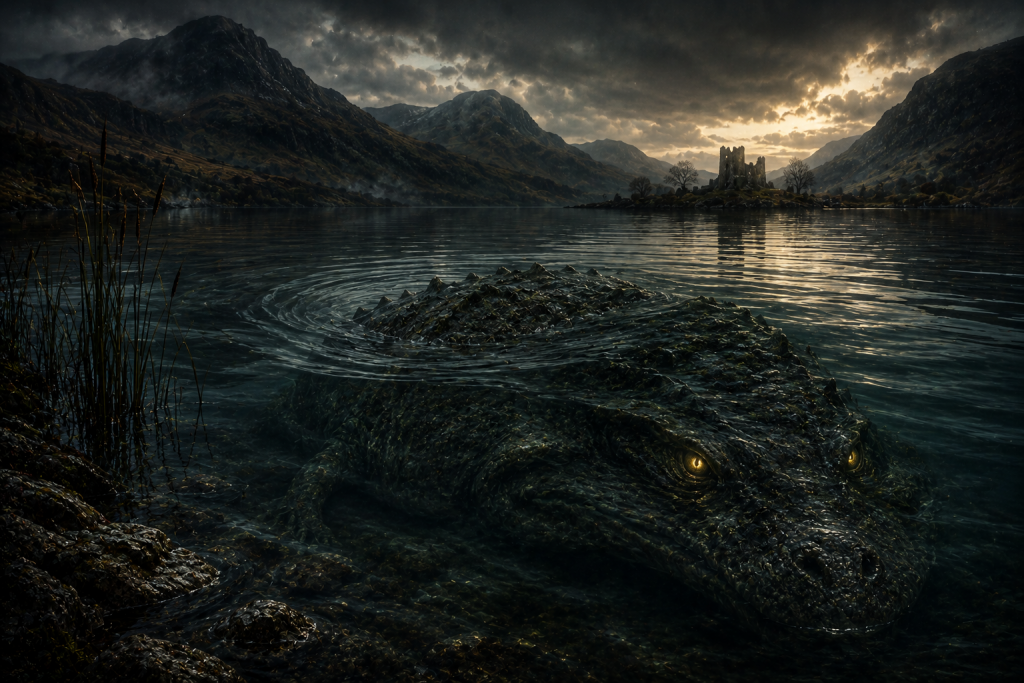
The Afanc does not work this way. Depending on which part of Wales you ask and which period of the tradition you examine, the Afanc is a giant beaver, a crocodile, a dwarf, a demon, something vaguely dragon-like, and something that resists easy description entirely. The descriptions do not converge on a single form across the centuries. They diverge.
This is not a failure of the tradition. It is the most interesting thing about the Afanc, and understanding why the descriptions vary so dramatically is more productive than picking one version and presenting it as definitive. The Afanc is not a single creature with a fixed form. It is a category of water danger given a name, and the name has accumulated different shapes in different places because the dangers it represents are themselves different in different landscapes.
The Name and What It Means
The word afanc in Welsh originally meant simply beaver, the semiaquatic mammal that was once common across Britain and Wales and that was hunted to extinction in the country by the early medieval period. The connection to the animal is significant for understanding the creature’s origin, because the beaver in a pre-extinction Welsh landscape was genuinely impressive: adult beavers can weigh thirty kilograms, build dams that alter the course of rivers, fell substantial trees, and cause significant flooding by blocking waterways. To a community living beside a beaver-dammed river in early medieval Wales, the creature responsible for flooded fields and blocked streams was not a charming woodland animal but a powerful and potentially destructive force.
The word’s subsequent evolution from beaver to lake monster reflects a common process in folklore: as the actual animal became extinct and its habits became unknown, the name retained its associations with water, strength, and the capacity to flood and destroy, while the specific form it referred to became increasingly uncertain and increasingly large. By the time the Afanc traditions that are documented in medieval and later Welsh sources were being recorded, the original beaver had been gone for centuries, and the creature that bore its name had grown considerably beyond anything that would fit in a river.
The name is pronounced Ah-vank, with the stress on the first syllable, following standard Welsh phonological rules where f represents the v sound and c at the end of a word is hard.
The Flood Traditions
The most consistent element across Afanc traditions is not the creature’s appearance but its relationship with water and specifically with flooding. The Afanc causes floods. This is the core characteristic that appears in more accounts than any specific physical description, and it is the characteristic that tells you what the creature is actually doing in the tradition.
Wales is a country shaped by water. The mountains of Snowdonia and the Brecon Beacons generate enormous rainfall, which flows down river valleys that can flood rapidly and destructively. Glacially carved lakes sit in high cwms across the north of the country. The relationship between Welsh communities and their water has historically been one of dependence and vulnerability: the same rivers and lakes that provided water and fish could flood fields, destroy bridges, and cut off settlements for weeks at a time.
The tradition of a creature that lives in lakes and rivers and causes catastrophic flooding when disturbed is a way of encoding that experience. The Afanc is not an explanation for flooding in a naive sense, a community simply blaming a monster for a natural event. It is a conceptual framework that treats the lake or river as a living system with its own nature, one that demands respect and that responds badly to disturbance or provocation. The flooding is the Afanc’s response to something that has gone wrong in the relationship between the human community and the water it lives alongside.
Llyn yr Afanc and the Specific Locations
Several Welsh lakes and pools carry the name of the Afanc in various forms, the most famous being Llyn yr Afanc, which translates as Lake of the Afanc, near Betws-y-Coed in Conwy in north Wales. The existence of named locations associated with the creature is significant for the same reason that Herne’s Oak and the Wulver’s Stane are significant: named landscape features suggest genuine community belief attached to specific places rather than purely literary tradition.
Llyn yr Afanc sits on the River Conwy above Betws-y-Coed, in a section of river that would historically have been accessible enough to be part of daily community life while remaining deep and cold and somewhat dangerous. The naming of this specific pool as the home of the Afanc connects the creature to a real landscape feature that community members could point to and visit, which gives the tradition a geographical anchor that purely narrative folklore lacks.
Other locations across Wales carry similar associations. Llyn Barfog, the Bearded Lake, in the hills above Aberdyfi is associated with an Afanc removal story. Various pools on the River Conwy and in the lakes of Snowdonia appear in regional traditions. The geographical spread of the creature across Welsh water landscapes, rather than concentrating it in a single location, is consistent with the idea that Afanc is a category of water threat rather than a specific individual creature.
The Removal Stories
The most narrative-rich element of the Afanc tradition is the story of its removal from whichever lake it has been terrorising, and this story has several significantly different versions that are worth examining separately.
In the Llyn yr Afanc tradition, the creature is lured from the water by a young woman who allows it to rest its head in her lap. The Afanc, calmed by her presence, falls asleep. Chains are attached to it while it sleeps, and powerful oxen, sometimes specifically the Ychen Bannog, the long-horned oxen that appear in other Welsh mythological contexts, drag it from the water. The creature wakes during the dragging and the struggle is immense, but eventually it is relocated to Llyn Cwm Ffynnon, a lake in Snowdonia where it can no longer threaten the Conwy valley communities.
In some versions of the story, the young woman who lulls the Afanc is injured or killed when it wakes and claws her in its distress. This element gives the story a moral dimension: the removal of the monster requires a sacrifice, and the person who makes it is specifically a woman using proximity and calm rather than strength or weapons. The feminine approach succeeds where direct confrontation would fail, which is a pattern that appears across Welsh mythology and that the Afanc tradition handles with more specificity than most.
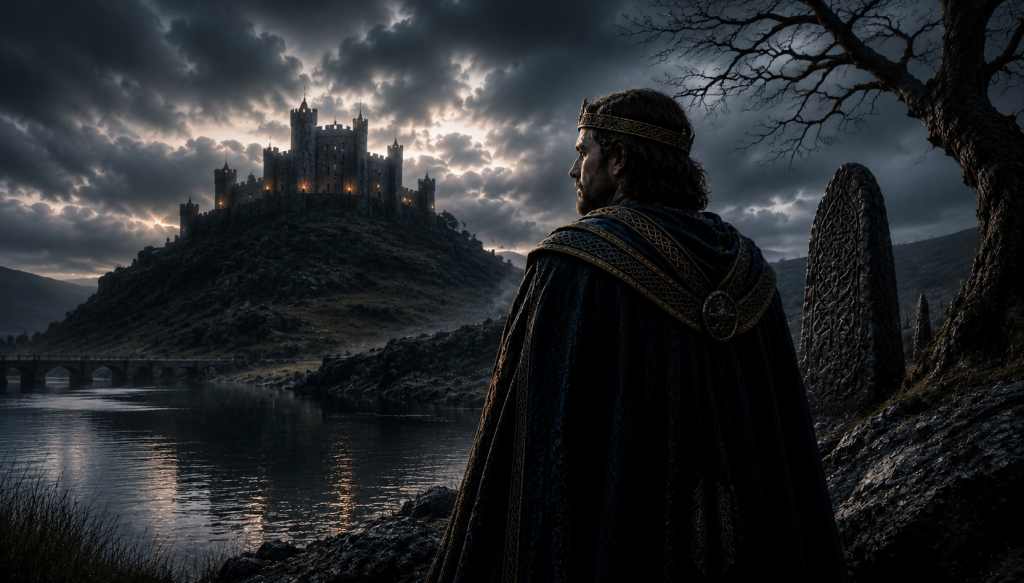
Arthur appears in some versions of the Afanc story, dragging the creature from the lake with his horse or with chains. The Arthurian connection places the Afanc within the broader cycle of Welsh mythology that preceded the literary Arthur of Geoffrey of Monmouth and later English tradition. In Welsh sources, Arthur is a monster-fighter and a clearing force who removes the supernatural dangers from the landscape, and the Afanc is one of the things he is called upon to deal with. This is a very different Arthur from the courtly king of the Round Table, and the Afanc story is a useful reminder that the Welsh mythological tradition has its own internal logic that does not always map onto the more familiar English and French versions.
The Prehistoric Beaver Theory
The possibility that the Afanc originated from knowledge or memory of extinct large beavers is not simply speculative. The Eurasian beaver was present in Britain until sometime in the early medieval period, and some evidence suggests it may have survived in Wales longer than in other parts of Britain, which would mean that communities in early medieval Wales had direct experience of large beavers in their waterways.
The giant prehistoric beaver Castoroides, which was genuinely enormous compared to the modern animal, was extinct long before any of the documented Afanc traditions were recorded, and any connection to it would have to go through fossil discovery or oral tradition stretching back thousands of years rather than living memory. However, the regular Eurasian beaver was impressive enough in its own right to have inspired exaggeration over time, particularly as the species declined and eventually disappeared, leaving only the place names and the folklore associations without the animal itself to anchor them to a recognisable reality.
The word’s history from beaver to monster follows the same trajectory: as the actual beaver became rarer and eventually extinct, the word retained its associations while the form they referred to became uncertain and then monstrous. This is a credible and well-documented process in the development of folklore creatures, and the Afanc is one of the better examples of it in the British tradition.
What It Shares With Other Welsh Water Creatures
The Afanc belongs to a tradition of Welsh water beings that includes the Ceffyl Dwr, the water horse, and various lake spirits that appear across the country’s mythological record. Wales shares with Scotland and Ireland a deep engagement with the supernatural qualities of water, which is consistent with the Celtic tradition of viewing lakes, rivers, and springs as thresholds between the human world and the Otherworld.
The Afanc is more specifically dangerous than many of these beings, more consistently associated with destructive flooding and with the need for removal rather than coexistence, which places it in a different relationship to the human community from the water horse that can sometimes be bridled or the lake spirit that can be appeased. The Afanc is not a creature the tradition offers a working relationship with. It is a danger that needs to be relocated, which suggests that whatever experience or observation originally generated the tradition involved something genuinely disruptive to the landscape rather than simply something frightening.
For more on Welsh supernatural tradition, the Wales category covers the creatures and legends of the Welsh tradition including the Gwiber. For more on water monsters across the British and Irish tradition, the Each-Uisge article covers Scotland’s most dangerous water creature and the Kelpie article covers the most widely distributed water being in Scottish folklore.
Never miss a myth
Thank you for being here. The site is brand new and every subscriber genuinely means something to me. If you're here, you care about this stuff as much as I do - and that's all the reason I need to keep going. New stories, videos and dark folklore from around the world, straight to your inbox. No algorithm. Just the stories, when they're ready.