
Shetland is not quite Scotland in the way that the mainland is Scotland. Geographically closer to Bergen than to Edinburgh, with a history shaped by Norse settlement and Norse law and the Norse language that survived in the islands in various forms until the eighteenth century, Shetland occupies a position at the edge of the British world that has always given its culture a distinct and slightly different flavour from the Gaelic Highland tradition to the south. The supernatural beings of Shetland reflect this difference. They are not the creatures of Scottish Gaelic mythology. They are something older and colder and shaped by a different imaginative inheritance entirely.
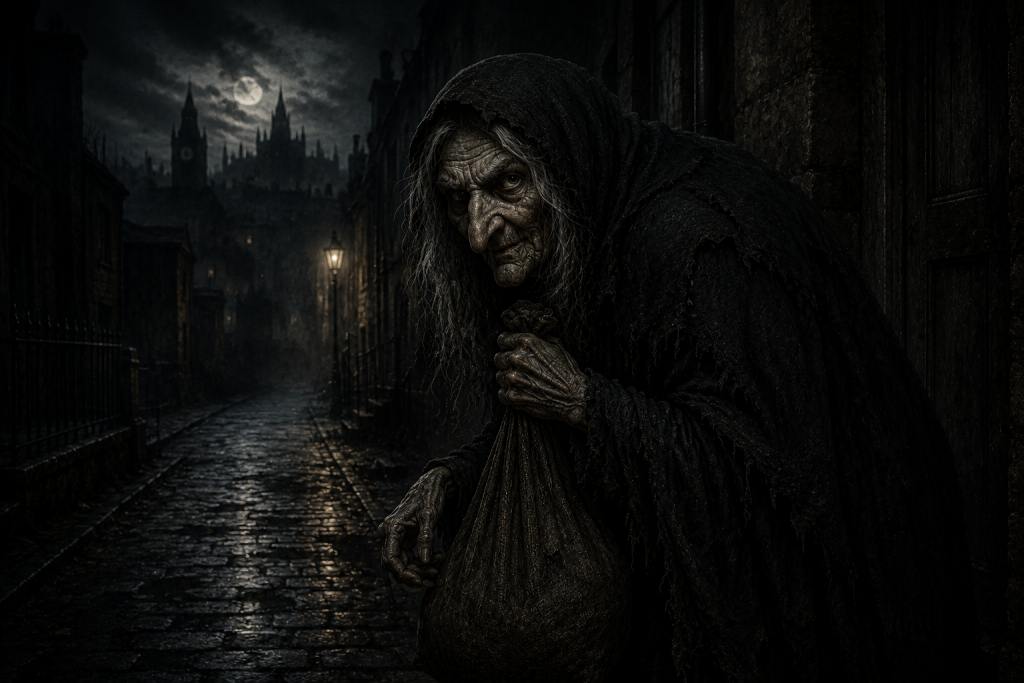
The Trows are Shetland’s trolls. Not the trolls of modern popular culture, not the large and stupid boulder-hurling giants of the tourist imagination. Something considerably more subtle and considerably more dangerous, beings that live inside the hills and come out at night and whose relationship with the human communities above them is defined by a specific and persistent hunger for what the human world contains.
They want your music. They want your health. They want your children. And they have been taking all three from the islands of Shetland for as long as anyone there can remember.
What the Trows Are
The Trows, sometimes spelled Drows in older sources, derive directly from the Norse troll, the supernatural beings of Scandinavian mythology that accompanied the Norse settlers to Shetland and Orkney in the ninth century and established themselves so thoroughly in the island tradition that they are still there a thousand years later.
In their Shetland form the Trows are small and grotesque, dark-skinned and misshapen, with a physical appearance that is the opposite of the unearthly beauty associated with many supernatural beings in Scottish Gaelic tradition. They are ugly in the way that things which have lived underground for a very long time sometimes become ugly, as though the absence of light and the pressure of the earth above them has worked on their forms over generations and produced something compressed and warped and fundamentally wrong in its proportions.
They live inside the knowes, the grassy mounds and hills of Shetland that dot the island landscape with a regularity that suggests, if you are inclined to think about it, a great deal of underground activity. The knowes are their homes, their gathering places, their courts. They come out at night, because daylight is harmful to them in a way that restricts their activities to the dark hours, and at night they move through the island landscape with a freedom and a familiarity that speaks to how long they have been doing exactly this.
They are divided in some accounts into the Hill Trows and the Sea Trows, a distinction that maps onto the Shetland landscape with its own logic. The island communities lived between the hills and the sea, and the supernatural threats came from both directions. The Hill Trows inhabited the inland knowes. The Sea Trows came from the water, associated with the sounds and voes and the open sea around the islands, with the storms and the dangerous currents and the specific maritime perils of a community dependent on the sea for its survival.
The Music They Stole
Of all the things the Trows wanted from the human world, music is the one most consistently and most strikingly emphasised in the Shetland tradition.
The Trows were understood to have their own music, a supernatural fiddle tradition that was among the most beautiful and the most dangerous things in the islands. The music of the Trows was not like human music. It could not be resisted. It compelled dancing in anyone who heard it whether they wanted to dance or not, and the dancing did not stop until the Trows decided to stop playing, which might be long after the human body had passed the point of endurance.
This supernatural musical ability extended to a specific hunger for human musicians. A Shetland fiddler of exceptional talent was at particular risk of Trow attention, because the Trows valued human musicianship and would take gifted players underground if they could manage it. The fiddler taken by the Trows might be kept for what felt to him like a night of playing in the knowes, emerging to find that years had passed above ground in the way that time passes differently in fairy spaces, the human world having moved on entirely while he played.
The exchange ran both ways, and this is one of the most interesting aspects of the Shetland tradition. The Trows taught their music to human fiddlers. The extraordinary tunes associated with Shetland fiddle tradition, the distinctive and haunting pieces that set Shetland music apart from mainland Scottish traditions, were in the island belief understood to have come from the Trows, either taught directly to human players taken underground or heard from above and memorised by those who had the wit and the nerve to listen without being caught.
Several specific tunes in the Shetland fiddle tradition carry explicit Trow associations in the folk memory of the islands. They are called things that reference the knowes or the night or the specific locations where the music was heard. They are some of the most distinctive pieces in the Shetland repertoire and they are still played.
Trow-Shot and the Taking of Health
Beyond their musical interests, the Trows maintained a persistent interest in the health of the human community above them, and their interest was not benevolent.
Trow-shot was the Shetland equivalent of elf-shot in mainland Scottish tradition, the invisible supernatural attack that caused sudden illness in people and livestock without any obvious physical cause. A person who was healthy in the morning and seriously ill by evening with no apparent infection or injury might be understood as trow-shot, attacked by the invisible projectiles that the Trows sent from their knowes against people who had attracted their attention or simply been unlucky enough to be in the wrong place.
The symptoms of trow-shot varied in the tradition but tended toward the wasting and the sudden, the kinds of illness that arrived quickly and resisted ordinary treatment. Livestock that failed to thrive, cattle that gave no milk, sheep that sickened without apparent disease, were the most common subjects of trow-shot accusations, and the practical consequences for the farming communities of Shetland, where animals were essential to survival, were real regardless of the cause.
The cunning people of Shetland, those individuals with specialist knowledge of the supernatural world and the means of navigating it, had specific techniques for identifying and treating trow-shot. The iron that protected against fairy attack in mainland tradition served a similar function here. Certain protective words and rituals were maintained as practical knowledge, passed within families and communities as the kind of information that might be needed at any time.
The Changeling Tradition
The most feared aspect of Trow behaviour, and the one that caused the most sustained anxiety in the communities of Shetland, was their habit of taking human children and leaving substitutes behind.
The Trow changeling tradition in Shetland follows the basic pattern found across British and European folklore, a Trow child or a glamoured piece of wood or stone left in the cradle while the human infant was taken underground. The substitute looked like the human child but behaved wrongly, crying incessantly, failing to thrive, eating extraordinary amounts without growing, and possessing a quality that the family found disturbing in ways they could not always articulate clearly but felt consistently.
The changeling tradition served several functions in the communities that maintained it. It provided an explanation for infants who failed to develop normally, who were seriously ill, who had conditions that the period had no other framework for understanding. It is a tradition that modern readers rightly find troubling, because the children identified as changelings were real children with real conditions who were sometimes treated accordingly, and the consequences of that treatment could be severe.
At the same time the tradition expressed genuine and understandable fears about infant vulnerability in communities where child mortality was high and the causes of illness were poorly understood. The Trows were an explanation for the inexplicable, a face put on the specific terror of watching a child change in ways that seemed beyond ordinary medical understanding.
The methods for recovering a stolen child and getting rid of the changeling varied in the Shetland tradition. Iron placed in the cradle was protective. Certain prayers and rituals were used. The exposure of the changeling, forcing it to reveal its supernatural nature through various means, was understood as the necessary precondition for negotiating the return of the stolen child.
If you want more like this, the Tales of Myth and Magic newsletter delivers new creatures, legends, and forgotten folklore straight to your inbox.
No fixed schedule. No noise. Just the stories, when they are ready.
Sign up here →Yule and the Trows
The Shetland calendar gave the Trows a specific period of heightened activity that shaped the winter practices of the island communities in concrete ways.
Yule in Shetland, the midwinter period, was understood as the time when the Trows were most active and most dangerous. The long dark of the Shetland winter, when daylight lasted only a few hours and the nights were correspondingly vast and impenetrable, created conditions in which Trow activity was most plausible and most feared. The Trows came out of their knowes during Yule and moved through the landscape with an unusual freedom, and the protective practices associated with the season were specifically calibrated to this intensified threat.
Iron was placed at doorways and windows. Fires were kept burning through the night. Certain words were spoken over sleeping children. The livestock were attended to with extra care because the Trows were understood to be especially interested in animals during Yule, and a byre that was left unlocked and unprotected on a Yule night was a byre that might be found in disarray by morning.
The Shetland Up Helly Aa festival, held every January and culminating in the burning of a Viking longship, has its roots in this midwinter tradition, though it has been substantially modified over the centuries and the direct Trow connection has been overlaid with the Viking heritage celebration that the modern festival emphasises. The fire at the heart of the tradition is older than the longship, older than the Viking imagery, a midwinter fire against the dark and whatever moves through it.
The Sound of the Knowes
On certain nights in Shetland, particularly during the dark months, the tradition held that music could be heard coming from the knowes. Not imagined music, not the sound of wind in a particular configuration of hills, but actual music, fiddle music with the specific character of Trow playing, audible to those who were in the right place at the right time and paying the right kind of attention.
Whether any of the people who reported hearing music from the knowes were reporting a genuine acoustic phenomenon, a misattributed sound source in the dark and the wind, or something else entirely is not a question the tradition was interested in resolving. What mattered was the music and what it meant. Music from a knowe at night was a signal to go home, to go quickly, to not stop and listen however compelling the music was.
The fiddler who stopped to listen was the fiddler who might find himself inside the knowe by morning, playing for the Trows, not entirely sure how he got there, with no clear sense of how long he had been underground or what the world above looked like anymore.
The exceptional Shetland fiddlers knew this. They also knew that the music they heard on those nights was unlike anything else they would ever encounter, that it contained things that human music had not yet found, and some of them stopped and listened anyway.
The best tunes in Shetland came from somewhere. The tradition is very clear about where.
What the Trows Left Behind
The Trows are still present in Shetland in ways that go beyond museum preservation and academic documentation. The knowes are still there, hundreds of them across the islands, and they are still called knowes, still understood in local consciousness as the kind of feature that has a history attached to it. The fiddle tradition they shaped is still alive and still distinctive, still producing music that sounds like nothing else in the British Isles.
The Trow tradition in Shetland demonstrates something important about how supernatural folklore works in island communities, how it weaves itself into the practical fabric of daily life in ways that make it genuinely functional rather than merely decorative. The music the Trows gave was real music. The iron protection against trow-shot was a real practice. The Yule precautions were real precautions. The fear was real and it shaped real behaviour in communities that needed practical frameworks for managing a world that was genuinely dangerous in multiple ways.
The Norse settlers who brought the troll tradition to Shetland could not have known that a thousand years later the music their supernatural beings supposedly taught to island fiddlers would still be played at sessions and festivals and in living rooms across the islands. They could not have known that the knowes would still be knowes, still carrying the same associations, still sitting in the landscape with the same quality of inhabited silence.
But here we are. The knowes are still there. The fiddles are still playing.
And on certain winter nights in Shetland, when the dark comes down early and the wind is in a particular direction and the islands feel very far from anywhere else, the tradition says the music still comes from the hills.
Whether you stop to listen is up to you.
Just remember what happened to the fiddlers who did.

If you enjoyed this article, the creatures and legends of Scotland are collected in my book Tales of Myth and Magic, Volume I: Scotland — 25 tales told in full, each traced to its earliest sources, with a map, glossary, and full bibliography. Available in paperback for £11.99.
Find Out More →Further Reading
If this article sparked your interest, these are the books worth reading next.
Scottish Urban Legends: 50 Myths and True Stories
by Aaron Mullins — fifty Scottish urban legends including stories from Glasgow, Edinburgh, and the Highlands. The kind of tradition that Maggie Murphy belongs to, collected properly in one volume.
Scottish Urban Myths and Ancient Legends
by Grace Banks and Sheena Blackhall — vampires, werewolves, devil encounters, and the school playground legends of Scotland. A genuinely good collection of the stories Scots have been telling each other for generations.
The Lore of Scotland: A Guide to Scottish Legends
by Jennifer Westwood and Sophia Kingshill — the most comprehensive collection of Scottish legend in print, covering Glasgow to Shetland, exploring origins and historical basis. Endorsed by Terry Pratchett as the real macabre.
Never miss a myth
Thank you for being here. The site is brand new and every subscriber genuinely means something to me. If you're here, you care about this stuff as much as I do - and that's all the reason I need to keep going. New stories, videos and dark folklore from around the world, straight to your inbox. No algorithm. Just the stories, when they're ready.