
In the beginning, before the islands and the firths and the sea lochs had taken their present shape, there was the Stoorworm. It lay in the ocean and it was so vast that the ocean barely contained it, a creature of such incomprehensible size that its body displaced the seas around it and its breath poisoned the air for miles in every direction. When it yawned, the tides changed. When it moved, coastlines shifted. It was not simply a large creature in a world that had already been made. It was older than the world as we know it, and the world as we know it is, in the Orcadian tradition that preserves its story, partly made of it.
The Mester Stoorworm is Orkney’s contribution to the world-serpent tradition, a mythological category that includes Jörmungandr of Norse mythology, the Midgard Serpent that encircles the world and whose stirring causes earthquakes, and Apophis of Egyptian tradition, the serpent of chaos that threatened to swallow the sun each night. These are not simply very large snakes. They are cosmological forces, beings whose existence is bound up with the existence of the world itself, whose death or defeat reshapes reality rather than merely removing a threat.
In the Orcadian tradition the Stoorworm’s defeat does exactly that. The landscape of northern Scotland, the firths and the islands and the specific geography of the far north, is the consequence of what happened when a boy with a burning peat and a small boat decided that something had to be done.
The First of All Evils
The Mester Stoorworm, the name translating roughly as the Master Great Worm in the Norn language of Orkney, was understood in the tradition as the first and greatest of all evil creatures, the original monster from which all subsequent monsters descended or derived some portion of their nature.
Its size in the tradition is described through the kind of accumulative enumeration that characterises the most ancient layer of northern mythology. When it yawned, its upper jaw reached the sky and its lower jaw scraped the ocean floor. Its tongue, forked and vast, could sweep villages from clifftops. Its breath killed crops and cattle and people across entire regions. When it raised its head from the water the shadow it cast covered the landscape for miles.
This is not the exaggerated size of a fish story. It is the cosmological size of a being that exists at the same scale as the world itself, a creature that cannot be avoided or gone around or waited out because it is, in a real sense, everywhere. The communities of the northern islands that told this story were not imagining a very large sea creature. They were imagining something that made the sea feel small.
The Stoorworm’s arrival in the waters around Scotland is presented in the tradition as a catastrophe of the first order, not a natural disaster to be weathered but an existential threat to the continued existence of the human world. It demanded tribute in the form of maidens, seven at a time, delivered to the shore at regular intervals. When the tribute was not paid, it expressed its displeasure in ways that made continued non-payment seem inadvisable.
The King’s Impossible Bargain
The story of the Mester Stoorworm follows a narrative structure that appears in mythologies across the world, the monster that demands tribute, the king who cannot find a solution, the hero who rises from unexpected origins to achieve what armies could not.
A king, faced with the Stoorworm’s inexhaustible appetite for maidens, consulted with his advisors and eventually with a sorcerer, and the answer he received was not the one he wanted. The only way to appease the Stoorworm, or to persuade it to leave, was to offer it his own daughter, the princess, along with the hand of the princess in marriage to whoever could kill the creature.
This is the bargain that structures the rest of the story, the princess and the kingdom as the prize for accomplishing the impossible. The champions who came to try were many, because the prize was extraordinary, but they arrived with armies and weapons and strategies calibrated to the kind of monster they had encountered before, and the Mester Stoorworm was not that kind of monster. They failed, and the Stoorworm remained, and the tribute continued.
Then there was Assipattle.
Assipattle: The Boy Who Sat in the Ashes
Assipattle is one of the great underdog heroes of northern mythology and one of the most clearly drawn in his original characterisation. His name means literally the one who sits in the ashes, the boy who stays by the fire while others go out into the world, the youngest and least regarded of his family, given the worst tasks and the smallest share of everything.
He was not impressive. He was not a warrior. He had no weapons, no training, no standing in the community that would have given a more conventional hero his starting position. What he had was a habit of telling stories about the great things he would do someday, stories that his family found amusing and his brothers found irritating, and a quality of imagination and lateral thinking that the warriors who had already tried and failed against the Stoorworm entirely lacked.
When Assipattle decided to kill the Stoorworm, the decision was taken seriously by nobody except Assipattle. He took a small boat. He took a pot containing burning peat, the ordinary domestic fire of a northern island household. He rowed out toward the Stoorworm in the dark before anyone was fully awake.
His plan was not to fight the Stoorworm. Fighting the Stoorworm with the resources available to him was not a plan that could work, and Assipattle understood this where the warriors before him had not. His plan was to go inside it.
The Burning of the Liver
When the Stoorworm yawned in the morning, as it yawned every morning, drawing in the sea through its open mouth in a tide that reached for miles, Assipattle and his small boat were drawn in with the water. He went inside the Stoorworm deliberately, navigating through the vast darkness of its interior, past structures and spaces that the tradition describes with a quality of interior geography that gives the creature an almost architectural scale, until he reached the liver.
The liver of the Stoorworm, in the tradition, was the source of its life and its power, the organ without which the creature could not continue to exist. Assipattle dug a hole in the liver with his knife and pushed the burning peat inside it and blew on it until it caught.
Then he ran.
The fire spread through the Stoorworm from the inside, the creature’s own vast body becoming the fuel for its destruction, and the Stoorworm died in a series of convulsions that reshaped the landscape around it. Its teeth fell from its mouth and became the Orkney Islands, and then the Shetland Islands, and then the Faroe Islands, scattered across the northern sea in the sequence of their falling. Its tongue, lashing in its death agony, gouged out the Baltic Sea. Its body, coiling and contracting, became the island of Iceland, and the fire that Assipattle had set in its liver is the volcanic fire that still burns beneath Iceland today.
The Geography of a Dead Monster
The aetiological function of the Mester Stoorworm story, its purpose as an explanation for how specific geographical features came to exist, is one of its most distinctive and most ancient characteristics. This is mythology doing the work that geology does now, providing an account of why the landscape is the way it is in terms that are emotionally and narratively satisfying in a way that plate tectonics, however accurate, is not.
The Orkney Islands as the teeth of the Stoorworm is an image that rewards attention if you look at a map of the northern islands. The scatter of islands across the sea, numerous and irregular and seemingly without pattern to a casual observer, makes a different kind of sense when understood as the fallen teeth of something vast dying in convulsions. The geography has not changed. The explanation has, depending on whether you are working within the mythological tradition or the geological one.
The Baltic Sea gouged by the Stoorworm’s tongue, Iceland as its coiled body, the volcanic fire of Iceland as the burning peat that Assipattle planted in its liver, these are not random associations. They reflect a genuine observation of geographical relationships, of the fact that Iceland is geologically active in ways that the other northern lands are not, of the fact that the Baltic is enclosed in a way that suggests something other than the ordinary action of the sea. The mythology is working with real geographical observations and providing a framework for them that the communities of the northern islands found compelling and transmissible.
If you want more like this, the Tales of Myth and Magic newsletter delivers new creatures, legends, and forgotten folklore straight to your inbox.
No fixed schedule. No noise. Just the stories, when they are ready.
Sign up here →The Norse Foundation
The Mester Stoorworm belongs to the same mythological family as Jörmungandr, the Midgard Serpent of Norse mythology, and the relationship between the two traditions is close enough to be more than coincidental.
Jörmungandr in Norse myth encircles the world, biting its own tail, holding the known world together by its own body in a way that means its death, which comes at Ragnarök at the hands of Thor, is simultaneously the death of the world order it maintained. The Midgard Serpent’s death unmakes the world as much as it saves it, because the world was in some sense made of and by the serpent’s presence.
The Mester Stoorworm’s death reshapes the world in a similar way, though in the Orcadian tradition the reshaping is creative rather than apocalyptic. The landscape that emerges from the Stoorworm’s dying is the landscape that the community inhabiting the northern islands recognised and lived within. The monster’s death was the world’s making, and the making was good, or at least it was the world they had, which amounted to the same thing.
This is the Norse cosmological inheritance that the settlers brought to Orkney and Shetland and that took root in the island tradition in the form of the Mester Stoorworm story. The Trows of Shetland are another expression of the same inheritance, the Norse supernatural tradition adapting to the specific conditions of the island landscape. But where the Trows are a living tradition that continued to function in the communities of the islands long after the Norse language had given way to Scots and then English, the Mester Stoorworm story belongs to a more purely mythological register, a creation story rather than a practical guide to supernatural risk management.
Assipattle’s Lesson
The hero of the Mester Stoorworm story is not the king, not the warriors, not the champion who arrives with the best weapons and the most impressive credentials. He is the boy in the ashes, the one nobody expected, the one who sat by the fire and told stories about the great things he would do and was laughed at for it.
He wins not through strength but through understanding. He understands that the Stoorworm cannot be defeated from the outside, that no weapon available to the human world is adequate to the scale of the threat, and that the only way to destroy something that vast is to find its centre and burn it from within. This is a form of intelligence that is available to the person who has been sitting quietly and thinking rather than the person who has been training to fight the kind of enemies he already knows.
The burning peat is the detail that carries the most weight in the tradition, and it is worth sitting with. The weapon that kills the greatest monster in the world is not a sword or a spear or a piece of enchanted metal. It is domestic fire, the same fire that heats the house and cooks the food and keeps the dark away on winter nights. Assipattle takes the most ordinary thing in his world, the fire that everyone has and no one thinks of as a weapon, and uses it to do what armies could not.
This is not a coincidence. The tradition is making a specific point about where power actually resides, and it is not where the warriors assumed it would be.
The Fire That Still Burns
Iceland is still volcanically active. The fire that Assipattle planted in the Stoorworm’s liver has not gone out in all the centuries since the story was first told, which gives the mythology a quality of ongoing confirmation that most creation stories cannot claim. You can go to Iceland and see the fire. You can stand at the edge of a lava field and know that whatever geological process is responsible for it, the tradition that explains it in terms of a burning peat in the liver of a dying monster is not less true for being mythological.
The Orkney Islands are still there, scattered across the northern sea in the pattern of fallen teeth. Shetland is still there. The Faroe Islands are still there. The Baltic is still enclosed in the way that something gouged rather than shaped would be enclosed. The geography that the Mester Stoorworm story explains has not gone anywhere.
Assipattle won. The world was made from what he left behind.
The fire is still burning.
That is either a geological fact or it is the most durable consequence of a small boy with a burning peat and a boat that nobody else wanted, and the tradition of Orkney has always known which answer it prefers.
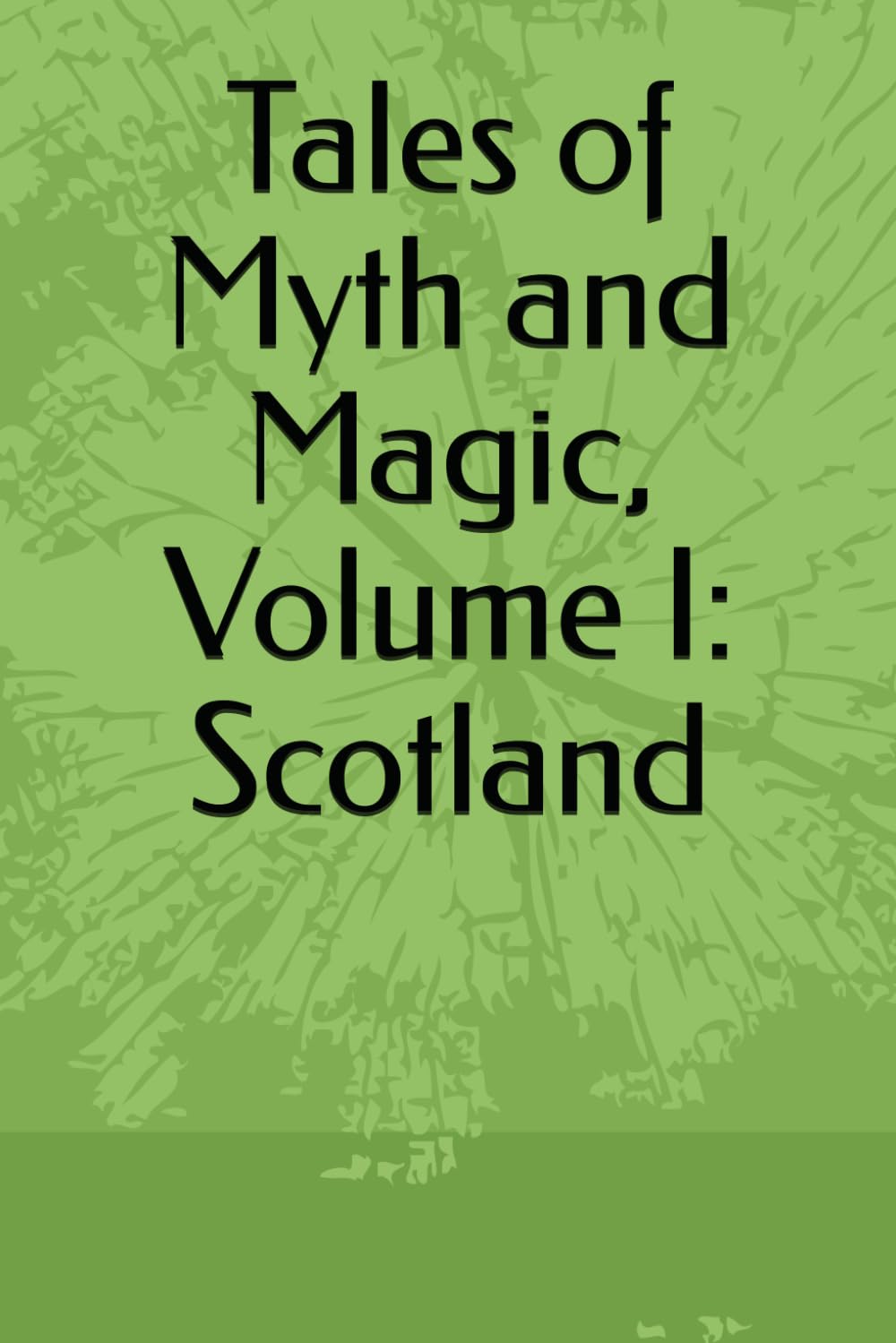
If you enjoyed this article, the creatures and legends of Scotland are collected in my book Tales of Myth and Magic, Volume I: Scotland — 25 tales told in full, each traced to its earliest sources, with a map, glossary, and full bibliography. Available in paperback for £11.99.
Find Out More →Further Reading
If this article sparked your interest, these are the books worth reading next.
Scottish Urban Legends: 50 Myths and True Stories
by Aaron Mullins — fifty Scottish urban legends including stories from Glasgow, Edinburgh, and the Highlands. The kind of tradition that Maggie Murphy belongs to, collected properly in one volume.
Scottish Urban Myths and Ancient Legends
by Grace Banks and Sheena Blackhall — vampires, werewolves, devil encounters, and the school playground legends of Scotland. A genuinely good collection of the stories Scots have been telling each other for generations.
The Lore of Scotland: A Guide to Scottish Legends
by Jennifer Westwood and Sophia Kingshill — the most comprehensive collection of Scottish legend in print, covering Glasgow to Shetland, exploring origins and historical basis. Endorsed by Terry Pratchett as the real macabre.
Never miss a myth
Thank you for being here. The site is brand new and every subscriber genuinely means something to me. If you're here, you care about this stuff as much as I do - and that's all the reason I need to keep going. New stories, videos and dark folklore from around the world, straight to your inbox. No algorithm. Just the stories, when they're ready.